China will expand zero-tariff treatment to all African countries that have diplomatic relations with it starting May 1, 2026, Chinese authorities announced on Tuesday.
From May 1, 2026 to April 30, 2028, China will apply zero-tariff treatment to 20 African countries that have diplomatic relations with China and are not classified as least-developed countries (LDCs), according to an announcement by the Customs Tariff Commission of the State Council on Tuesday.
This move represents the active implementation of China's earlier commitments.
For products subject to tariff-rate quotas, only the in-quota tariff rates will be reduced to zero, while out-of-quota rates will remain unchanged. During the two-year implementation period, China will continue to promote the signing of economic partnership agreements for shared development with relevant African countries, according to the statement.
The new policy also marks a further expansion of the existing tariff arrangement. For the 33 African LDCs that have diplomatic relations with China, China has granted zero-tariff treatment for 100 percent of tariff lines since December 1, 2024.
The move to expand zero-tariff treatment to the remaining 20 African countries that have diplomatic ties with China reflects China's proactive stance on expanding high-standard opening-up, and it will play an important role in strengthening China-Africa economic and trade ties and promoting the building of an all-weather China-Africa community with a shared future for the new era, the statement said.
Observers said that the landmark move will strengthen China-Africa economic cooperation under China's broader opening-up, helping African countries shift exports from raw materials toward higher value-added products. Such a model represents a paradigm of equality, mutual benefit and shared development, they said.
Amid the rise of unilateralism and protectionism, developing countries, including those in Africa, are facing mounting challenges. Guided by the principles of sincerity, real results, amity and good faith, and a balanced approach to justice and interests, China has adopted innovative arrangements by taking the lead in granting zero-tariff treatment for a set period to expand market access and create development opportunities for African countries, China's Ministry of Commerce (MOFCOM) said on Tuesday.
At the same time, the nation will ensure stable and sustained benefits for African partners by advancing negotiations on economic partnership agreements for shared development, providing long-term, stable and predictable institutional support for deepening China-Africa economic and trade ties.
This year marks the 70th anniversary of the establishment of diplomatic relations between China and African countries. The MOFCOM said that it will work with relevant departments to effectively implement the zero-tariff measures, advance negotiations on economic partnership agreements for shared development in line with the principles of equal consultation and mutual benefit, deepen institutional economic and trade cooperation, and share opportunities and pursue common development with African countries.
He Wenping, a research fellow at the China-Africa Institute, told the Global Times on Tuesday that Africa has long grappled with trade imbalances, noting that comprehensive zero-tariff access will effectively balance imports and exports while empowering Africa's independent industrial development.
This policy builds on China's sustained efforts to extend exclusive economic benefits to African nations via international platforms such as the China-Africa Economic and Trade Expo and the China International Import Expo, said He, adding that these initiatives have provided tangible support, including preferential policies and complimentary exhibition booths.
Contrasting this with the rise of global protectionism and the misuse of unilateral tariffs by certain nations, He highlighted the clear distinction in China's approach.
"While some countries frequently brandish 'tariff sticks' and weaponize their domestic markets, China is building platforms for win-win cooperation," He said. "This brings practical benefits to both African nations and the Chinese people, driving shared global development."
According to customs data, China's trade with Africa surged from 87.38 billion yuan ($12.78 billion) in 2000 to 2.49 trillion yuan in 2025. Scaling up from the 10-billion-yuan bracket to the trillion-yuan level, bilateral trade has registered a 27.5-fold increase with an average annual growth rate of 14.3 percent.
Meanwhile, in the first quarter of this year, China's imports from Africa rose by 14.6 percent.
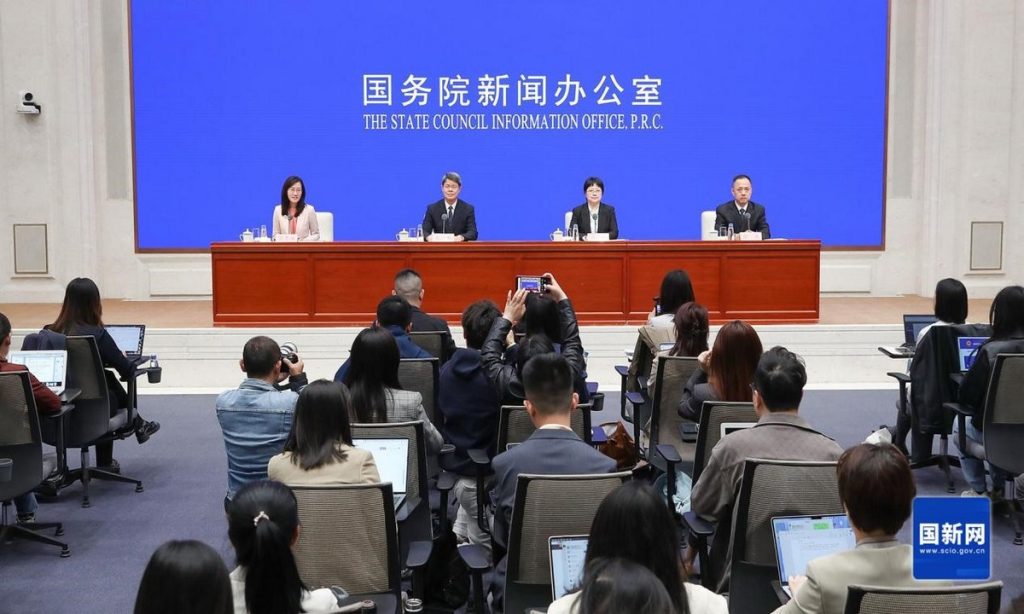
Officials from China's Ministry of Industry and Information Technology (MIIT), the country's top industry regulator, announced on Tuesday plans to conduct policy research and set standards for the coordinated development of computing power and electricity. MIIT also aims to promote the orderly development of the space computing power industry, chinanews.com reported.
The announcement was made during a press conference held by the State Council Information Office on Tuesday, introducing developments in industry and information technology in the first quarter of 2026. Zhang Yunming, an MIIT official, stated that the ministry will guide the construction of computing power infrastructure based on demand and enhance China's national computing power platform.
Space-based computing refers to the deployment of computational capacity in space, enabling seamless global coverage through satellite networking. Compared with terrestrial data centers, its greatest advantages lie in real-time responsiveness and global coverage.
In recent years, computing infrastructure has become a key foundation driving the development of artificial intelligence (AI), Zhang said, adding that in the next step, the ministry will guide the coordinated layout of green power and computing power, advance full-coverage automated monitoring of computing resources, improve China's national computing power platform, facilitate precise matching of computing power supply and demand, and enhance the efficiency of computing resource utilization.
The ministry will further transform research results into practical applications, improve the computing power standard system, support forward-looking research in space computing power technologies, and orderly promote the development of the space computing power industry, Zhang said.
Chinese authorities and experts have emphasized the importance of developing the space computing industry.
Xiang Ligang, a veteran industry analyst and director-general of the Zhongguancun Modern Information Consumer Application Industry Technology Alliance, told the Global Times on Tuesday that compared with traditional terrestrial data centers, which face multiple bottlenecks such as high energy consumption, scarce land resources, high cooling costs, and limited coverage, space computing boasts advantages such as real-time on-orbit processing, low-cost energy and wide-area coverage.
It can help improve the efficiency of "space-based data processing," enhance space energy development capabilities, strengthen global coverage and anti-interference capabilities, and expand the boundaries of network applications, giving it significant strategic value and broad industrial prospects, Xiang said. Developing space computing can fundamentally break through the energy and spatial constraints of terrestrial computing, providing the digital economy with a new type of computing supply that is zero-carbon, green, sustainable, and widely accessible, he added.
Zhao Ce, an official from the MIIT's information and communications development department, stated at a recent conference on space computing industry that China should seize the potential opportunities presented by space computing power as an emerging industry and proactively address challenges related to chip performance, inter-satellite communication, power supply, and heat dissipation.
He also stressed the need to strengthen systematic planning, make forward-looking arrangements, deepen industrial development, strengthen coordination, and steadily and orderly advance the growth of the space computing industry, the Economic Daily reported on April 13.
"Space computing power is the extension and integration of terrestrial industries into space, and a frontier deployment for building a global ubiquitous computing network. It will strongly support the high-quality development of applications such as artificial intelligence," said Li Jie, deputy director of the Cloud and Big Data Institute of the China Academy of Information and Communications Technology (CAICT), according to the Economic Daily report.
On the international front, China is the first country to achieve in-orbit networking and operation of a space computing constellation. In terms of engineering practice and the speed of commercial implementation, it is already among the world's leaders, ranking in the top tier globally in the space computing power sector, said Xie Lina, deputy director of the data center department at the Cloud Computing and Big Data Research Institute under the CAICT, the Economic Daily reported.
In recent years, China has gradually carried out pilot construction and verification of space computing networks, accelerated technological breakthroughs and advanced multiple constellation projects, Xinhua News Agency reported. Meanwhile, the country is accelerating the cultivation of the space computing industrial ecosystem, according to Xinhua.
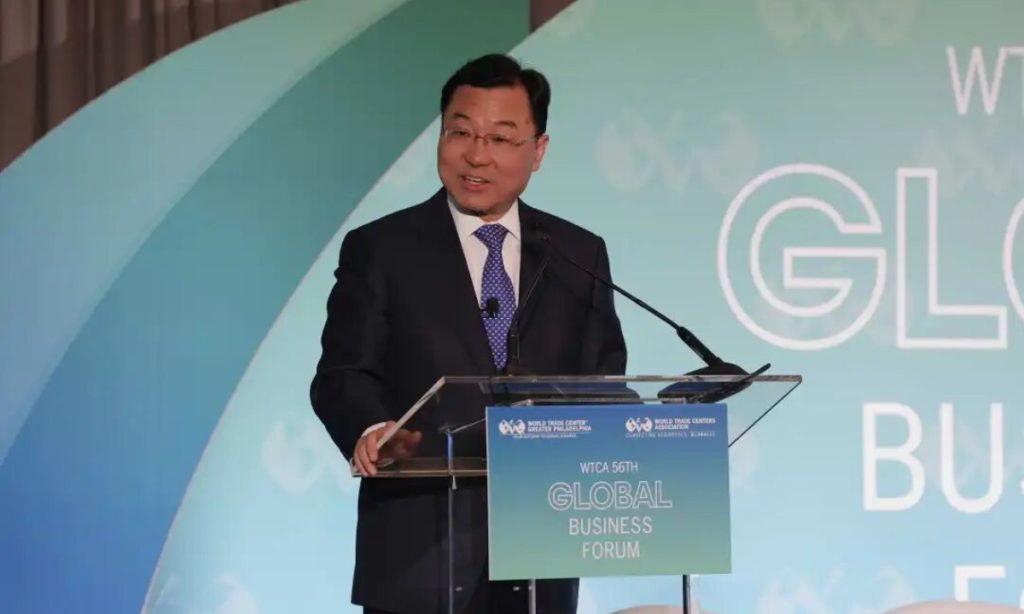
Chinese Ambassador to the US Xie Feng on Monday called for restoring common sense and reason to economic, trade, and science and technology cooperation, stressing that China and the US should advocate fair competition and help each other succeed, instead of engaging in a zero-sum game.
The ambassador made the remarks in a keynote speech at the opening ceremony of the 56th Annual WTCA Global Business Forum.
Xie said that while safeguarding national security is both legitimate and essential, the concept should not be overstretched or misused as a catch-all, according to a speech transcript published by the Chinese Embassy in the US on Wednesday.
“Even now, the Chinese side still cannot figure out why Chinese EVs have been singled out and accused to be ‘data collectors on wheels’; where the so-called ‘spy equipment’ is installed in Chinese cranes; and how Chinese garlic could ever possibly be classified as a ‘national security threat,’” the ambassador said.
This kind of paranoid illusion lacks basic common sense, and does not hold up against the facts, Xie noted, adding that it would only destabilize global industrial and supply chains, suffocate innovation, and ultimately serve no one’s good.
The ambassador emphasized that the yardstick of national security should be brought back to its proper measure. “What we need is fewer unfounded suspicions and accusations, and more rationality grounded in market rules and commercial logic. Only then can the vast potential of China-US cooperation be fully unleashed,” he added.
Regarding China-US economic and trade ties, Xie cited the healthy competition between Tesla and Chinese electric vehicle (EV) companies as an example, saying “it is only natural that China and the US have competition in areas such as economy and trade, and what matters more is how the two sides choose to compete.”
“Such a race [between Tesla and Chinese EV companies] to the top is mutually beneficial and win-win, and also serves the best interests of global consumers,” Xie added.
The ambassador said that this sets an example for competition between China and the US, which should be like competing for excellence in a racing field, not beating one another down in a wrestling ring. Moreover, the playing field should be level, and the rules should be observed.
He stressed that one should accept either outcome with grace, instead of applying double standards, extolling free trade when one is competitive, yet turning to fair trade when outcompeted.
“It also means one should not predetermine the result, accepting only scenarios in which they win, while denying others the right to outperform them. Still less should one resort to smearing, trapping, or tripping others up in order to undermine them,” Xie said.
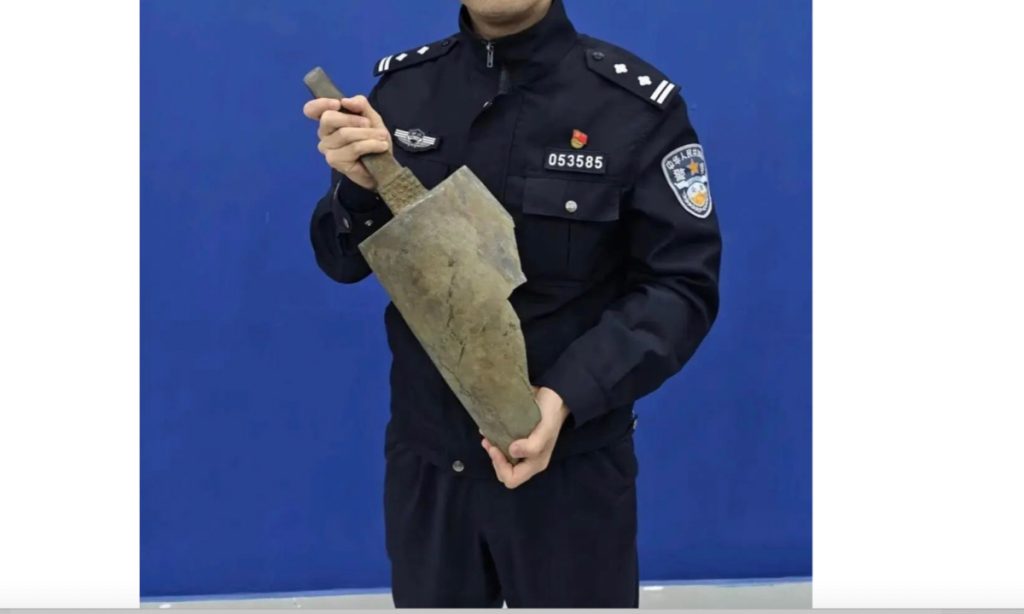
An elderly couple from Huzhou, East China's Zhejiang Province, discovered an unusual piece of "scrap iron" while collecting recyclables. After handing it over to a local police station, it was preliminarily identified as a bronze musical instrument known as the Gou Diao from the Spring and Autumn and Warring States Periods (770–221 BC), The Paper reported. The couple, from the Wuxing district in Huzhou, discovered a metal object of peculiar shape and archaic ornamentation while gathering discarded items by the riverside, The Paper reported. They realized that this "lump of metal" was unlike ordinary scrap iron—it felt unusually heavy and bore decorative patterns on its surface, the report said.
Convinced that the object, which resembled scrap iron, was not a modern item, they packed it in a gunny sack and delivered it in person to a local police station, per the report.
Upon preliminary inspection, the object appeared elongated and slender, with a surface patina of bluish‑green rust, per The Paper. Its faint decorative patterns were still discernible, and the form was neat and symmetrical, suggesting it might be an ancient bronze artifact, according to the report.
Police officers then conducted online research and compared the item with archaeological catalogs. Based on its weight, shape and decorative features, they preliminarily concluded that it was most likely a Gou Diao—a distinctive bronze percussion instrument unique to the Wu and Yue regions, which cover present-day areas such as Suzhou and were once under the rule of the Qin Empire (221 BC-207 BC), The Paper reported.
Gou Diao was a percussion instrument used by aristocracy in the Wu and Yue regions for sacrificial rituals and banquets. Renowned for its melodious sound, it also represented one of the highest achievements of bronze casting technology at that time, holding significant value for the study of ritual and musical systems of the pre-Qin period (pre-221 BC) in the Wu and Yue region.
To ensure an accurate assessment of the object, the local police officers also contacted the municipal cultural relics bureau and invited archaeological experts to conduct an on-site preliminary appraisal.
After measurement, the experts confirmed that the artifact dates back no later than the Song Dynasty (1127-1279), with a history of at least 1,000 years, The Paper reported. Its form closely matches that of the bronze Gou Diao from the Spring and Autumn and Warring States Periods, and it possesses considerable historical, artistic, and scientific value, per the report.
The bronze Gou Diao has been formally transferred to the Huzhou municipal bureau of cultural relics for further examination, cleaning, and dating analysis, The Paper reported. It will be considered for incorporation into the exhibition plan of the local museum based on subsequent findings.
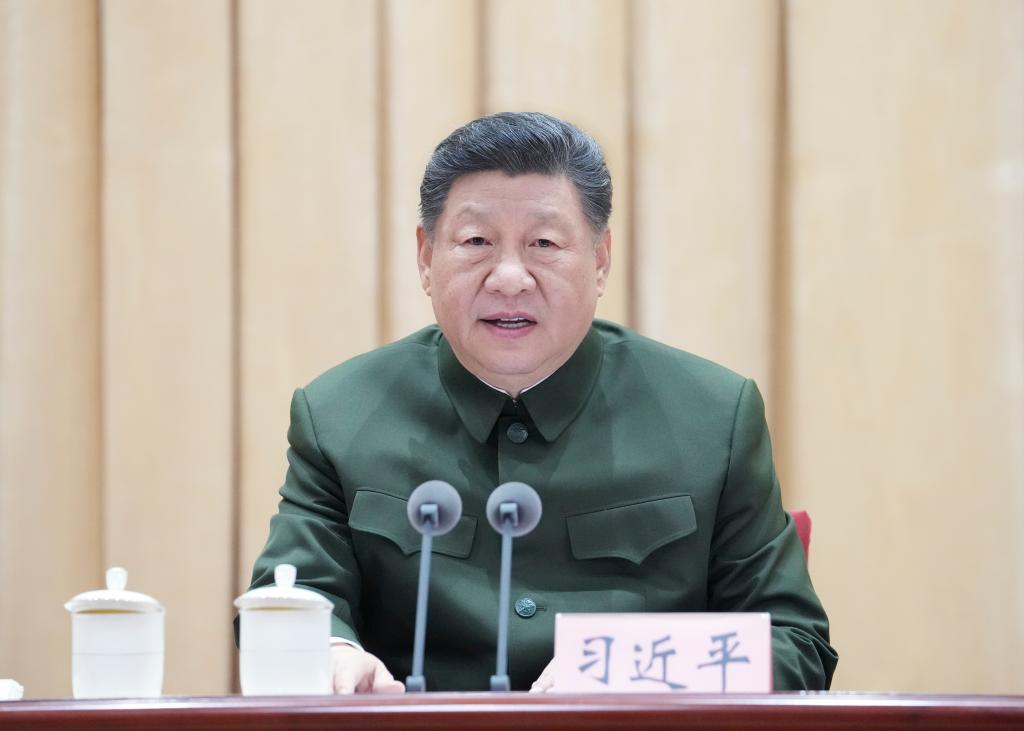
Chinese President Xi Jinping on Wednesday urged efforts to deepen political rectification in the military to maintain the purity and glory of the people's armed forces.
Xi, also general secretary of the Communist Party of China Central Committee and chairman of the Central Military Commission (CMC), made the remarks when he addressed the opening ceremony of a training session for high-ranking military officials, which was held at the National Defense University in Beijing on the same day.
He called for a fresh political outlook to greet the 100th anniversary of the founding of the People's Liberation Army, which will be marked in 2027.
Stressing the significance of ideals and convictions, Xi said being part of the Party and the military means having firm faith in Marxism and being loyal to the Party. He called on high-ranking military officials to take the lead in carrying out intra-party political activities in earnest and in speaking the truth.
All thoughts or actions driven by personal gains and corruption are completely incompatible with the Party's nature and purpose, Xi said.
Xi also urged high-ranking military officials to take the lead in restoring and carrying forward the fine traditions of the Party and the military, put down the official airs, and remain true to the identity of revolutionary service personnel.
Xi noted that everyone should be equal before laws and regulations, and there are no special cases in the observance of laws and regulations and no exceptions in their enforcement.
Xi expressed the belief that the military, with unprecedented solidarity and unity under the new historical circumstances, will write a new chapter in building a strong army.
Zhang Shengmin, vice chairman of the CMC, presided over the opening ceremony of the training session.
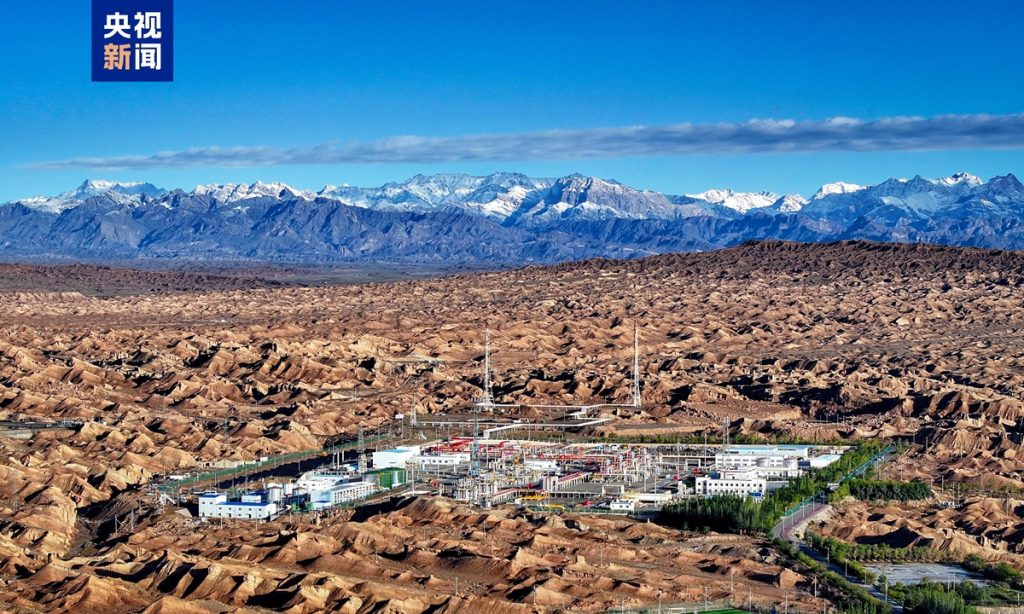
As of Wednesday, the Kela 2-5 well in Tarim Oilfield's Kela 2 gas field has produced 10.009 billion cubic meters of natural gas, becoming the seventh well at the field to exceed 100 billion cubic meters in cumulative output and forming China's largest high-yield well cluster—each producing over 10 billion cubic meters—while the field itself retains the national record for the highest average single-well production, China Media Group (CMG) reported on Thursday.
The Kela 2 gas field in the Tarim Basin, Northwest China's Xinjiang Uygur Autonomous Region is a major gas field for China's west-east gas transmission project and is known as the "first source of the west-east gas transmission project." Facing growing gas demand, Tarim Oilfield has developed a core production technology of "control, adjust, discharge, and inject," breaking the conventional limits of strong water-drive gas reservoirs, according to CMG.
After more than 20 years of development, the Kela 2 gas field has maintained stable production, sustaining an annual output of approximately 6 billion cubic meters for 10 consecutive years, with a cumulative natural gas production of nearly 153 billion cubic meters.
Meanwhile, the Kela 2 gas field has adopted automation technologies to create an efficient production model. The field's 33 gas wells are operated and maintained by just 32 technical and operational personnel—averaging one person per well—with each well producing 860,000 cubic meters per day.
To put it in perspective: based on a daily consumption of 0.5 cubic meters per three-person household, a single well at Kela 2 can meet the daily gas needs of over 1.7 million families. This exemplifies the highly efficient development model of "one person, one well, one city", CMG reported.
As one of China's three major gas-producing regions, the Tarim Oilfield has achieved a cumulative natural gas output of over 500 billion cubic meters, maintaining an annual production of more than 31 billion cubic meters for six consecutive years. It has played a key role in safeguarding national energy security and promoting energy restructuring as well as green and low-carbon development, CMG reported.
In the first quarter of 2026, Tarim Oilfield's three core businesses—crude oil, natural gas, and new energy—operated smoothly and in an orderly manner. The field supplied more than 13.2 billion cubic meters of natural gas, generated 590 million kilowatt-hours of green electricity, and saw gas storage extraction more than double compared to the same period last year, the local media outlet reported.
After years of technological innovation and investment, China has become the world's leading driver of robust growth in the renewable energy industry, demonstrating strong resilience amid the recent global oil market turmoil.
Now, renewable energy is more than a substitute or backup for traditional energy in the country. From upgrading traditional industries to powering AI computing, green power is emerging as a brand-new production factor, helping China develop emerging and future industries.
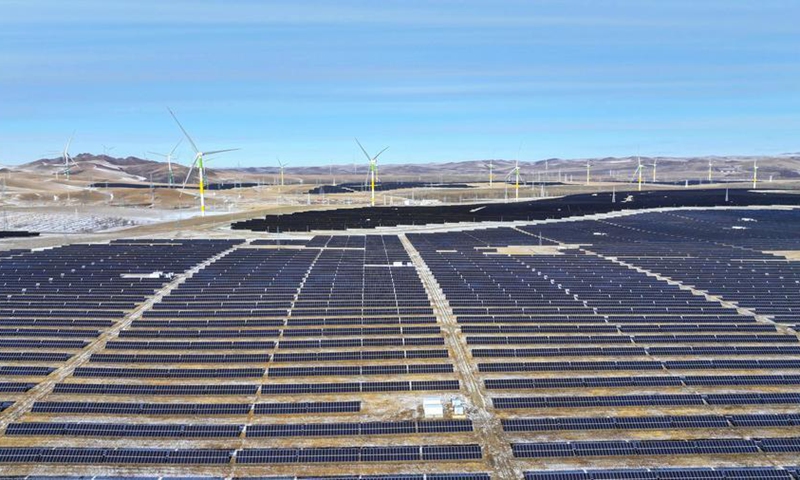
In north China's Inner Mongolia Autonomous Region, where exploitable wind and solar energy resources account for about 57 percent and 21 percent of the national totals, the use of renewable energy has changed local industries, providing a microcosm of this green transformation.
TRANSFORMATION OF TRADITIONAL INDUSTRIES
For decades, Holingol in eastern Inner Mongolia has developed into a major aluminum industrial base in northern China, using abundant local coal and thermal power for aluminum smelting. However, electrolytic aluminum production consumes roughly 13,500 kWh per tonne, resulting in substantial carbon emissions. Today, Holingol's rich wind resources, capable of generating power for up to 4,400 hours a year, are transformed into a stable industrial power supply through intelligent energy management systems.
The city generated some 6.5 billion kWh of green electricity in 2025, saving about 1.95 million tonnes of standard coal and reducing carbon emissions by 5 million tonnes. The cost of green power is only 0.15 to 0.18 yuan (about 0.02 U.S. dollars) per kWh.
The low-cost and stable power supply has attracted numerous enterprises, including an aluminum company from south China's Guangdong Province.
In the company's production workshops in Holingol, molten aluminum undergoes multiple processes before becoming aluminum foil rolls just 0.012 millimeters thick, a popular product for users from both home and abroad.
The company's administrative director, Wang Jue, attributed its relocation to Holingol's comprehensive advantages in energy, electricity pricing, raw materials, and industrial support.
The aluminum industry cluster in the city has formed a complete industrial chain from electrolytic aluminum to high-value-added products such as battery foil and automotive lightweight materials. In fact, energy-intensive industries powered by green electricity here no longer imply high carbon emissions, but represent green manufacturing. Beyond Inner Mongolia, renewable-powered aluminum smelting is being promoted in regions rich in solar and wind power. China's 15th Five-Year Plan outline, released last month, also proposes an orderly transfer of qualified high-energy-consuming industries to areas rich in renewable energy resources.
SYNERGY WITH AI COMPUTING
Beyond transforming traditional industries, renewable energy is being harnessed to generate high-value computing power through data centers.
While some countries are challenged by the massive power consumption of artificial intelligence (AI), China is witnessing a synergy between green electricity and AI computing power, and the Horinger data center cluster in Hohhot, the capital city of Inner Mongolia, is one such demonstration project.
The cluster's electricity is mainly supplied by wind farms dozens of kilometers away, at a delivered price of roughly 0.36 yuan per kWh. The cluster comprises more than 50 data centers, the largest of which is the China Mobile Hohhot Data Center. About 88 percent of the power used by the center is green.
According to the center's deputy general manager Li Chenggui, the center boasts a computing power of 20,100 petaflops, including 16,700 petaflops of intelligent computing power.
"We provide server leasing, model training, and data storage services for more than 100 clients, supporting massive computing power demands in the Beijing-Tianjin-Hebei and Yangtze River Delta regions," Li said. Xuanwu Intelligent Computing, headquartered in Beijing, has deployed a 30,000-GPU cloud rendering center in the Horinger cluster. AI training, big data analysis, and real-time rendering of online games performed by users in Beijing are all completed at Horinger.
"It takes over two hours by high-speed train to travel the nearly 500 kilometers from Hohhot to Beijing, but computing power crosses this distance in less than two milliseconds," said Xiao Liangpeng, general manager of the company.
Behind the Horinger cluster is the common practice of "electricity-computing synergy." China's data centers are built mostly in regions rich in green electricity, such as Inner Mongolia, Guizhou, Gansu and Ningxia. When cheap green electricity drives computing power, the value created can increase dozens to over 100 times, providing a new model for the deep integration of the digital economy and energy transition.
CONVERTING TO GREEN FUELS
Green energy is also upgrading the traditional fossil fuel system. Through sci-tech innovation, fluctuating green electricity is being converted into green fuels at scale, which can fit existing fuel storage and transportation systems.
In the city of Chifeng in Inner Mongolia, rows of wind turbines and solar panels generate electricity to power a nearby zero-carbon hydrogen industrial park. This is China's largest-scale green hydrogen and ammonia project to date.
Built and operated by Envision Energy, phase one of the project was officially commissioned in July 2025 and can produce 320,000 tonnes of green synthetic ammonia annually. It operates off the grid, with all energy supplied by green electricity. According to Envision Energy's chief hydrogen engineer Zhang Jian, the renewable energy generation and chemical production in the project achieve intelligent responses within seconds through AI-powered systems, transforming unstable wind and solar resources into stable industrial electricity. Then the green power electrolyzes water to produce green hydrogen, which is used to synthesize green ammonia.
The project won the Energy Transition Changemakers award at the 28th session of the Conference of the Parties (COP28) and obtained two certifications from the International Sustainability and Carbon Certification system.
In February, the project sent the world's first shipment of green synthetic ammonia to the Republic of Korea.
The city of Ordos in Inner Mongolia is advancing another green fuel technology route. In a methanol demonstration project led by a local subsidiary of China Coal and the Dalian Institute of Chemical Physics (DICP) under the Chinese Academy of Sciences (CAS), wind and solar power are used to electrolyze water to produce green hydrogen, which then reacts with captured CO2 to synthesize green methanol.
According to Li Can from the DICP, also a CAS academician, the advantage of this technology route is that green methanol can use existing oil and gas storage and transportation facilities, at costs far lower than building new hydrogen pipeline networks.
The project is scheduled for commissioning this November. It will produce about 100,000 tonnes of green methanol annually and consume about 150,000 tonnes of CO2, providing a new carbon-reduction pathway for local coal chemical industries.
The country's 15th Five-Year Plan outline proposes extending the green hydrogen industry chain to green ammonia and methanol, which are widely used as low-carbon fuels and in the chemical industry. Such projects are being constructed and commissioned in Inner Mongolia, Xinjiang, Jilin and Heilongjiang.
Imagine seeing a doctor before you even step into a hospital.
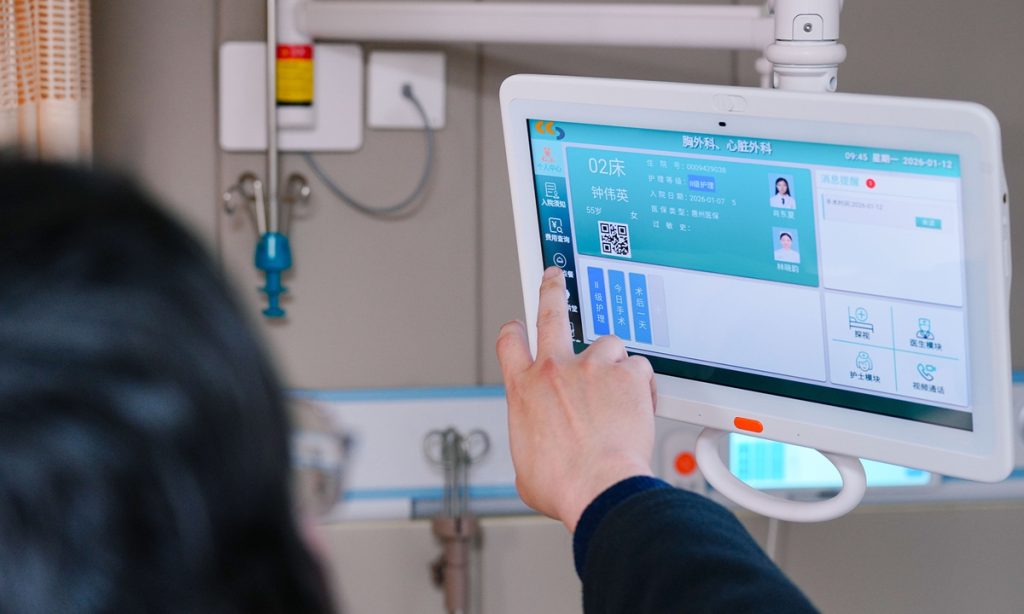
A patient uploads medical records and symptoms on a phone, and AI provides initial triage and risk alerts. By the time the patient arrives, the doctor already has a structured case summary. After treatment, the system continues with follow-up reminders and medication alerts, turning fragmented care into a more connected process.
For many, such a scenario may still sound futuristic. In China, however, it is moving more quickly from vision to reality.
The country recently took a step in that direction with the launch of its first AI hospital in Boao, South China's Hainan Province, on March 26, the Xinhua News Agency reported. On the same day, a consensus on AI hospitals was released during the 2026 Zhongguancun Forum (ZGC Forum) in Beijing, offering the first internationally recognized definition of an "AI hospital," according to news outlet china.com.cn.
According to the consensus, an AI hospital is a new type of smart healthcare model in which AI is embedded into the system itself, linking offline medical expertise with the broader reach of online services to deliver more proactive and continuous care.
Meanwhile, concepts such as AI hospitals, AI doctor assistants, intelligent follow-up systems and AI-assisted diagnosis have been gaining ground in hospitals and healthcare settings across China.
This latest wave of change is not unfolding in isolation. In November 2025, China's National Health Commission and other relevant authorities issued a guideline on promoting and regulating the application of AI in healthcare, calling for AI to support continuous services across prevention, diagnosis, rehabilitation and health management.
In other words, China's push to bring AI into healthcare is no longer limited to scattered experiments by individual hospitals or companies. Under policy guidance, it is moving toward a more systematic and better regulated phase.
As AI enters hospitals, works alongside doctors and reaches patients more directly, what exactly will it change? As the technology advances rapidly, how should standards, regulation, accountability and ethical boundaries keep pace?
Super AI hospital
"Instead of patients searching everywhere for medicine, the right medicine can now 'find' the right patients," Zhang Bangqun, general manager of the Super AI Hospital in Boao, said in describing the significance of the new hospital.
The hospital, formally named Hainan Boao Super Digital Intelligence Hospital Management Co, is located in Boao Lecheng International Medical Tourism Pilot Zone. According to news outlet China City Network, the project was jointly funded by several domestic companies, with core technical support provided by related firms.
In Zhang's view, the most immediate change brought by the hospital is not simply the insertion of AI into a hospital setting, but an attempt to reorganize the way patients gain access to medical resources.
"In the past, patients who wanted access to the world's latest specially licensed drugs and medical devices might have had to visit multiple hospitals and wait for months. Now, AI helps find them, match them and track them," he told the Global Times.
According to materials provided by the hospital to the Global Times, the Super AI Hospital has built an AI hospital intelligence network system and a MaaS (Mobility-as-a-Service) results promotion platform, in an effort to connect the entire chain from technology research and development to clinical application.
Relying on core modules embedded in the platform, including "thousand-disease agents," "thousand-hospital agents" and an AI assistant for specially licensed drugs and medical devices, the system can track the latest global drug and device information around the clock, identify patients with relevant indications through intelligent assessment, and match them with more suitable treatment plans.
At the same time, a related app connects providers and users of medical AI scenarios, seeking to move more high-quality technologies from the laboratory into real-world medical settings and reduce the extra burden patients face due to information gaps and cross-regional treatment-seeking.
AI hospitals are also taking root in fertile ground. In service terms, the hospital has adopted a three-step model: local consultation, treatment in Lecheng and home follow-up. The idea is to reduce unnecessary travel while improving the flow of medical resources, according to Zhang.
Approved by the State Council in 2013, the Lecheng pilot zone is the country's only special medical zone on the southern tropical island of Hainan, according to Xinhua. Today, more than 30 medical institutions have established operations in the pilot zone, including top-tier hospitals from Shanghai and East China's Shandong Province, as well as other renowned healthcare providers from China and abroad, the Global Times learned from the pilot zone.
Drawing upon its special policy advantages, the pilot zone has become a key gateway for the entry of global medicines and medical devices not yet approved elsewhere in China, according to the pilot zone. Xinhua reported in January that more than 200,000 patients had benefited from Lecheng, which had introduced more than 500 innovative medicines and medical devices approved overseas but not yet available domestically. Defining new trend
In recent years, various forms of "AI hospitals" have been emerging one after another. But what kind of AI hospital can truly be recognized across the field as an ideal model?
The International Consensus on AI Hospitals was released at the 2026 World Digital Health Forum during the ZGC Forum in Beijing, offering what organizers described as the first internationally recognized definition of an "AI hospital," the Global Times learned from the organizer of the forum.
The event was co-hosted by the Chinese Academy of Engineering and Tsinghua University, and attended by more than 700 representatives, including 10 academicians, 40 hospital presidents and experts from countries such as the US, the UK, Italy and Indonesia, china.com.cn reported.
According to the consensus, the core of an AI hospital lies in the deep integration of artificial intelligence into every stage of medical service, combining the professional strengths of physical hospitals with the broad reach of online platforms, so that patients can receive far more continuous care than under traditional models.
Yu Rongshan, deputy director of the National Institute for Data Science in Health and Medicine, School of Medicine of Xiamen university and one of the contributors to the consensus, told the Global Times that, compared with AI-enhanced physical hospitals, many hospitals have already applied AI in areas such as image recognition, auxiliary diagnosis and surgical planning, significantly improving accuracy and efficiency. However, their service structure still centers on the physical hospital campus, with AI functioning mainly as a tool embedded into existing processes.
The consensus notes that traditional healthcare starts when patients actively seek medical help - that is, when they feel unwell and decide to go to the hospital. AI hospitals, by contrast, are meant to fundamentally change this logic. Relying on smart wearables and home health terminals, such systems can carry out around-the-clock health monitoring, detect abnormal signals before symptoms fully appear.
In other words, patients would no longer go to the hospital only after falling ill, but could instead gain access to continuous, proactive and intelligent health services at any time.
At the same time, the relationship between online and offline services in an AI hospital is not just one of simple information exchange, but part of an interdependent and evolving ecosystem, according to the consensus.
For patients, the most direct change would be that whether they seek treatment at a hospital, through a mobile phone, or at a community health center, they can access the same complete health record and receive the same connected service.
They would no longer need to carry a stack of paper reports from one institution to another or provide all of their medical history each time they visit a new provider. More equitable, inclusive healthcare system
From AI-assisted diagnosis to smart health platforms, China is stepping up efforts to integrate AI into its evolving digital healthcare ecosystem, with the aim of improving efficiency and expanding access to quality medical services.
According to Xinhua, the outline of the country's 15th Five-Year Plan (2026-30), adopted on March 12 at the national legislative session, stresses the need to secure a leading strategic position in AI industrial applications from 2026 to 2030.
This year's government work report also pledged to "advance and expand the AI Plus Initiative" and "encourage large-scale commercial application of AI in key sectors and fields," while identifying biomedicine as one of the country's emerging pillar industries.
AI has already made solid progress in China's healthcare sector. As of May 1, 2025, the country had released around 300 medical large models, while county-level remote medical imaging services had handled more than 68 million cases, making AI an increasingly important tool for primary-level healthcare, Xinhua reported.
Yet the rapid expansion of medical AI has also brought new questions into focus.
The AI consensus also notes that AI hospitals represent an ideal healthcare model for the AI era, rather than something that has already been fully achieved in reality. In a report published by the Guangming Daily, some experts warned that excessively detailed AI-generated medical reports may burden patients with too much information and in some cases heighten anxiety.
Though upfront investment required for AI hospitals is undoubtedly substantial, Wang Xiaobin, an expert in healthcare industry, believes that once these hospitals are fully up and running, they could help reduce patients' waiting time as well as travel time and costs, not to mention hospitals' labor, management and other operating costs to a certain extent, the China Youth Daily reported.
"The fundamental goal of AI hospitals is to harness digital technology to build a fairer and more inclusive healthcare system for all, so that quality medical resources can benefit everyone," Wang said.
The consensus also states that the fundamental goal of AI hospitals is to harness digital technology to build a more equitable and inclusive healthcare system, so that quality medical resources can truly benefit everyone.
"The invention of vaccines meant infectious diseases were no longer the fate of the poor. The spread of antibiotics enabled ordinary families to survive deadly infections. And the establishment of public health systems turned clean drinking water and basic medical care from privileges enjoyed by a few into everyday necessities for the many, Yu said, "throughout history, every major technological revolution has profoundly expanded access to health rights."