Uruguay announces visa waiver for Chinese citizens; move reflects steady momentum in China-Uruguay ties, positive prospects for China-LatAm cooperation: experts

Uruguayan Foreign Minister Mario Lubetkin announced Thursday that Uruguay will waive visa requirements for Chinese citizens holding ordinary passports, the Xinhua News Agency reported on Friday.

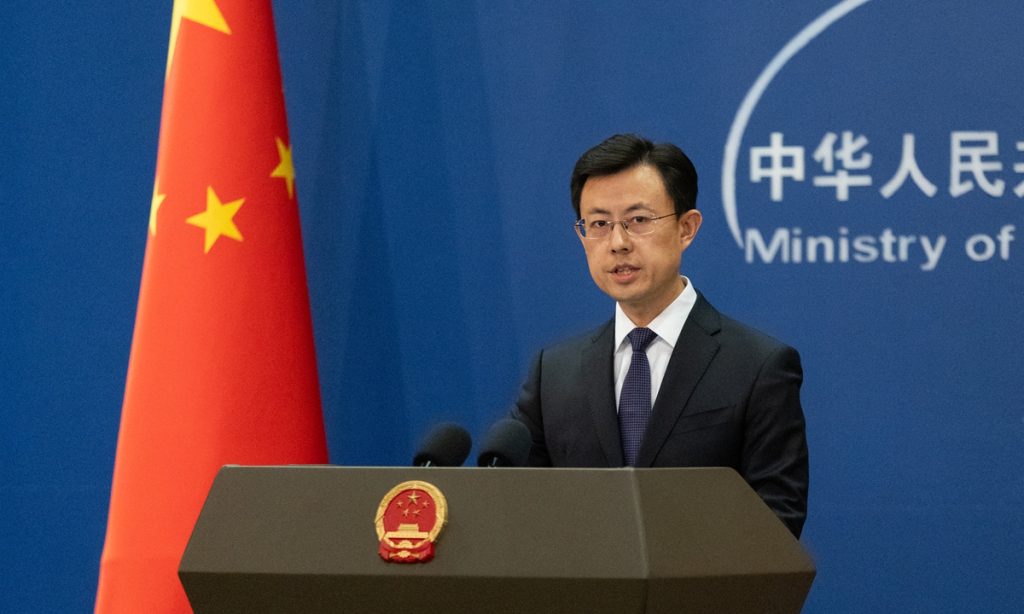
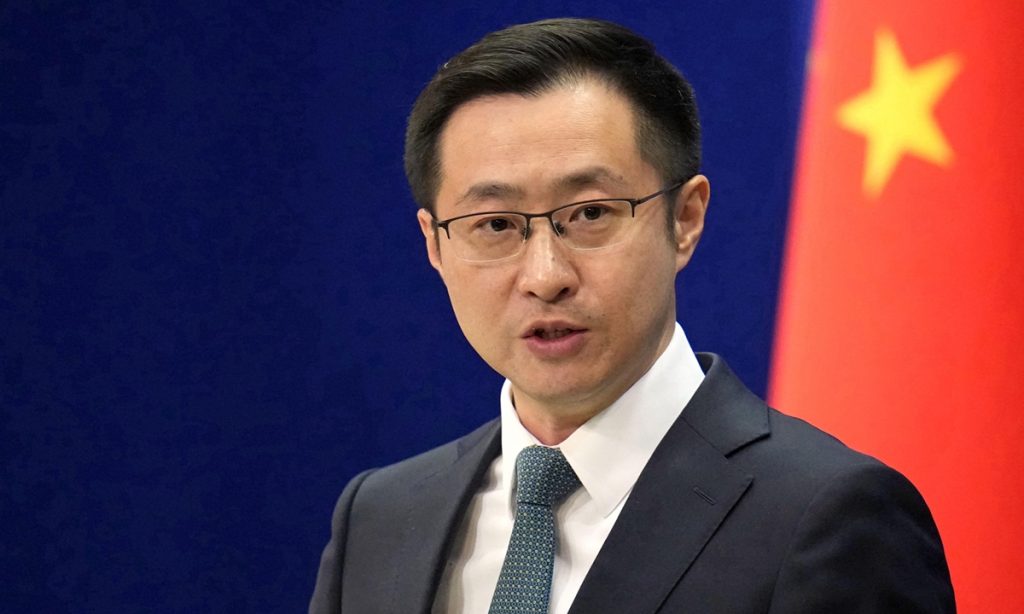
Greater ease of travel between China and Uruguay will contribute to better mutual understanding and more exchanges and cooperation between the two peoples, Chinese Foreign Ministry spokesperson Mao Ning said on Friday following the announcement.

Chinese experts said that the move reflects continuing steady momentum of ties between the two countries, a positive response of China's earlier visa-free policy to the countries in the broader geographical context of the Latin-American region, and a growing recognition of China passport in the region.

Positive response

At the instruction of President Yamandu Orsi, Uruguayan Foreign Minister Mario Lubetkin announced on Thursday during the farewell event for Chinese Ambassador Huang Yazhong the start of a process to allow Chinese citizens to enter Uruguay without a visa, according to a post by Cancillería Uruguay, the country's foreign ministry, on X platform.

The measure will especially benefit growing tourism from that part of the world, and comes in reciprocity to the step taken by Chinese authorities at the beginning of 2025, which will help significantly boost this sector that is highly important to the country's economic development, according to the post.

The move came after Chinese Foreign Ministry announced last year starting June 1, 2025, China's visa-free policy will benefit nationals of Brazil, Argentina, Chile, Peru and Uruguay, with the trial period lasting until May 31, 2026.

The news about Uruguay's visa-free policy for Chinese citizens quickly drew attention from local media, with outlets including Uruguayan television Subrayado, La Diaria and Montevideo Portal reporting on the Uruguayan Foreign Ministry's announcement.

According to Montevideo Portal, the measure aims to especially promote the growth of Chinese tourism and strengthen bilateral ties between the two countries.

At the bilateral level, the reciprocal visa-free arrangements are an important part of the China-Uruguay comprehensive strategic partnership. They reflect the continuing momentum of China-Uruguay ties and will help facilitate investment and trade between the two countries. More broadly, they represent a positive response to China's visa-free policy for five Latin American countries, Wang Youming, Director of the Institute of Developing Countries at the China Institute of International Studies in Beijing, told the Global Times on Friday.

According to Xinhua, the Brazilian government also announced that Brazil will implement a visa-free entry policy for Chinese citizens holding valid ordinary passports, starting May 11, 2026.

Recent high-level interactions have also underscored the steady momentum in China-Uruguay relations. On May 28, Chinese Foreign Minister Wang Yi met with Mario Lubetkin in New York. Earlier this year, in February, President Yamandú Orsi paid a state visit to China. During his visit, China called for strengthening the alignment of development strategies, and deepening cooperation in areas such as economy and trade, finance, agriculture and animal husbandry, infrastructure construction, and information and communications technology, according to an earlier report by Xinhua in February.

According to a release from the Chinese Foreign Ministry, since the establishment of diplomatic relations, the biggest features of China-Uruguay relations have been maturity, stability and predictability.

China is not only Uruguay's largest trading partner, but also a major trading partner of Latin America and the largest trading partner of many South American countries.

Wang Youming said that China's vast consumer market, especially its demand for agricultural and livestock products, matches the export needs of many Latin American countries, including Uruguay, where beef exports play an important role in driving the economy.

The visa-free move is an important step in implementing the consensus and cooperation measures reached by the two sides, especially after the Uruguayan president's visit to China earlier this year. More than boosting tourism, the policy will also benefit business exchanges, trade and investment facilitation between the two countries, Wang said.

Jiang Shixue, a professor at the Center for Latin American Studies at Shanghai University, told the Global Times on Friday that China-Uruguay trade shows a complementary pattern, as the two countries' trade structure reflects their respective comparative advantages. Uruguay mainly exports primary products and raw materials while China mainly exports manufactured goods such as mobile phones and air conditioners.

According to statistics from China's General Administration of Customs, bilateral trade between China and Uruguay reached $7.19 billion in 2025, with China's exports standing at $3.68 billion and imports at $3.51 billion.

China passport sees growing recognition

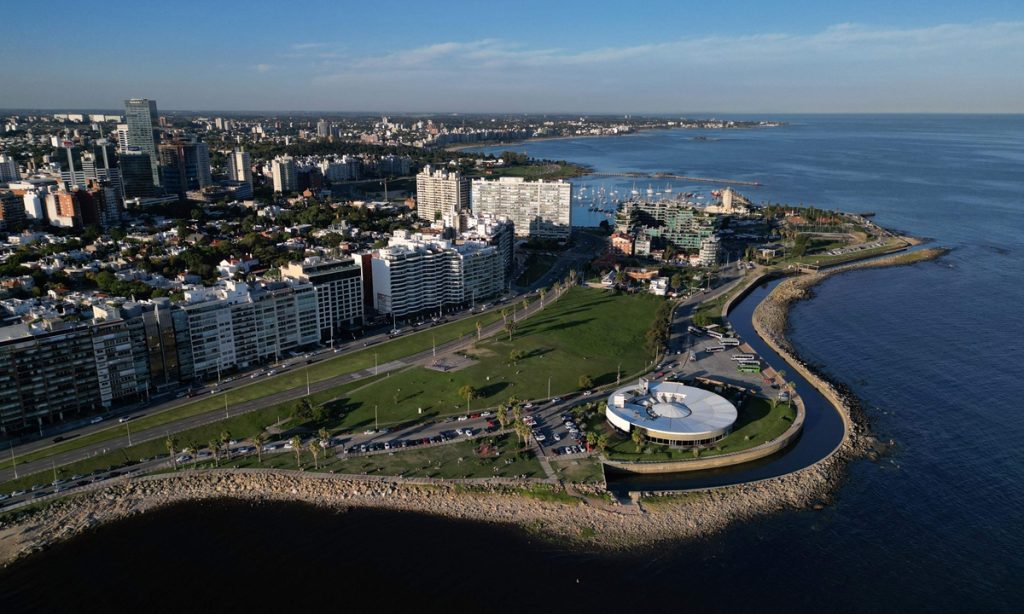
Located in southeastern South America, Uruguay sits on the eastern banks of the Uruguay River and the Río de la Plata, bordering Brazil to the north, Argentina to the west and the Atlantic Ocean to the southeast. Its vast grasslands, long coastline, unhurried pace of life and rich cultural heritage together shape the distinctive charm of this South American country, according to media reports, citing Xinhua.

Data from Chinese online travel platform Qunar showed that as of Friday morning, searches for flights from China to Uruguay had risen significantly, with searches for Montevideo, Uruguay's capital and the most popular local destination for Chinese travelers this year, surging dozens of times compared with the previous week. Qunar's research institute said that as Brazil has already implemented a visa-free policy for Chinese citizens, travelers can now combine Uruguay and Brazil in one trip and visit multiple South American countries with lower costs.

The visa-free move also reflects the growing recognition of Chinese passports among Latin American countries, as well as China's rising international standing and the continued improvement of China-Latin America relations, Jiang said.

Data from another online travel platform Tongcheng Travel also pointed to rising interest in Uruguay after the announcement. The platform said the expansion of visa-free destinations is helping stimulate demand for long-haul outbound travel, while the upcoming 2026 FIFA World Cup in North America could further boost "match-watching plus South America tour" itineraries, making visa-free South American destinations more attractive to Chinese travelers.

Official data from platforms including the China Consular Affairs website show that at present, 62 countries and regions allow visa-free entry for Chinese citizens, 37 offer visas on arrival, and 49 allow entry with e-visas. After removing overlaps, the total reaches 123 countries and regions, accounting for about 64 percent of the 193 UN member states.

As of April 2026, research by Henley & Partners showed that China's ordinary passport had a Henley Passport Index score of 82 and ranked 55th among 101 places globally, its highest level in recent years.

The visa-free move can also be viewed in a broader regional context, Wang said, noting that Uruguay is an important member of Mercosur and has long supported closer trade arrangements with China, including efforts to advance China-Uruguay free trade cooperation and broader China-Mercosur economic engagement.

12.9 million Chinese sit 2026 college entrance exam as gaokao shows a social ethos that values knowledge, fairness

It is the time of the year once again when one examination commands the concern of the nation. As China's national college entrance exam, or gaokao, began on Sunday, scenes at test sites captured the moment: parents offering hugs and encouragement as students stepped into exam halls for one of the most pivotal tests of their lives. Some mothers wore qipao, a traditional dress symbolizing qikaidesheng, or success at the outset.

A total of 12.9 million students have registered for this year's gaokao, with 7,981 testing centers and about 348,000 examination rooms set up across the country. Chinese language and mathematics are the subjects tested on the first day of the exam, media reported.

Authorities have mobilized a wide range of resources, from traffic control and noise-reduction measures to AI-powered anti-cheating systems and emergency medical services to ensure a smooth and fair examination process. This year's essay topics, which repeatedly touched on technology and societal change, illustrate how the gaokao reflects China's evolving social values and supports the country's strategic priorities.

Since the gaokao's restoration in 1977, the college entrance examination is not only a selection process, but also an important engine of national development and social mobility. The gaokao has continuously provided China's higher education institutions with high-quality students, cultivated a large number of professionals for national strategy, economic development and technological innovation, and fostered a social ethos that values knowledge and upholds fairness, analysts said. 

Ensuring a convenient and fair environment

At Beijing No. 8 Middle School, students and parents began gathering outside the testing center hours before the first exam. Parents were seen holding signs to encourage their children, one of which read, "May success bear your name, and may our paths cross at the summit."

Police officers and community volunteers offered assistance and distributed messages of encouragement, while a temporary service station helped students resolve last-minute identification issues.

Across China, local governments have mobilized resources to support the students taking this year's gaokao. In Yuncheng, North China's Shanxi Province, testing centers are equipped with cooling facilities, backup audio systems and round-the-clock medical support. Outside exam venues, authorities have stepped up traffic management, noise control and food-safety inspections in an effort to ensure that students can focus on one of the most important exams of their lives.

During the gaokao, market supervision authorities across Guangzhou launched targeted inspections to safeguard students, covering food safety, stationery quality, special equipment and even anti-cheating measures. In several districts, officials checked canteens, nearby restaurants, catering services and student accommodations to ensure safe meals, according to a notice published by the authorities.     

In a notice issued on June 6, the Ministry of Education (MOE) reminded candidates to observe exam discipline and refrain from bringing mobile phones, smartwatches, smart glasses or other wireless communication devices into testing centers, requiring any such items to be stored at designated locations before entering examination rooms.

To curb cheating during the gaokao, testing centers across China have deployed technologies including AI-powered monitoring systems and smart security screening gates. 

In Beijing, candidates are barred from bringing smart glasses into testing venues, while in Guangzhou, Guangdong Province, security gates have been upgraded to better detect concealed wearable devices. AI monitoring systems used in many examination rooms can automatically flag unusual behavior by test takers and generate video clips for further review, according to China Central Television. 

Keeping pace with the times

China's 2026 gaokao essay questions featured five sets of papers, each with its own writing task. Education officials told the Xinhua News Agency that the essay questions were designed to reflect contemporary themes, promote critical thinking and values education, and encourage students to apply what they have learned to real-world issues.

Compared with last year, technology featured more prominently in this year's essay questions. In Beijing, one prompt asked students to draft a promotional message for a volunteer event themed "Artificial Intelligence and a Happy Retirement," to encourage the participation of seniors ahead of the Chongyang Festival.

In Shanghai, the essay topic also focused on technology, asking candidates to reflect on how it reshapes the world and transforms the way we imagine it.

One of the essay prompts in National Paper I asked students to reflect on a word whose meaning had evolved for them as they grew up, and to discuss how that change reflects their personal development and understanding of a rapidly changing world.

The recent changes to gaokao essay topics and university programs reflect broader efforts to align education with evolving social and economic needs, Zhang Yiwu, a professor in the Department of Chinese Language and Literature at Peking University and director of its cultural and arts committee, told the Global Times. 
Zhang said the prominence of argumentative writing underscores a growing focus on critical thinking, analytical skills and clear expression, while universities are increasingly channeling resources toward emerging fields such as artificial intelligence and other strategically important disciplines. The shift, Zhang said, reflects a move beyond merely adjusting existing programs toward cultivating new areas of growth.

In January, the Ministry of Education issued a notice on the gaokao, outlining plans to improve the quality and broaden the reach of higher education, with an emphasis on expanding enrollment in top-tier undergraduate programs. 

Universities are restructuring their academic offerings to prioritize foundational disciplines, emerging fields, interdisciplinary studies, and areas of high demand, in line with national priorities for scientific innovation and industrial development. At the same time, existing programs are being updated and refined, supporting China's pursuit of advanced scientific and technological self-reliance, reads the notice.

Moreover, this year, multiple Chinese universities have rolled out new undergraduate programs such as embodied intelligence, low-altitude economy and management, as well as marine intelligence and unmanned technologies, aiming to meet the country's emerging strategic and industrial needs, according to an updated catalog recently issued by the MOE.

The college entrance examination has long remained a focal point of concern for Chinese society, not only because it shapes the personal development of candidates and their families, but also because it reflects the nation's enduring emphasis on education and knowledge. The exam carries the public's expectations for fairness and social mobility, Zhang noted, adding that trends in the gaokao provide a window for observing broader societal changes and evolving values.

Ministry of State Security article warns researchers about unintentional leaks of sensitive scientific data

As technological competition grows increasingly intense, technological security has become an important area of national security. Once sensitive scientific research data is leaked, it may not only affect the future prospects of researchers themselves, but also potentially endanger national security, read an article by the Chinese Ministry of State Security (MSS) on Wednesday.

A casually disclosed update on research progress, or the upload of unauthorized materials — such "unintentional mistakes" may well lead to the leakage of scientific research information, therefore requiring serious attention and prevention, the article warned.

The article cited one case as an example. In order to increase the chances of acceptance when submitting papers to international journals and academic conferences, a researcher, without undergoing the required confidentiality review by his or her institution, included detailed information in the appendix and supplementary materials, such as the core structure of equipment, key technical parameters, and distinctive experimental sample data. This resulted in the leakage of important technical details, and the individual concerned as well as relevant responsible personnel were held accountable, according to the article.

Another case showed that a staff member from a domestic university, while conducting a visiting study overseas, stored sensitive data including unpublished raw experimental data and interim research parameters, on an overseas cloud drive and in a personal overseas email account for research convenience, without completing the required confidentiality approval procedures for the cross-border transfer of research data. 

A foreign partner institution obtained core scientific research information through backend extraction and published related academic findings ahead of others, resulting in the loss of value of domestic research achievements. The individual concerned and relevant responsible personnel were held accountable, the MSS article wrote.

The MSS article also warned of photo-sharing leaks. In one case it provided, some university students and researchers casually took photos of experimental scenes, instruments and equipment, and new devices while conducting experiments in laboratories, operating precision equipment, or testing experimental platforms, and then post them on online social media platforms. 

These seemingly ordinary daily-life posts may be captured by foreign espionage and intelligence agencies or relevant research institutions, which may analyze them to identify sensitive information such as equipment performance, technical shortcomings, experimental conditions, and research progress, creating risks of leaks and disclosure.

Another case showed that some researchers, when attending overseas academic forums or online seminars, lack sufficient vigilance against targeted technical questions, data inquiries, and probing into research topics raised by foreign participants, and casually disclose key details such as technical principles and process flows. Such remarks, made in passing, may become high-value intelligence for foreign espionage and intelligence agencies or relevant research institutions.

Strictly observing confidentiality requirements in scientific research and building a strong line of defense are essential, the MSS article underscored.

Anyone who crosses the line, violates China's core interests on Taiwan question will inevitably pay the price: FM on latest entry-ban measures on NZ lawmakers involved

A small number of New Zealand lawmakers recently ignored China's serious concerns and firm opposition and insisted on visiting China's Taiwan region. Their actions violated the one-China principle and interfered in China's internal affairs. In accordance with the relevant laws of the People's Republic of China, China has decided to impose entry-ban measures on the individuals concerned, Chinese Foreign Ministry spokesperson Mao Ning said on Thursday in response to a question about China's one-year entry ban on four New Zealand lawmakers who previously visited Taiwan. 

"I would like to emphasize that the one-China principle is a widely recognized norm of the international community and a basic principle governing international relations. It is also the political foundation of China-New Zealand relations," the spokesperson said. "We urge the individuals concerned to genuinely respect China's sovereignty and territorial integrity, and strictly abide by the one-China principle. Anyone who crosses the line and violates China's core interests on the Taiwan question will inevitably pay the price," Mao noted. 

In response to another media inquiry that some German lawmakers visited Taiwan region in May and whether China would ban lawmakers from Germany and other countries who visit Taiwan region from entering China, Chinese Foreign Ministry spokesperson Mao Ning stated that Taiwan is a part of China, and that the one-China principle is a prevailing consensus of the international community, a basic norm governing international relations, and the political foundation of China-Germany relations. 

Mao said it is hoped the German side will abide by the one-China principle and refrain from interfering in China's internal affairs by using the Taiwan question, adding that "anyone who crosses the red line on the Taiwan question will definitely pay a price."

China needs to focus its efforts on managing its own affairs: Chinese scholar

China-US relations are expected to face even more challenging times, and China needs to focus on managing its own affairs, Yang Xiyu, a senior research fellow at the China Institute of International Studies, said at the Global Times Annual Conference 2025, themed "Moving forward in Partnership: Resonance of Values between China and the World," which is held in Beijing on Saturday. 

Yang spoke during the session on "Exploring the Ways of Interaction Among Major Powers: Differences and Consensus" of the conference. 

China-US relations encompass a wide range of areas, which can be categorized into three main domains on politics and security, economic/trade and technology, and ideology. Moving forward, the relationship is expected to face even more challenging times, with intense competition and potentially stormy and turbulent scenarios. China must be well-prepared for these developments, said Yang. 

Yang said that the increasingly tense China-US relations stem from two key factors. First, the shifts in the balance of power between the two countries, leading to rising US strategic anxiety toward China. Second, the international political security order centered on the United Nations is facing mounting challenges, while the US dollar-dominated international economic and financial system is becoming increasingly unsustainable and even dysfunctional. 

Currently, the core structural issue in the international system is the dysfunction of the old order and a new one is unable to establish, said Yang. 

In its relations with China, the US has pursued a strategy of competition aimed at outcompeting and beating China. In contrast, China needs to follow three guiding principles: mutual respect, peaceful coexistence, and win-win cooperation.

Given the significant differences between the two sides, what can be done? For China, there is only one path: to focus its efforts on managing its own affairs, said Yang. 

China, Indian Ocean countries hold special dialogue to bridge blue economy opportunities, highlighting regional integration

Delegates from China and Indian Ocean countries gathered in Kunming, Southwest China's Yunnan Province on Sunday for a government-business dialogue, aimed at connecting governments, financial institutions, and businesses to promote regional integration in the development of the blue economy.

The Sunday event hosted over 200 delegates from 20 countries and international organizations. 

Zhao Fengtao, vice chairman of the China International Development Cooperation Agency, made three points for the dialogue in his address speech: advocating for consensus building so that governments, financial institutes and companies can work in the same direction; advocating for shared development through the combination of aid, investment and trade; and advocating for openness and inclusiveness with efforts promoting communication and sharing experience of Chinese modernization. 

The Sunday dialogue featured three topics - ocean-based infrastructure, digital empowerment for the blue economy, and cultural exchange for marine tourism. 

Phillianne Ernesta, delegate from Seychelles' ministry of fisheries and blue economy, discussed Seychelles' focus on cold chain development and processing facilities to support its rich fisheries resources, which can assist the related industry and expand market share. 

In the same session, Chu Yili from China Communications Construction Company Ltd. shared insights on the company's automated port projects and equipment that have been applied overseas. Chu also highlighted opportunities for joint development in marine new energy and deep-sea resource exploration. 

Rodrigo Salvado, director general of Asian Investment and Infrastructure Bank, said during the dialogue that the point of the dialogue is to build bridges between different parties with unique strength.     

The Global Times learned from the dialogue that Chinese companies have established automated warehouses and distribution centers that reduce logistics costs and improve efficiency for local communities. Pakistan's first smart distribution center, built by a Chinese firm, has reduced the error rate from 1 percent down to 3 out of 10,000 parcels and below. 

Daniel Tindipu, Papua New Guinea's Vice Minister for National Planning, said in the marine tourism session that as an island nation, PNG has rich marine cultures, including traditional navigation skills and festivals; and marine tourism allows the country to share its story to global visitors. 

Marine tourism creates jobs, improves people's livelihoods and helps protect local ecology and environment, Tindipu said, while proposing regional travel packages to offer diverse experiences. Such packages can connect Indian Ocean countries together and maximize resources and opportunities for regional countries. 

Tindipu told the Global Times that through direct dialogue, "we understand each other's pace in development, vulnerabilities and strengths, build trust and forge partnerships" that will contribute to better economies and better societies of the Global South.  

Tindipu spoke highly of China's vision of a maritime community of shared future. The vision is about cooperation and solidarity to address common challenges, and seeks to build resilience, promote equitable growth, and enhance global partnerships, Tindipu said. 

Mozambique Ambassador to China Maria Gustava told the Global Times that Chinese brands and projects are already well known in her country, including Huawei which provides 5G services in addition to smart devices. China is also helping with rice farming and built one of the largest suspension bridges in Africa in the country. 

What makes China different is that "we are cooperating for mutual benefit. There is no conditions or obligation. There is no interference," Gustava added.

Chinese Foreign Ministry releases video of national achievements – "What Cannot Kill You Will Only Make You STRONGER"

The Chinese Foreign Ministry released a video on its official WeChat account on Saturday, titled "What Cannot Kill You Will Only Make You STRONGER." The video shows a series of achievements the People's Republic of China has made since 1949. 

The video has been posted by the Foreign Ministry spokesperson Hua Chunying on her X account on Wednesday. “With no fallback option, the only way ahead is to succeed," she posted with an emoji of Chinese national flag.

China, Nepal forge stronger development synergy, vowing to deepen BRI cooperation

China and Nepal have agreed to strengthen the synergy of their development strategies, and pursue deeper and even more concrete high-quality Belt and Road cooperation, according to a joint statement between the two countries issued during Nepali Prime Minister KP Sharma Oli's visit to China which concluded on Thursday.

The joint statement said that both sides agreed to ensure timely and swift implementation of the agreements signed, consensus reached, and decisions made as well as completion of the programs, projects and activities carried out jointly by the two countries. 

According to the National Development and Reform Commission, China and Nepal also signed a framework agreement for advancing Belt and Road Initiative cooperation. 

According to the framework agreement, the two sides will adhere to the principle of extensive consultation, joint contribution and shared benefits, strengthen practical cooperation in key areas such as economy, finance, transportation, logistics, trade, industrial investment and customs. 

Both sides also expressed their commitment to strengthening connectivity between the two countries in such areas as ports, roads, railways, aviation, power grids and telecommunication, and to help Nepal transform from a land-locked country to a land-linked country, the joint statement reads. 

Oli wrote on Wednesday on his X account that "Nepal China economic cooperation will further strengthen under the Belt and Road Framework Cooperation." 

The BRI framework cooperation agreement between China and Nepal has drawn scrutiny from Indian media outlets, casting the cooperation in a negative light. 

The NDTV published a report on Wednesday titled "Nepal joins China's Belt and Road Initiative, raises concerns for New Delhi."

The NDTV report questioned how the agreement between China and Nepal will be carried out, claiming it "paves the way for China to fund these projects and how exactly each project would be financed by Beijing." 

Times of India also attempted to sow discord, claiming that "debt concerns have sparked debate within Nepal's coalition government. While the agreement may unlock new opportunities, the Nepali Congress Party, a key ally in Oli's coalition, opposes reliance on loans for these initiatives."

It's an old trick for Indian media to badmouth BRI cooperation of Nepal, smearing that the cooperation has not been yielding any practical results, but only dragging Nepal into a debt trap, Lin Minwang, a deputy director of the Center for South Asian Studies at Fudan University, told the Global Times.

It shows India's hegemonic attitude, Lin said, adding that some Indian media don't see Nepal as an independent sovereign country.  

If India does not fundamentally change its mindset, it will be difficult for it to gain the respect of neighboring South Asian countries. New Delhi should not consider South Asia its "sphere of influence", Lin added. 

Lin said that South Asian countries need to develop, which should not be viewed through a geopolitical perspective. He also noted that India always hinders those South Asian countries' cooperative ties, but not able to offer alternatives. Other South Asian countries have developed sound relations with China as China advocates equal cooperation and mutual benefits, the expert said.

The joint statement also details various concrete cooperation projects that China will work on with Nepal.

The two sides agreed to jointly advance the fourth phase of the China-aided Araniko Highway maintenance project and the Hilsa-Simikot Road project, implement the second phase of the Kathmandu Ring Road Improvement Project, and welcome the signing of the Letters of Exchange for the Approval of the China-aid Project of Feasibility Study for the Tokha-Chhahare Tunnel. 

Olympic champions Ma Long and Yang Qian among mainland teachers, students set to arrive in Taiwan island on Wednesday for exchanges

Students and teachers from seven universities in Chinese mainland, invited by the Taiwan-based Ma Ying-jeou Culture and Education Foundation, will arrive in the island of Taiwan on Wednesday to begin a nine-day journey, mainland and Taiwan media reported. Olympic champions Ma Long and Yang Qian will also be part of the delegation, sparking excitement among the Taiwan public, according to media reports. 

The invited students from the mainland come from renowned universities such as Peking University, Tsinghua University, and Fudan University, according to Taiwan local media, citing the foundation. 

Hsiao Hsu-tsen, executive director of the foundation, said the journey covers nine days, adding that the itinerary will include visits to attractions such as Sun Moon Lake and the Palace Museum in Taipei, as well as exchanges with six universities in Taiwan island. Additionally, baseball experience activities will be arranged to provide mainland students a deeper understanding of Taiwan island's history and culture, promoting the development of cross-Straits relations, Taiwan local media reported. 

Taiwan media outlets noted that the journey includes a special arrangement with a Taiwan high school, aiming to provide high school students in Taiwan the opportunity to interact with students from top universities in Chinese mainland. 

Hsiao noted that the future of both sides of the Taiwan Straits lies with the youth, hoping to provide more opportunities for young people across the Straits to interact, laying a solid foundation for the next generation. He emphasized the need for peace instead of war, and for cross-Straits exchanges instead of "Taiwan independence," and added this represents the true voice of the island of Taiwan, Taiwan media reported. 

During the visit, Ma Long is also expected to showcase his table tennis skills during campus visits, according to Taiwan media reports. 

Some netizens from Taiwan island expressed excitement about Ma's arrival, eager to seize the opportunity to see him showcase his skills. Others warmly welcomed Ma and planned to compile a list of Taiwan delicacies for him to try, China News Service reported. 

Hsiao said his phone has been flooded with calls from the public, all wanting to know the details of Ma's itinerary. Hsu Shu-hua, the magistrate of Nantou County in Taiwan, also added that many fans have been calling the county government to ask whether Ma will be visiting and expressing their desire to take photos with him. The magistrate said she is also a fan of Ma and is ready to help arrange related activities, Jimu News reported. 

Responding to the visit by the mainland teachers and students to Taiwan island at the end of November, Zhu Fenglian, spokesperson for the Taiwan Affairs Office of the State Council said at a press conference earlier this month that she was pleased to see young people across the Straits have regular interactions and close ties.  

 "We welcome more young people from Taiwan to explore the mainland, and bring youthful energy to the promotion of the peaceful development of cross-Straits relations," Zhu added.

Remains of 43 Chinese martyrs in Korean War to be returned from ROK

The remains of 43 Chinese People's Volunteers (CPV) martyrs who lost their lives during the War to Resist U.S. Aggression and Aid Korea have been handed over to the Chinese side by the Republic of Korea (ROK) and will be returned to China on Thursday, according to China's Ministry of Veterans Affairs.

From 2014 to 2023, the two countries, in accordance with international laws and humanitarian principles, successfully handed over the remains of 938 CPV martyrs, along with related artifacts.