Palace Museum increases capacity, reveals anti-scalping measures amid soaring demand

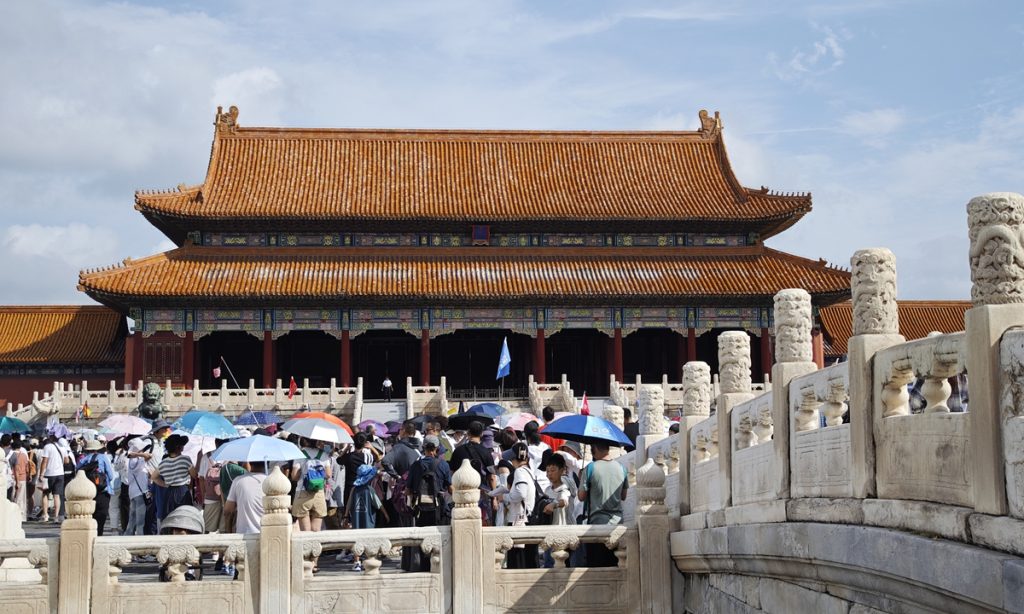
The Palace Museum in Beijing is fighting ticket scalping in order to provide an orderly visit experience for tourists, as it recently disclosed that during some peak hours of visit, 99 percent of ticket buyers turned out to be ticket scalpers. 

This UNESCO World Heritage site revealed to the public its anti-scalping measures and its back-end system to ensure fair chance of acquiring a ticket for the first time.

In response to the overwhelming demand, the Palace Museum plans to maintain reception capacity at 40,000 people on weekdays, the number of tickets will be increased by about 25 percent to improve accessibility for visitors during the summer.

This initiative, announced by the museum's Information Technology Department, aims to enhance accessibility during the busy summer months and will be extended to future peak periods, such as the National Day and May Day holidays. 

Additionally, the museum will continue to offer free admission to underprivileged groups, including minors, people with disabilities, active military personnel, and firefighters, ensuring these communities have access to the attraction.

With the summer vacation season in full swing, Chinese families nationwide are eager to explore the country's top cultural landmarks. 

However, many travelers are struggling to secure tickets to the Palace Museum. Recent reports indicate that scalpers have been reselling tickets for as much as 1,100 yuan ($154), with some walk-in reservations skyrocketing to 1,600 yuan. 

In stark contrast, tickets sold through the museum's official booking system are priced at just 60 yuan for the summer season.

To uphold fairness and protect consumer rights, the Palace Museum is implementing measures to isolate ticket inventory for travel agencies and individual visitors, thus preventing travel agencies from monopolizing tickets intended for the general public. 

A timed ticket release strategy will also be introduced to further combat automated ticket grabs, allowing tickets to be sold in batches at fixed intervals during high-demand periods.

To thwart scalpers, the museum's risk control engine operates at high speed every day. During the summer season, over 99 percent of ticket requests come in within a single peak hour. 

Market authorities have made it clear that using software to quickly purchase tickets for resale is a criminal offense, and emphasized their commitment to ongoing efforts to ensure fair access for all museum visitors.

Chinese fans thank Singaporean goalie, call for visits to his food stall

Chinese soccer fans have taken to social media to express their gratitude to Singapore's goalkeeper for preventing Thailand's landslide victory, and thus keeping China's World Cup hopes alive by the narrowest of margins.

China managed to advance to the third round of Asian qualifiers for the 2026 World Cup despite a 1-0 loss to South Korea. 

Thailand, who finished the group with the same number of points and goal difference as China, missed out the next stage with an inferior head-to-head record. 

Having to beat bottom side Singapore by three goals to edge past China into second place in Group C, Thailand could only win 3-1 at home as Singaporean goalkeeper Hassan Sunny's performances helped China squeeze into the third qualification round.   

Singaporean forward Ikhsan Fandi's equalizer in the second half put the Thais on the brink and 40-year-old Sunny pulled together 11 saves in the game, preventing Thailand from scoring more goals. During the stoppage time, he even received a yellow card in the 95th minute for time-wasting.

After the game, Sunny's personal social media account has been inundated with thank-you messages from Chinese fans. The goalie runs a stall selling Malaysian coconut milk rice in Singapore. Some Chinese fans posted the pictures and address of Sunny's stall, calling for Chinese tourists to visit the stall and give it a "five-star review." His stall was flooded with visitors on Wednesday. 

Some netizens reportedly posted the payment QR code of Sunny's stall online and made payments to show their support and gratitude.

In response to Chinese fans' gratitude, Sunny said "Thank you, China" during a short video filmed by his teammates after the game. One of his teammates said in the footage that "He saved China."

The social media accounts of the Singaporean Embassy to China and of the Singapore Tourism Board on China's X-like Weibo also received a great deal of thank-you messages from fans. 

"Thank you Singapore for your fair play. I would love to travel to Singapore," wrote one Weibo user. 

Eighteen teams will be divided into three groups for the third qualifying round in Asia, where the top two teams of each group will secure automatic spots for the 2026 World Cup. Two more teams will earn direct entry to the World Cup from a fourth qualification stage and another will go into intercontinental playoffs for a spot at the global soccer showpiece.

Exhibition titled 'The Travels of Marco Polo and Its Legacy between East and West' kicks off in Beijing

An Italian exhibition titled A journey of knowledge: The Travels of Marco Polo and Its Legacy between East and West, was unveiled at the China Millennium Monument in Beijing on Friday. Consisting of six sections, the exhibition features 130 artifacts from 15 Chinese and Italian museums. Experts told the Global Times that the exhibition reflects the positive results of cross-cultural exchanges between China and Italy.

Exhibits tell the legend of Venice with manuscripts, oil paintings, sculptures, jewelry, ceramics, coins, glass products, textiles, illustrations and a unique VR experience.

This year marks the 700th anniversary of Marco Polo's death, as well as the 20th anniversary of the China-Italy comprehensive strategic partnership.

This exhibition showcases a variety of cultural relics to present to the visitors the historical trade and cultural exchanges.

At the entrance of the exhibition, visitors are impressed by the very first world map, standing in front of the cultural relics long, looking for their own cities.

Planning Director of the China Millennium Monument, Jiang Haimei, one of the curators, told the Global Times that the exhibition recreates the adventures of the missionaries, merchants and warriors who traveled between Europe and Asia with Marco Polo on the Silk Road through their perspectives, showcasing an oriental picture of the interweaving of romantic legends and historical realities

"It reveals the fruitful results of cross-cultural exchanges between China and Italy, and the profound impact of this legendary journey on the contemporary world is still relevant," she said.

The 890 square meters exhibition space is decorated with red and blue, with unique designs of golden images from the book Le devisement do monde (The Development of the World), the exhibition provides signposting for visitors to navigate through the route that Marco Polo travels over his life.

Sono Guicciardo Sassoli de Bianchi, an art historian and project curator for the exhibition from the Italian institute of culture in Beijing, told the Global Times on Friday that Marco Polo introduced China to the West, promoting exchanges and mutual learning between Eastern and Western civilizations.

"He [Marco Polo] played an important role in promoting the progress of human civilization. Looking back at history will help create a better future," he stressed.

Many cultural relics are displayed in China for the first time and some porcelain exhibits show the infusion between Chinese and Western culture, organizers said.

The exhibition remains open in Beijing until November 24 before be exhibited in other museums across China.

China details 300 bln yuan allocation supporting nationwide renewal and trade-in campaign

China's National Development and Reform Commission (NDRC) and the Ministry of Finance on Thursday co-released a 16-point document on how to implement the plan for equipment renewal and trade-in of consumer goods, as officials said the policies will stimulate the consumer market in the second half of the year.

Some 300 billion yuan ($41.58 billion) in funds raised by ultralong treasury bonds will be used to support the campaign, Zhao Chenxin, deputy head of the NDRC, said at a press conference on Thursday, emphasizing that relevant departments are making efforts to complete the fund allocation by the end of August this year.

The document listed various financial support measures for equipment renewal, including granting subsidies for the scrapping of operating ships and vehicles, agricultural machinery based on their capacity and emission volume, and increasing the subsidy for new-energy bus and battery renewal.

In terms of consumer goods, the document listed a detailed plan to support home appliance trade-in by offering subsidies of 15 to 20 percent of the original price of the products. Subsidies for vehicle scrapping will be lifted to 15,000 to 20,000 yuan.

China's cabinet, the State Council, on Mar 13, 2024, released the action plan to promote the large-scale renewal of equipment and the trade-in of consumer goods, which is aimed at bringing more high-quality durable consumer goods into people's lives, smoothing the recycling chain of resources, and significantly improving the quality and level of economic circulation, according to the Xinhua News Agency.

For over four months, the action plan has made positive progress in attracting investment, stimulating consumption potential, improving the recycling system and promoting the green transition, said Zhao, adding that China's investment in equipment and tools increased by 17.3 percent year-on-year, contributing 54.8 percent to overall investment growth in the first half of 2024.

In addition, retail sales of household appliances and audio-visual equipment of enterprises with annual income of no less than 5 million yuan increased by 3.1 percent year-on-year, with the growth rate accelerating by 2.1 percentage points compared to the same period last year, Zhao revealed at the press conference.

China's NDRC supports high-quality enterprises to borrow long-term foreign debt, promote real economy

The National Development and Reform Commission (NDRC), China's top economic planner, on Tuesday issued a notice to support high-quality enterprises in borrowing medium- and long-term foreign debt to promote high-quality development of the real economy.

This move aims to further expand high-level opening-up, enhance cross-border investment and financing facilitation, and support high-quality enterprises in better integrating domestic and international markets and resources, the NDRC said in a notice on its website.

The goal is to fully leverage foreign debt funds to serve high-quality development. Efforts will be made to actively support high-quality enterprises that have significant industry status, have good credit, and play a leading role in promoting high-quality development of the real economy, the NDRC said.

The move underscores the Chinese government's momentum in encouraging quality enterprises to better coordinate their domestic and international funding resources to ultimately boost the real economy, experts said.

The notice relaxes standards for borrowing foreign debt, simplifies the review process, and strengthens supervision before, during, and after borrowing to reduce risks. Its implementation helps attract resources from both domestic and international markets, promotes international economic circulation, and thus enhances the vitality and potential of China's economic growth, Tan Xiaofen, an expert at the School of Finance at the Central University of Finance and Economics, told the Global Times on Tuesday.

These enterprises must comply with relevant regulations and macro-control policies, be among the top five in their industry, demonstrate strong financial performance, and maintain a good credit rating of investment grade (BBB or above) or a domestic credit rating of AAA. They should also have a clean record of debt repayment, no major violations, and receive a positive assessment from a registered accountant, according to the notice.

"It further defines high-quality enterprises in detail and encourages more eligible companies to borrow foreign debt," Tan said.

"The notice states that high-quality enterprises can submit a consolidated foreign debt quota application for both parent and subsidiary companies, allowing for phased use, which means combining quotas to facilitate better fund allocation. For example, a subsidiary can use the borrowing quota from the parent company which borrows foreign debt more easily," Tan said.

The main content of the notice includes defining standards for high-quality enterprises, simplifying review requirements and processes, continuously supporting and serving high-quality enterprises in their foreign debt financing and improving corresponding supervision during and after the process, according to the NDRC

The notice allows for "processing with missing documents" for applications for international commercial loans or overseas bond issuance. "This is a significant breakthrough, as previously full documentation was mandatory. The new regulation increases flexibility and speeds up the process," Tan said.

Since October 2023, the central government has implemented several financial facilitation policies. Corporate borrowing of foreign debt, especially medium- and long-term, is essential for China's use of foreign capital and expanding openness. Enhancing foreign debt management promotes balance of payments, economic and financial stability, and a new development paradigm, NDRC said as it introduced why it issued the notice at the press conference on Tuesday.

The measures, set to take effect on July 29, 2024 which will be valid until July 29, 2029, will oversee the borrowing of foreign debt by eligible companies through a review and registration system.

Medium to long-term foreign debt includes debt instruments issued by Chinese corporations as well as their overseas subsidiaries and branches. These loans could be denominated in local or foreign currency and have durations longer than a year. These include perpetual debt, medium-term notes and convertible bonds.

H1 GDP of Chinese localities shows steady development, bolstered by thriving high-tech sector, robust foreign trade

The Chinese economy in the first half of 2024 showed resilience and vitality, with upbeat GDP figures for many provinces and municipalities, fueled by favorable factors such as the thriving high-tech industry, robust foreign trade, an expanding services sector and growing investment.

Observers said the progress is likely to continue in the second half of the year, backed by firm policy support, continuous industrial upgrading and transformation, growing domestic demand and optimizing business environment.

The GDP of East China's Zhejiang Province grew by 5.6 percent to 4.09 trillion yuan ($562.59 billion), with an unexpectedly strong trade performance as one of the country's major trade hubs. The province's trade grew 7.8 percent year-on-year to 2.56 trillion yuan.

Beijing's GDP grew 5.4 percent to 2.18 trillion yuan, with continuous expansion by emerging industries playing a vital role.

The added value of the capital's strategic emerging industries rose by 12.9 percent year-on-year.

The GDP of Shanghai grew by 4.8 percent year-on-year to 2.23 trillion yuan, with the expanding services sector, growing leading industries and fast investment growth being the top three drivers. The added value of the city's tertiary industry increased by 5.8 percent.

The GDP of Southwest China's Sichuan Province expanded 5.4 percent to 2.95 trillion yuan amid the accelerated development of high-tech industries. The provincial added value of the high-tech manufacturing sector above the designated size increased by 6.9 percent.

The GDP in Southwest China's Chongqing Municipality rose 6.1 percent to 1.51 trillion yuan. The strong demand for digital, smart and green products from emerging sectors such as new-energy vehicles propelled the local economy.

These results showed that Chinese localities have promoted economic development through their industrial competitiveness and strengths, while actively guiding the advancement of new quality productive forces, Li Changan, a professor at the Academy of China Open Economy Studies at the University of International Business and Economics, told the Global Times on Sunday.

Stepped-up policy support for provinces and cities covering various sectors contributed to the steady economic growth, according to Wang Peng, an associate research fellow at the Beijing Academy of Social Sciences.

Wang told the Global Times on Sunday that the targeted policies safeguarded economic progress in the first half and will lay a solid foundation for the rest of the year.

The GDP announcements by local governments came along with the release of national first-half GDP data and the conclusion of the third plenary session of the 20th Central Committee of the Communist Party of China.

China's GDP expanded 5 percent to reach 61.68 trillion yuan in the first half of 2024. The stable growth has put China on a firm track to hitting its full-year economic growth target of about 5 percent as the fundamentals of the economy remain positive and are set to improve in the second half.

Global confidence in China's stable economic growth is unchanged. The IMF last week raised China's GDP growth forecast for 2024 to 5 percent in its latest World Economic Outlook, an upward revision of 0.4 percentage points compared with the April WEO report. HSBC said earlier that it expects China to achieve its annual GDP growth target of 5 percent.

There will be both opportunities and challenges in the second half, Li and Wang said.

They expect further enhanced policy support following the conclusion of the third plenary session last week, with more stimulus accompanying an active fiscal policy and a prudent monetary policy.

Wang also emphasized the nation's continuing industrial upgrading and transformation. Emerging industries will become indispensable engines for driving sound economic development, while the upgrading of traditional industries will help boost their competitiveness and market share.

Expanding domestic demand and optimizing the business climate will become standout drivers to propel economic development for the rest of the year.

China's summer grain output hit nearly 150 million tons, food security further guaranteed

With the sown area of summer grain remaining stable and the yield per unit area increasing, the summer grain harvest in 2024, which increased by 2.5 percent year-on-year, has laid a solid foundation for stable grain production throughout the year, further enabling China to realize its grain output goal and providing support for sustained economic development.

China's output of summer grain totaled 149.78 million tons in 2024, an increase of 3.627 million tons, or 2.5 percent, over 2023 levels, the National Bureau of Statistics (NBS) announced on Friday.

Among them, wheat output stood at 138.22 million tons, an increase of 2.7 percent, or 3.658 million tons, over 2023. Summer grain is the first season of annual grain production in China, a bulk of which is winter wheat.

China has been an active participant in the international agricultural market. In the first half of 2024, China imported $109.54 billion worth of agricultural products, according to statistics released by the General Administration of Customs on Friday.

The sown area for summer grain remained stable at 26.613 million hectares, an increase of 45,000 hectares over 2023. The output of summer grain per unit area was 5,628 kilograms per hectare, an increase of 135.4 kilograms per hectare or 2.5 percent over 2023. Among which, wheat yield per unit area was 5985.8 kilograms per hectare, an increase of 2.6 percent, according to NBS data.

The latest harvest statistics mean that China has completed 23 percent of its annual grain output target - which is set at 1.3 trillion jin (650 million tons).

According to the Ministry of Agriculture and Rural Affairs, the summer grain output accounts for one-fifth, or 20 percent, of annual grain output.

China has always placed food security high on its economic agenda.

China's summer grain harvest in 2024 laid a solid foundation for stable grain production throughout the year, and provided solid support for consolidating and enhancing the good trend of economic recovery and continuously promoting high-quality development, Wang Guirong, an official from the NBS, said on Friday, as posted on NBS website.

In recent years, China has stepped up efforts to protect and develop arable land and stabilized the sown area. These efforts have yielded sustained results and laid a solid foundation for food security, Li Guoxiang, a research fellow at the Rural Development Institute of the Chinese Academy of Social Sciences, told the Global Times.

Analysts also believe that the increase in harvest and the yield per unit area is largely attributed to the application of new technologies in the farming sector, as China emphasizes the role of scientific and technological development in ensuring food security and promoting rural revitalization.
Aided by increased contributions from agricultural machinery and technology, China has secured a grain harvest of over 650 million tons for the ninth consecutive year in 2023, Xinhua News Agency reported.

In recent years, China has vigorously strengthened scientific and technological innovation and application, and the contribution rate of agricultural scientific and technological progress has increased from 54.5 percent in 2012 to more than 63 percent at present, according to media reports.