Group of Friends of Global Governance forges consensus on 5 points: Chinese FM

Chinese Foreign Minister Wang Yi said Thursday that the Group of Friends of Global Governance (GFGG) has reached consensus on five key points regarding global governance.

Wang, also a member of the Political Bureau of the Communist Party of China Central Committee, attended a meeting of the GFGG at the UN headquarters in New York.

Since the group's establishment, all members have engaged in extensive discussions on reforming and improving global governance, Wang said, adding that the group has reached consensus on five major points.

First, all members support the democratization of international relations, Wang said, noting that all countries, regardless of size, strength or wealth, have the right to choose their own social systems and development paths, and to participate, decide and benefit equally in global governance.

Second, all members call for upholding the purposes and principles of the UN Charter, ensuring the equal application of international law and international rules, and opposing double standards and coercion, he said.

Third, all members support safeguarding the central role of the UN, practicing multilateralism, strengthening multilateral mechanisms, and opposing unilateralism and power politics, Wang said.

On the fourth point, Wang said all members support reforming and improving global governance and narrowing the North-South divide to ensure that all countries share the benefits of development and that no country is left behind.

Fifth, all members also call for addressing the most pressing challenges facing the international community through concrete actions and practical results to ensure global governance meets the needs of the times and the people, he added.

Lao delegates return from China’s border villages with valuable lessons: top-down, scientific and sustained model can benefit wellbeing

China has consistently made poverty eradication a key priority in national governance. Over the past decades, China has lifted 800 million people out of poverty, achieving the poverty reduction goals of the UN's 2030 Agenda for Sustainable Development a full decade ahead of schedule.

This unwavering commitment, described by Chinese President Xi Jinping as the "endurance, perseverance, and striving spirit that enables water drops to penetrate rocks over time and turns blueprints into reality," has ensured both policy continuity and long-term success, according to the Xinhua News Agency.

Poverty eradication remains a global challenge. China's remarkable achievements in poverty alleviation have drawn extensive international attention. Having lifted a massive population out of poverty within a short period, China's development practices embody profound wisdom and offer valuable experience for other nations. Numerous developing countries are eager to explore the secrets behind China's victory in poverty relief, with many dispatching delegations to learn from China's experience.

In light of this, the Global Times is launching Season Two of the series "constant dropping wears away a stone" to explore how China's poverty alleviation achievements and compelling stories are benefiting populations abroad and providing inspiration to Global South countries. In this opening episode, we look at 11 village officials and representatives from Luang Prabang, Laos, who came to Xishuangbanna, Southwest China's Yunnan Province along China-Laos border to study China's rural poverty reduction and revitalization models in distinctive cultural tourism villages.
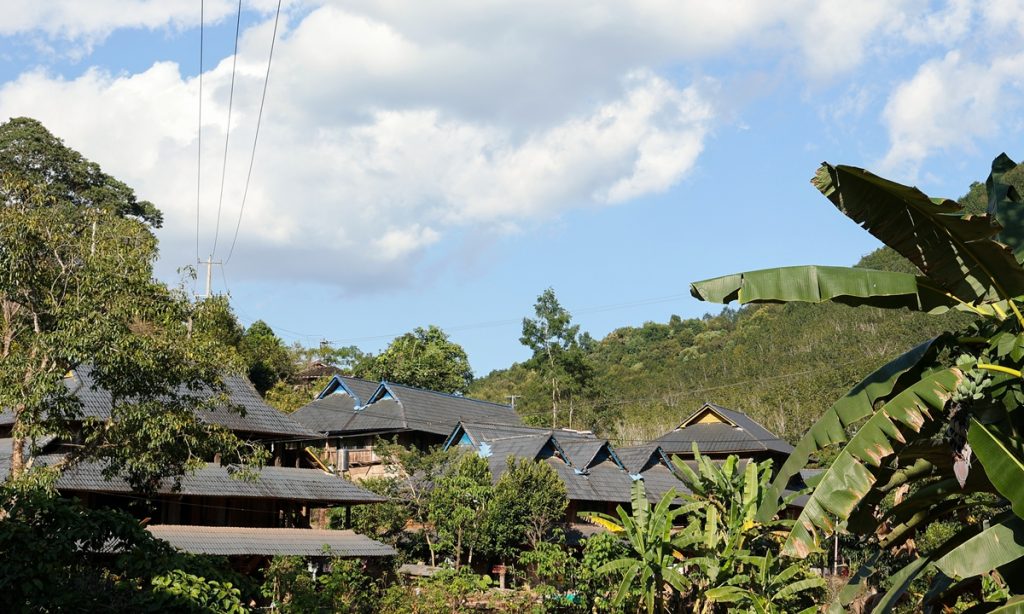
Stepping into the Sanman villages in Menghan town, Xishuangbanna, Southwest China's Yunnan Province - right on the China-Laos border - Lao village official Somphone Keomany's eyes sparkled with excitement. He pointed at a beautifully renovated traditional Dai ethnic group's bamboo house that had been transformed into a stylish boutique guesthouse and said enthusiastically, "This is exactly what we can try in our Tingsong village back in Laos!"

Somphone and his delegation - 11 village officials and representatives from Luang Prabang, Laos - came to Xishuangbanna to study China's rural poverty reduction and revitalization experience. Tingsong village in Luang Prabang is a demonstration site for village-level poverty alleviation and rural revitalization, developed through collaboration between China Agricultural University, the Tencent Foundation and the Luang Prabang provincial government.

The five-day training program in Yunnan offered the Lao participants a valuable, ground-level perspective on China's rural development model, enabling them to identify practical experiences and approaches that could be effectively adapted and replicated in Luang Prabang. The Lao delegates traveled to China aboard the China-Laos Railway, filled with curiosity and keen observation, jotting down in their notebooks the key to rural prosperity in China.
'Path of learning how to prosper'

In just one and a half days, Somphone had filled four pages with detailed notes. One of the most prominent words was "turning waste into treasure." In the Sanman villages (Mankongdai, Manluanzhan, Mankongmai), he saw a re-innovated water tower transformed into a popular cafe, an idle warehouse turned into a leisure teahouse, low-yield rubber forests converted into science education bases and old low-rise houses renovated into comfortable, bright boutique guesthouses.

This "miracle blooming on black soil," as Somphone described it, stems from the "Sanman villages rural tourism complex" idea promoted by Professor Li Xiaoyun from China Agricultural University, a prestigious scholar in China's rural development, and local government's strive for rural revitalization.

In 2023, at the invitation of the Xishuangbanna prefectural government, Li Xiaoyun's team supported building an experimental zone in Sanman villages for rural revitalization, and positioned the villages as a window to showcase China's rural development, ethnic unity, and overall progress to Southeast Asia and the world.

In February 2021, China announced it had secured a "complete victory" in its fight against poverty. In Laos, struggling against poverty remains a challenge. As of 2024/2025, about 15 percent of its people were living below the national poverty line of $1.10 per day, according to data of the United Nations World Food Program. Many Global South countries including Laos have thus turned to China - the developing nation that lifted the largest number of people out of poverty - to learn from its successful experience.

"We were all very excited before coming. Everyone signed up as soon as they heard there was a chance to visit China," said Khankeo Keopanya, development advisor of Tingsong village in Laos. "We started observing China's development speed and efficiency the moment we boarded the China-Laos Railway from Luang Prabang. This railway has truly taken us onto a path of learning how to prosper," he told the Global Times.

Some villagers in Manluanzhan village told the Global Times that the area used to be poor with outdated infrastructure and limited opportunities. Today, the Global Times reporter observed that the high-end guesthouses feature modern, comfortable, well-designed furniture. Villagers said Li Xiaoyun personally selected and designed things down to the plates and bowls. His team lived and worked alongside the villagers, exploring local Dai ethnic culture to find uniqueness, and provided systematic training starting from basic tasks like cleaning courtyards and landscaping. They guided villagers to develop high-end homestay tourism at their doorstep, offering an alternative to pure farming or migrating to cities for work.

The modern yet pastoral-style villages fascinated the Lao visitors. During an exchange with the local rural CEO, questions poured in. "How do you mobilize farmers to join new industries?" "How do you ensure their income?" "Where does the funding come from?"

Li Faxin, rural CEO of the Sanman villages, patiently explained: At first, many villagers were hesitant about converting traditional Dai houses into guesthouses. The team organized study tours, brought in successful enterprises as models and arranged low-interest loans. Village officials became the first to try it. Once the guesthouses generated real income and neighbors saw the profits, participation then surged. In 2025, the average annual income per guesthouse operator from accommodation alone reached 60,000 yuan ($8,830). The goal for 2026 is to maintain this level, rising to 80,000-90,000 yuan by 2028 and 100,000 yuan by 2029, according to Li Faxin.

The villages have also developed a scientific benefit-sharing mechanism. Most guesthouses are operated by the homeowners as managers under unified company oversight. All operating expenses are centrally procured. In addition to guesthouses, the village collective runs restaurants, swimming pools, conference rooms, cafes and traditional Dai medicine centers. A unified QR code mobile payment system ensures immediate revenue distribution to villagers. The majority of income goes directly to the operators, with a small portion retained by the company and returned to the village committee for collective dividends. This creates a win-win for villagers, the collective economy and the enterprise, Li Faxin introduced.

Somphone nodded frequently as he listened. He understood that this interconnected mechanism protects villagers' interests while ensuring space for collective economic growth.
Cultivating rural CEOs

During the visit, the delegation also toured the workshop of Xishuangbanna Daixian Fresh Agricultural Development Co., Ltd., a modern enterprise integrating planting, processing, and sales. Workers deftly operated automated machines that sorted, cleaned, and packaged sticky corn with impressive efficiency.

Somphone's eyes lit up. He quickly pulled out his phone and began taking photos nonstop. "In Laos, we usually steam the corn immediately after harvest and pack it in simple plastic bags," he said. "Whatever doesn't sell is often taken home as pig feed. A lot of value is lost."

The standardized, mechanized processing and refined packaging left a deep impression on him. He carefully noted in his notebook: obtain detailed technical guidance on agricultural processing and packaging from the Chinese side, with the aim of upgrading traditional farming and sales practices back in Luang Prabang. People around him jokingly say he's starting to look more and more like a dedicated rural CEO.

Somphone likes being called a "rural CEO." Village CEO, also referred to as agricultural manager, was included among 13 new professions published jointly by China's Ministry of Human Resources and Social Security, the State Administration for Market Regulation, and the National Bureau of Statistics in 2019.

Village CEOs serve as links between rural resources and the market. They use their skills to drive the rural collective economy to ensure efficient use of resources, thereby making sure rural people benefit from what they have, said Li Xiaoyun. Experts see this as a concrete embodiment of Chinese path to modernization in rural governance and economic development.

Having experienced three business failures in his hometown, Somphone realized rural development is a complex systemic issue. He found that China's approach emphasizes a top-down, scientific and sustained operational system. His dream is to build a small farm near his village, drawing on models like the Sanman villages. The trip gave him greater confidence to become a successful rural CEO.

To share its experience, China Agricultural University launched the "Global South Youth Rural Entrepreneurs Initiative" training program in 2025, inviting young people from developing countries to train in China. A key component involves hands-on experience in agro-tourism integration and modern agriculture at border villages such as Manluanzhan.

"Trainees can see with their own eyes how young people in rural China operate guesthouses, run e-commerce and manage modern agriculture," Li Xiaoyun told the Global Times.

Why China's model fits better

Since 2013, China has supported more than 40 million people worldwide escape poverty through infrastructure, agriculture and small-scale livelihood projects, the Xinhua News Agency reported.

A report released in May by China Agricultural University noted that in recent years, amid profound global geopolitical changes, Western countries' willingness to provide development aid has declined, with funding shrinking continuously. As Global South countries rise as a key force reshaping the international order, breaking reliance on old models and building a new global development cooperation system tailored to the Global South has become increasingly urgent.

Before becoming a rural CEO, Somphone worked with some small Western aid projects in Laos. He believes China's approach is more interactive, as an old Chinese saying, "Give people fish, and you feed them for a day. Teach them how to fish, and you feed them for a lifetime." As fellow developing countries, China and Laos share greater understanding and resonance.

Somchai Khampaseuth, a staff member of the Luang Prabang provincial administrative office, also told the Global Times that the modern transformation of China's rural infrastructure and living standards is impressive, viewing it as key to improving residents' quality of life. Laos hopes to learn from this transformation path. As a fellow developing country, China's experience is invaluable.

"China not only provides material support but also fosters villagers' self-reliance awareness. This philosophy has gained support from the Laotian government. Some Western NGOs often bypass government structures, while China respects local systems and emphasizes coordinated mechanisms, such as rural cooperatives, which Laos finds highly relevant," he said.

In Professor Li Xiaoyun's view, sharing China's rural development experience with Global South countries has a twofold significance: at the micro level, it focuses on the future rural transformation of the Global South, enabling young people to learn China's new rural development practices; at the macro level, it embodies the vision of building a community with a shared future for humanity.

As the training session ended, Somphone carefully packed his "rural CEO notebook" - filled with over 10 pages of closely written insights - into his phone's digital folder. Then, alongside his fellow Lao village officials, he boarded the China-Laos Railway train back to Luang Prabang, ready to plant the seeds of what he had learned in the soil of Tingsong village.

China's May diplomatic blitz: proactive layout demonstrates irreplaceable role as a global stabilizer amid turmoil

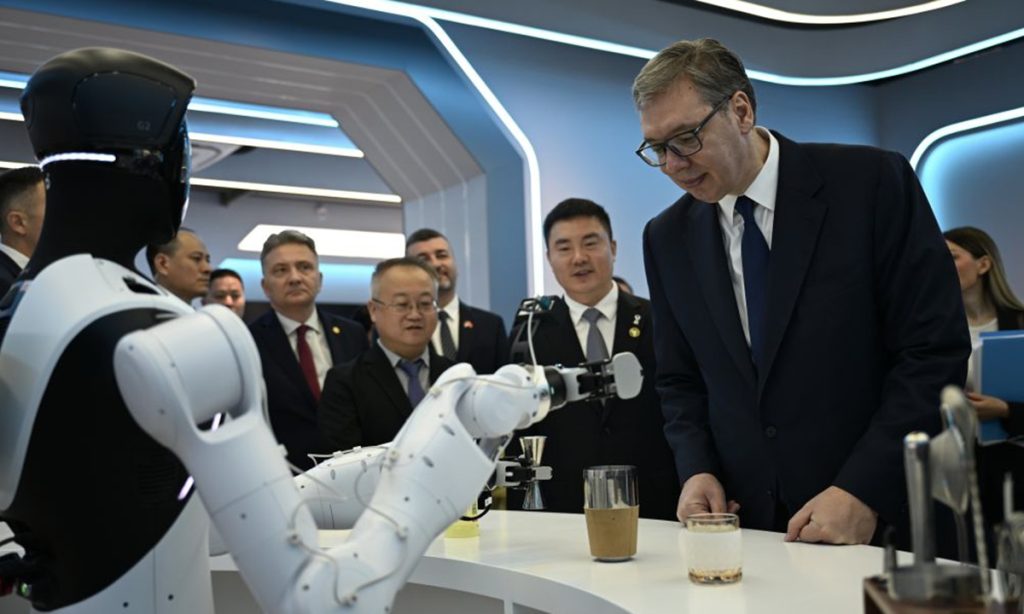
With the diplomatic red carpet barely rolled up following visits by US President Donald Trump and Russian President Vladimir Putin, Beijing's May diplomatic blitz shows no signs of slowing down. The Chinese Foreign Ministry has announced visits by Pakistani Prime Minister Shehbaz Sharif and Serbian President Aleksandar Vucic in the coming days, keeping the capital in a continuous flurry of diplomatic engagements.

As May unfolds, the global diplomatic spotlight has turned toward China, with a series of high-level bilateral exchanges and home-ground multilateral events unfolding in quick succession.

According to the Chinese Foreign Ministry's official website, at least a dozen foreign dignitaries are scheduled to visit China this month. The visiting delegations come from major powers, neighboring countries, and nations across the Middle East, Europe, and Africa. Analysts noted that these diplomatic engagements are marked by high-level participation, tangible outcomes, and broad geographic coverage.

They added that China's intensive May diplomacy demonstrates its proactive major-power responsibility in a turbulent world. Through high-level bilateral engagements and hosting APEC multilateral events, China has played a constructive role as a stabilizer and promoter of global and regional cooperation. In addition, China is increasingly seen as an indispensable force for stability and shared prosperity.

An inevitable and shared choice

Among the major diplomatic activities hosted in Beijing, the early May talks between Chinese Foreign Minister Wang Yi and Iranian Foreign Minister Seyyed Abbas Araghchi drew widespread international attention. This was the first visit by a senior Iranian diplomat to China amid ongoing conflict, per media reports.

Other early dignitaries to Beijing included Tajik President Emomali Rahmon, Uzbek Prime Minister Abdulla Aripov, Bangladeshi Foreign Minister Khalilur Rahman, and Brunei's Crown Prince and Senior Minister at the Prime Minister's Office, Prince Haji Al-Muhtadee Billah.

In mid-May, summits between heads of state from major powers took center stage.

On May 14 in Beijing, leaders from China and the US agreed on a new vision of building a constructive bilateral relationship of strategic stability. The new vision will provide strategic guidance for China-US relations over the next three years and beyond.

Shortly afterward, Russian President Vladimir Putin paid a state visit to China from May 19 to 20, pushing Beijing's bustling diplomatic agenda to another high.

On Wednesday, the Chinese and Russian leaders hailed a "new stage" in bilateral ties as they agreed to further extend a China-Russia friendship treaty and pledged to work together for a more just and equitable world order, per Xinhua. They also witnessed the signing of 20 cooperation documents in areas including the economy and trade, education, and science and technology.

As the month draws to a close, more high-level visits continue. Pakistani Prime Minister Shehbaz Sharif will visit China from May 23 to 26, Serbian President Aleksandar Vučić from May 24 to 28, and Moldova's Deputy Prime Minister and Foreign Minister Mihai Popșoi from May 21 to 25.

Prior to this, China's capital welcomed foreign dignitaries from two African countries. Barry Faure, Minister of Foreign Affairs and Diaspora of Seychelles (May 18 to 19), and Minister of Foreign Affairs Sara Beysolow Nyanti of Liberia (May 18 to 22).

Li Haidong, a professor at China Foreign Affairs University, believed that the diplomatic blitz in May reflects China's global vision and its status as a responsible major power. It also demonstrates that China's diplomatic philosophy and practices have won growing understanding and support from countries around the world.

Against the backdrop of intensifying geopolitical competition and lingering hegemonism and Cold War mentality, China advocates an equitable and orderly multipolar world, including globalization, mutual respect and sustainable development, Li said, "This has made China an irreplaceable and pivotal driving force for defusing global crises and steering the international order toward a more constructive direction."

Wang Yiwei, a professor at the School of International Studies of Renmin University of China, echoed this view, stating that the world is confronted with overlapping challenges concerning security, development and global governance, while Western countries have largely failed to deliver effective solutions. Against this backdrop, more countries are turning to China for problem-solving ideas and development pathways.

Furthermore, China has demonstrated a proactive, pragmatic and inclusive stance in international affairs. Rather than taking sides or exacerbating confrontation, it maintains communication with all parties.

Citing an analyst, Channel News Asia said in a Thursday report that visits by foreign dignitaries reinforced China's image as a major power whose engagement is sought by rivals, partners and hedging states alike.

"The new era of world affairs is less centered around the West," Samir Puri from Kings College London told the BBC. "For China, these visits are proof that because of its massive economy and new-found diplomatic clout, all roads now lead to Beijing," the BBC remarked on Wednesday.

Openness and win-win pattern

While advancing high-frequency bilateral diplomacy, China also seized the major opportunity of the APEC "China Year" home-ground diplomacy, hosted a series of high-level multilateral meetings in various parts of the country, and sent a clear signal of open cooperation and joint development to economies in the Asia-Pacific region.

The Second Senior Officials' Meeting (SOM2) of APEC China 2026 was held in Shanghai from Monday to Tuesday. More than 1,000 people consisting of representatives from APEC member economies, the APEC Secretariat and the APEC observers participated in these meetings, according to Xinhua.

Addressing the opening ceremony of the meeting on May 19, Chinese Vice Foreign Minister Ma Zhaoxu said that China will focus on the theme of "Building an Asia-Pacific Community to Prosper Together" of this year's APEC meeting and leverage the APEC leaders' Shenzhen Declaration as a platform to envision a roadmap for achieving the goals of Asia-Pacific community.

Following the SOM2, China will host another APEC-related event, the 32nd Asia-Pacific Economic Cooperation (APEC) Ministers Responsible for Trade Meeting, in Suzhou, East China's Jiangsu Province, from May 22 to 23, according to China's Ministry of Commerce.

Li Chenggang, China's international trade representative with the Ministry of Commerce and vice commerce minister, said previously on May 9 that China expects the meeting to send signals supporting high-standard opening up, stronger digital and green cooperation, and a commitment to inclusive growth and shared prosperity.

According to Li Chenggang, in 2025, China became the largest trading partner of 13 APEC economies.

By hosting APEC-related multilateral diplomatic events on home soil, China is not only creating conditions for the improvement of global governance mechanisms, but also fostering consensus on regional development among participating parties, thereby supporting economic recovery and growth across the Asia-Pacific region, said Wang Yiwei.

According to the expert, China possesses not only the willingness to advance regional and international cooperation and promote stable development, but also the tangible capabilities to do so, including superior industrial capacity, world-class infrastructure construction ability, and rich practical experience in long-term development.

As the only country with a fully integrated industrial chain, China is able to offer a wide array of products, technologies, and customized industrial cooperation programs tailored to the diverse development needs of different nations, said Wang Yiwei, "This distinctive feature of having 'both the will and the capability' allows China to play a vital and irreplaceable role in today's world."

"There is no doubt that China serves as the anchor of stability, prosperity, hope and peace in today's world," Li stated.

8 confirmed dead, 38 trapped in coal mine accident in North China's Shanxi; cause under investigation: local authorities

Eight people have been confirmed dead, and 38 remain trapped underground after a gas explosion in a coal mine in Changzhi City, North China's Shanxi Province, on Friday night, according to a release from the Qinyuan County Emergency Management Bureau.

At 7:29 pm on Friday, a gas explosion occurred at the Liushenyu coal mine, operated by Shanxi Tongzhou Group in Qinyuan County, where a total of 247 workers were underground at the time, per the release published Saturday morning. 

Following the incident, Party committees and governments at the provincial, city, and county levels attached great importance to the situation. Principal officials immediately made arrangements and deployments, promptly activated the emergency response mechanism, and rushed to the scene to direct rescue operations, the release said. 

As of 6 am on Saturday, 201 people had been safely brought to the surface, eight people had been confirmed dead, and intensive search and rescue operations for the remaining 38 miners trapped underground were still underway. The cause of the accident is under investigation, according to the local emergency management bureau.

DPP authorities cling to ‘Taiwan independence’ separatism while resorting to wordplay to deceive people on island and intl community: Taiwan Affairs Office spokesperson

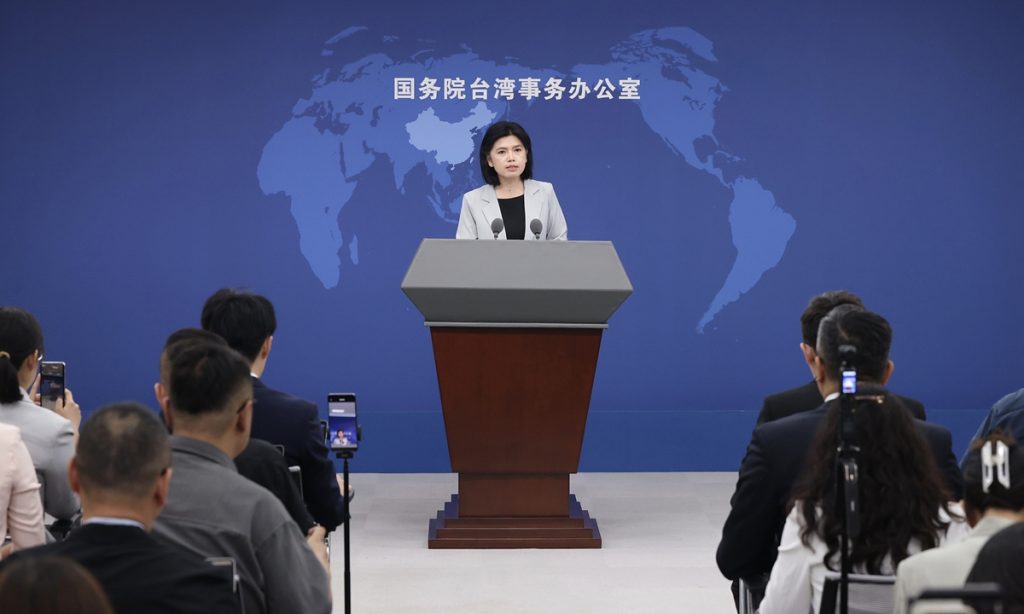
While the DPP authorities refuse to acknowledge that both sides of the Taiwan Straits belong to one China, stubbornly cling to the separatist stance of seeking "Taiwan independence" and keep making provocative moves for separatist purposes, they also resort to wordplay to deceive people on the island and the international community in a bid to cover up their true nature, Zhu Fenglian, a spokesperson for the State Council Taiwan Affairs Office, said on Wednesday.

Zhu made the remarks when asked to comment that following the China-US summit, Taiwan regional leader Lai Ching-te first claimed that “Taiwan independence” means Taiwan is not part of the People’s Republic of China and that the Republic of China and the People’s Republic of China are not subordinate to each other, yet on the same day he claimed there is no “Taiwan independence issue.” 

Zhu stressed that there is only one China in the world, and both the mainland and Taiwan island belong to one China. Taiwan has never been a country, and this is the genuine status quo across the Taiwan Straits. Realizing the complete reunification of the motherland is the shared aspiration of all Chinese people, an irresistible general trend, a righteous cause and the will of the people that no individual or force can hold back. 

"Taiwan independence" and cross-Straits peace are as irreconcilable as fire and water. Only when the DPP authorities truly completely abandon separatist stances, cease all provocative acts for “Taiwan independence” and return to the political foundation of the 1992 Consensus, can cross-Straits peace and stability truly be safeguarded and cross-Strait relations can be improved and developed, Zhu said.

Chinese FM responds to whether China, US leaders talk about Iran during exchanges on views on major international and regional issues, including Middle East situation

Q: It is reported that during President Trump's visit to China, the two presidents exchanged views on major international and regional issues, including the situation in the Middle East. Did the two sides talk about Iran? What is China's view on the current Iran situation?

A: China's position on the Iran situation is very clear. The conflict has inflicted severe losses on the people in Iran and other regional countries. With the spillover still expanding, the conflict has put a heavy strain on global economic growth, supply chains, international trade order and the stability of global energy supply, which hurts the common interests of the international community. There is no point in continuing this conflict which should not have happened in the first place. To find an early way to resolve the situation is in the interest of not only the US and Iran, but also regional countries and the rest of the world.

The recent US-Iran ceasefire and effort to explore resolving issues through negotiation is welcomed by regional countries and the international community. China always believes that dialogue and negotiation is the right way forward, and the use of force is a dead end. Now that the door of dialogue has been opened, it should not be shut again. It is important to steady the momentum in easing the situation, keep to the direction of political settlement, engage in dialogue and consultation, and reach a settlement on the Iranian nuclear issue and other issues that accommodates the concerns of all parties. It is important to reopen the shipping lanes as soon as possible to respond to the call of the international community and jointly keep the global supply chains stable and unimpeded. It is important to reach a comprehensive and lasting ceasefire as soon as possible, enable peace and stability to return to the Middle East and Gulf region at an early date, and lay the foundation for building a sustainable security architecture for the region.

Since the conflict began, China has been working for an end to the conflict and peace. President Xi Jinping put forward the four propositions on safeguarding and promoting peace and stability in the Middle East. China and Pakistan issued the five-point initiative for restoring peace and stability in the Gulf and Middle East region. China will continue to act in line with President Xi Jinping's four propositions, and work with the international community to provide stronger support for peace talks and play a constructive role in achieving lasting peace in the Middle East.

Trump says looking forward to "big discussion" with President Xi

US President Donald Trump said here Thursday that he looks forward to a "big discussion" with Chinese President Xi Jinping.

"There are those who say this is maybe the biggest summit ever," Trump said in his opening remarks when having talks with Xi at the Great Hall of the People in Beijing.

"When there were difficulties, we worked it out," said Trump. "We're going to have a fantastic future together."

Trump, who is on a three-day state visit to China, repeatedly called Xi a great leader.

He also highlighted the high-level American business delegation accompanying him, describing their presence as a gesture of respect toward China and its leader.

"They look forward to trade and doing business," Trump said.

"It's an honor to be your friend and the relationship between China and the USA is going to be better than ever before," Trump said.

When AI meets football: Tech empowers 'Su Super League,' demonstrating province's smart manufacturing strength

The Jiangsu Football City League (JSCL) is back. 

The league, an amateur football tournament featuring 13 teams representing cities across East China's Jiangsu Province that was viral on Chinese social media in 2025, is more commonly known as the "Su Super League."

Unlike 2025's viral success with the "fragmented Jiangsu" meme, during this season, the league caught the audience's eyes with cutting-edge technologies such as artificial intelligence (AI) virtual hosts, digital replays and smart voice interaction, building a smarter viewing experience and bringing new energy to traditional football. 

On the night of April 11, at the opening match in the Changzhou Olympic Sports Center, 200 quadruped robotic dogs and 90 humanoid robots made by Magic Atom, a local embodied intelligence technology company in Jiangsu, put on a show on the rain-soaked field. 

It was the world's largest and most complicated outdoor coordinated robot performance ever, according to the website of the JSCL. 

The robots moved in perfect sync, and the crowd was amazed by what felt like science fiction come to life, the JSCL said on its website.

During the same game, 13 heavy-loaded drones made by MOVA, another Jiangsu-based technology company, lifted 13 flexible LED screens, creating a stunning "flying screen" formation in the night sky. Each of the 13 screens clearly showed Chinese characters representing Jiangsu's 13 cities. This also set a world record for the most drones flying in formation with hanging display screens, according to the JSCL website.

As the league entered its fifth week, even more advanced tech was on show.

On the pitch, AI tools built by local Jiangsu tech firms have changed how fans watch the football games. A digital twin, a virtual replica of a physical object or system, allows audiences to view the real stadium match from any 360-degree angle.  AI large models provide commentaries in local dialects and break down tactics. Smart interaction lets fans take part while they watch.

On the television screens, an AI virtual host named Le Yi made by a Jiangsu provincial television station is both professional and friendly. She knows the cultures of all 13 cities in Jiangsu. She can explain formations, player performance, and match stats, and chat with fans using the local dialects from Nanjing, Suzhou, and other cities. During live broadcasts, Le Yi works with real commentators, answers questions from comments right away, and makes watching feel like a two-way conversation.

Voice control makes watching the game easier. This year's JSCL viewing platform uses smart voice interaction. Fans don't need to tap their phones. They just speak to get player stats, schedules, possession rates, and more. The system can keep chatting, remember which team you support, send you updates, and even let you vote or join real time quizzes. Watching goes from "passive viewing" to "actively joining in."

Around the stands, smart robots and quadruped robotic dogs work as on site guides. They help police with crowd control and safety. They clearly show people where entrances and exits are, spread out crowds, ease the work of human staff, and make the stadium run more efficiently.

In training, digital twin technologies have changed how teams prepare. The system tracks more than 200 technical and physical stats for each player, makes personalized reports, and helps coaches plan tactics and prevent injuries. 

From digital twins that recreate the whole field to AI hosts that make watching fun, to voice control that makes everything simpler, AI has given the JSCL a huge boost. 

Beyond the pitch, Jiangsu's smart manufacturing has achieved an even more authoritative benchmark. The province is now home to more than 3,000 national-level specialized, sophisticated, unique and new "little giant" enterprises and 292 national-level manufacturing single champions, China Securities Journal reported.

The JSCL is emerging as a unique window to observe Jiangsu's economic leap from manufacturing to smart manufacturing and its transformation from industrial advantages to consumption advantages. It is more than just tech and sports coming together. It's the fruit of Jiangsu's investment in technology and a demonstration of its smart manufacturing strength.

Mozambique's president begins China visit to deepen ties

Beneath a soft Spring drizzle in Changsha, Central China's Hunan Province, Mozambique's President Daniel Francisco Chapo and First Lady Gueta Chapo descended the red-carpeted aircraft stairs on Thursday, greeted by Chinese personnel with a floral reception.

The week-long trip, from April 16 to 22, is the first state visit to China by a Mozambique's head of state in 10 years, and it is also President Chapo's first visit to China since taking office. Chapo's visit coincides with a flurry of recent visits to China by leaders from various countries including Spain, Vietnam and UAE.

During President Chapo's visit, Chinese President Xi Jinping will hold a welcome ceremony and a welcome banquet for him. The two presidents will have talks. He will also visit Hunan and Qinghai, Chinese Foreign Ministry spokesperson Guo Jiakun said at a regular press conference on Tuesday.
According to an official release from the press office of the Presidency of the Republic of Mozambique, the visit by the Mozambican head of state takes place within the framework of deepening and upgrading the existing Comprehensive Strategic Partnership between Mozambique and China, reflecting the shared will to consolidate longstanding ties of friendship, solidarity, and mutually beneficial cooperation between the two countries.

Accompanied by members of the Assembly of the Republic, government officials, and other senior Mozambican state representatives, Chapo started his visit with the aim of strengthening political-diplomatic and economic cooperation with China, while also deepening coordination on issues of common interest on the international agenda, particularly those concerning the Global South, United Nations reform, and climate change, according to the release.

The visit by the Mozambican president showed a high level of exchanges between China and Mozambique, Liu Naiya, executive director of the South African Studies Center at the Chinese Academy of Social Sciences, told the Global Times on Thursday.

Liu said through high-level interactions, the two sides are expected to conduct in-depth discussions on cooperation priorities and specific areas, reflecting a pragmatic, results-oriented approach. The visit itinerary, which includes not only major cities but also provinces such as Hunan and Qinghai, also demonstrates clear practical considerations.

Changsha, Chapo's first stop, carries symbolic and practical significance. As the host city of the China-Africa Economic and Trade Expo and home to the China (Hunan) Pilot Free Trade Zone focused on Africa cooperation, the choice reflects Mozambique's strong interest in expanding economic ties with China, analysts said. It also highlights Hunan's growing role as a hub for China-Africa cooperation.

According to the official website of the China (Hunan) Pilot Free Trade Zone, the pilot zone aims to pioneer deeper China-Africa economic cooperation by building platforms for trade in non-resource products, enhancing financial services and exploring new mechanisms for local-level cooperation.

More specifically, Liu noted that Qinghai and Mozambique share certain similarities in resource endowments and development needs. For instance, there is potential for cooperation in areas such as mineral resource development and agricultural modernization. Arranging visits and exchanges in Qinghai could be understood as focusing on tangible areas of cooperation with real potential.

Mozambican media outlet Club of Mozambique described the visit as part of efforts to "deepen and elevate the Comprehensive Strategic Partnership," echoing official statements from Maputo. On the economic front, Chapo is also expected to mobilize resources for major structural projects and support economic recovery in sectors including infrastructure, mining, energy and agriculture.

Song Wei, a professor at the School of International Relations and Diplomacy at Beijing Foreign Studies University, told the Global Times on Thursday that the Mozambican president's visit carries broader significance. "Amid intensifying geopolitical competition and rising protectionism, China and Mozambique maintaining sincere cooperation and upgrading their partnership has demonstrative value not only for China-Africa ties but also for Global South cooperation," Song said.

Song noted that under the current global environment, Mozambique and other African countries need China's technology and investment to advance modernization and industrialization, while China in turn values the role of African nations in amplifying the voice of the Global South in global governance.

On the economic front, the head of state will mobilize resources to finance high-impact structural projects, as well as to boost the relaunch of the national economy, focusing on priority sectors such as infrastructure, mining, energy and agriculture, Club of Mozambique reported, citing the release from the Presidency.

Broader China-Africa cooperation

2026 marks the 10th anniversary of the establishment of the China-Mozambique Comprehensive Strategic Partnership and the 70th anniversary of the establishment of diplomatic relations between China and Africa.

China is an important trading partner, source of investment, and contractor for engineering projects for Mozambique. In 2025, bilateral trade reached $5.4 billion, up 3.6 percent year-on-year, Chinese Ambassador to Mozambique Zheng Xuan wrote on People's Daily.

The trade structure has become more optimized. High-quality Chinese products such as electromechanical equipment, building materials, and general merchandise have supported Mozambique's economic and social development and improved people's livelihoods. Meanwhile, Mozambique's distinctive resources - including cashews, minerals, and timber - have seen steady export growth to China, offering Chinese consumers a more diverse range of choices.

This year also marks the 50th anniversary of the dispatch of Chinese medical teams to Mozambique. For decades, they have worked at the grassroots level, saving lives and healing the injured, using their compassion and medical expertise to safeguard the health of the Mozambican people, according to the ambassador.

"China-Africa cooperation is a cornerstone of Global South collaboration, and the close interaction between China and Mozambique can serve as a strong example," Song said, viewing China-Mozambique cooperation as a microcosm of broader China-Africa engagement.

China announced in February that it will fully implement zero-tariff treatment for 53 African countries with diplomatic relations with China, starting from May 1, according to Xinhua News Agency

China's zero-tariff offer to 53 African countries, set to take effect on May 1, is a game-changer and an impetus to boost the development of strong agricultural, mining and industrial value chains, while also enhancing intra-continental trade, said Jonas Atingdui, a Ghanaian economic analyst, Xinhua reported.