Diplomatic Channel: Former French PM Raffarin signals high hopes for President Xi’s visit, emphasizes respect for civilizations, frank dialogue

Editor's Note:

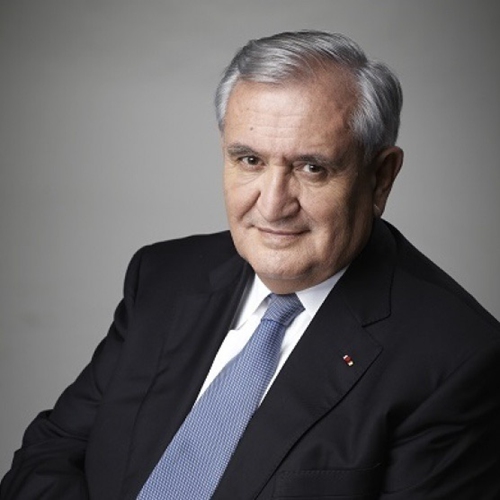
Chinese President Xi Jinping left Beijing on Sunday morning for state visits to France, Serbia and Hungary at the invitation of President Emmanuel Macron of the Republic of France, President Aleksandar Vucic of the Republic of Serbia, and President Tamás Sulyok and Prime Minister Viktor Orbán of Hungary. Ahead of his visit to France, Global Times reporters Chen Qingqing and Bai Yunyi (GT) interviewed former French prime minister Jean-Pierre Raffarin (Raffarin), talking about the significance of the state visit for China-France relations, reviewing the future development of bilateral ties, and discussing the role of China-France relations in China-EU relations.
GT: This year marks the 60th anniversary of diplomatic relations between China and France. Could you share some important historical moments and achievements from these 60 years of China-France relations?

Raffarin: First of all, General de Gaulle's decision to establish diplomatic relations with China in 1964 is itself historic. France's support for the Chinese authorities in their fight against the SARS pandemic in 2003 was a major act, as were the opening of the Airbus factory in North China's Tianjin and the commissioning of the first Franco-Chinese nuclear reactor in South China's Guangdong Province. I am also very struck by the beauty of the Beijing Opera House designed by French architect Paul Andreu. There have been many joint creations across numerous fields. In 60 years, I have made more than 100 trips to China; 100 opportunities for very fruitful sharing.

GT: Over the last 60 years, what have been the changes and constants in China-France relations?

Raffarin: The constant is France's desire for independence in its policy with China. The change has been the development of the European Union, which has made diplomatic work more complex. All French presidents have followed, in relation to China, Charles de Gaulle's major orientations: Respect for civilizations, frank discussions, and co-responsibility for the future.

GT: In your opinion, what is the core element that has allowed these relations to withstand tests and continue to progress?

Raffarin: The central core is the mutual cultural appetite.

Analyzing the differences in our two civilizations is particularly fruitful as demonstrated by the philosopher François Jullien.

Culture is the heart of our relationship. The joint curiosity has been intact for centuries. This is the source of the respect that allows us to live with deep differences.

GT: How do you assess the current relations between China and France? Given the challenges of globalization and changes in the international political and economic situation, in which areas can China and France strengthen cooperation?

Raffarin: France has stable relations with China unlike many other countries, including in Europe. Chinese President Xi Jinping and French President Emmanuel Macron are two leading figures who know each other very well. They have spent hours and hours in discussion together.

The priority of our future relations, in my opinion, is building peace. In the short term, it is to act together for peace in Ukraine. In the medium term, it is to build a new multilateralism capable of allowing peace and development on our common planet.

GT: In your opinion, what role does China-France relations play within the framework of China-Europe relations? How will Europe's position in Chinese foreign policy evolve?

Raffarin: France's role in Europe is very active. We defend our ideas vigorously in all European forums. Our vision for Europe's strategic independence is gaining ground.

We are allies of the US, but do not want to be aligned with their interests. Donald Trump's place in the American debate convinced many European leaders that it is urgent to promote our sovereignty.

I think that the China-France dialogue is the best way to bring about peaceful solutions.

GT: 2024 is the year of China-France culture and tourism, as well as the Olympic year for France. Could you present the plans for cultural cooperation and exchanges between China and France for this year?

Raffarin: Many public and private initiatives will mark this year. For example, the exhibition on Versailles and the Forbidden City are particularly creative. A cultural forum bringing together Chinese and French artists will take place in November in Deauville. France will be the guest of honor at the Shanghai Expo. And more than 100 initiatives are already being programmed.

Cultural exchanges are the best medium for fostering mutual understanding and reciprocal respect.

GT: What role do cultural and human exchanges play in China-France relations?

Raffarin: We will prioritize student exchanges because they are the best vectors for promoting joint projects and creating deep and authentic ties between the two countries.

GT: In the fields of emerging technologies, sustainable development, and green energy, how can China and France seek new opportunities for cooperation?

Raffarin: I think we need to work together on the theme that is very popular among young Chinese and French people, which I call "the Planetization of politics."

Only recently has the Planet become a political object. There is a shared conviction among the world's youth: We must protect the Planet to protect Humanity.

Global governance needs consensus to progress. It is around this theme that it should be possible to invent a new multilateralism that will correct the current multilateralism's impotence.

GT: Given the current uncertainty of the international commercial environment, what are the challenges and opportunities facing China-France economic cooperation? How do you view 2023's debates in Europe on "de-risking" and this year's on "over capacity" in China?

Raffarin: We must understand our differences to avoid misunderstandings. There is a real consensus in Europe that public money should be used to help Europeans, for example, buy electric vehicles. But these subsidies are not intended to assist the production of foreign industries.

Since the WTO is currently partially blocked, trade regulation should proceed through bilateral agreements. The only real way to cooperate sustainably is to balance concessions.

GT: What are your expectations regarding the visit of the Chinese top leader to France?

Raffarin: Peace in Europe. Let's remain faithful to the spirit of General de Gaulle when, 60 years ago, he decided to establish diplomatic relations with China. The differences were probably greater than now, but the central idea was that our destinies are linked and thus the path of cooperation is more fruitful than confrontation. For this, direct and frank dialogue, understanding of each other's interests and values, and respect for sovereignty are necessary.

Majority hope China-US relations to maintain status quo or ease in 2024: GT survey

Over one-third of respondents from 20 countries expect the future relationship between China and the US to "maintain status quo," in the coming year while nearly one-third hope for relations "to be eased." Meanwhile, over half of respondents from 20 countries expressed great concern over the spillover effects of US domestic issues that might negatively impact the world, according to a recent survey conducted by the Global Times Institute (GTI) released on Saturday.

In the survey, close to 20 percent of respondents chose "conflict" as their preferred outcome in the question related to their expectations in the development of bilateral ties between China and the US in the coming year.

From November 7 to December 1, 2023, the GTI conducted a survey using a commercially available online sample library to invite respondents across 20 countries to participate. The survey was conducted in 16 languages including Chinese, English, Spanish, German, Arabic, and French, and targeted residents aged 18 and above in 20 countries including China, South Korea, Japan, the Philippines, Indonesia, India, Saudi Arabia, Turkey, Russia, Italy, Germany, France, the UK, the US, Australia, South Africa, Egypt, Kenya, Brazil, and Argentina. A total of approximately 17,000 valid questionnaires were collected.

The survey covers a range of questions, including how respondents in foreign countries view China-US relations, the Chinese path to modernization, and how respondents anticipate their countries' relations with China will change.

Apart from China and the US, over 30 percent of respondents from 10 countries hope for the trend in the bilateral ties between China and the US to be eased with Germany, Italy, Indonesia, and South Korea exceeding 40 percent. Japan, Kenya, and India had over 40 percent of respondents hoping for the relationship to "maintain status quo," while 14 other countries had over 30 percent opting to maintain the status quo.

Seven countries had over 20 percent of respondents choosing "conflicts" between China and the US in the coming year with respondents in Argentina, Turkey, and India exceeding 30 percent.

For China and the US, the proportion of respondents hoping for the relationship to remain unchanged was very close. Chinese respondents had a higher percentage (9 percent) expressing hope for easement in bilateral ties compared to their American counterparts, while American respondents had higher percentages opting for conflicts and opining it was "hard to say" compared with Chinese respondents.

In 2023, China-US relations experienced a tumultuous year marked by various events from the "balloon incident," and the relentless imposition of restrictions by the US on China across multiple domains. However, a temporary easing of tensions occurred with the summit meeting between the two countries' leaders in San Francisco in November.

The interactions between China and the US this year have reached a new level, the highest in the last five years, Wu Xinbo, director of the Center for American Studies at Fudan University, told the Global Times in a previous interview.

Wu noted that the success of the San Francisco summit has become a highlight in the bilateral relations in recent years, or could be seen as a new starting point for China-US relations. And the question now is whether the two sides can move forward.

On average, over half of the respondents from the 20 countries expressed a high level of concern (very worried + somewhat worried) about the spillover effects of US domestic political, economic, and social issues and their adverse impact on the world, with over a quarter having some concerns.

Looking at individual countries, Indonesia, the Philippines, Italy, Germany, and Kenya had over 60 percent of respondents expressing a high level of concern. Nine countries, including China, Japan, and South Korea, had a similar high proportions or above 50 percent.

Regarding the US itself, 22 percent of respondents expressed that they were "very worried," and 32 percent expressed that they were "somewhat worried." A quarter of respondents noted that they were "a little worried."

According to the GTI, when comparing the 2023 and 2022 survey results, 18 countries (excluding China and the US) showed a decrease in the perception of the probable success of the current US government in containing China's continued development by roping in other countries, dropping from 48.3 percent to 45.4 percent, a decline of approximately 3 percentage points.

In 2023, except for the Philippines, India, South Korea, and Brazil, the assessment of US success by the other 14 countries was below 50 percent. Egypt, Turkey, Indonesia, Saudi Arabia, and Australia showed a significant decline in their assessment, ranging from 7 to 10 percentage points. Most other countries experienced minimal changes.

Chinese respondents' assessment of the probability of success of the current US government containing China's continued development by roping in other countries dropped significantly from 42.6 percent in 2022 to 28.3 percent in 2023, indicating a significant increase in confidence in countering US containment.

Surinamese Foreign Minister talks about China’s significant role in Latin America, Caribbean region

Editor's Note:

Chinese Foreign Minister Wang Yi, on Tuesday, met with Surinamese Foreign Minister Albert Ramdin in Beijing. China and Suriname enjoy a long history of friendship, and this year marks the 170th anniversary of the arrival of the Chinese in Suriname. Wang told Ramdin (Radmin) that China is willing to be Suriname's reliable partner in the process of development and revitalization and jointly realize modernization. Global Times reporters Chen Qingqing and Bai Yunyi (GT) conducted an exclusive interview with Ramdin in Beijing on Tuesday, and talked about China-Suriname relations, China-Caribbean relations, and further cooperation under the Belt and Road Initiative (BRI), Global Security Initiative (GSI), and Global Development Initiative (GDI).
GT: Suriname is among the first Caribbean nations to establish diplomatic ties with the People's Republic of China and stands as a strategic partner. How would you assess the evolution of relations between China and Suriname, and how do you perceive the impact of this cooperation on broader China-Caribbean relations?

Ramdin: The bonds between Suriname and China are both historic and enduring, characterized by a constructive and mutually beneficial friendship. This relationship has significantly advantaged Suriname.

We are staunch supporters of the one-China policy and firmly acknowledge China's territorial sovereignty. Our partnership has yielded multifaceted benefits. We have a dynamic collaboration on the global stage, actively coordinating within various international organizations and at the United Nations.

Our diplomatic missions in Washington, New York, and other locations work together. Suriname boasts a vibrant Chinese community that is deeply integrated into our society, contributing to diverse sectors including commerce, infrastructure, construction, and professional services like law, medicine, and academia.

Chinese culture has also left an indelible mark on Surinamese cuisine, with Chinese dishes being a staple of our national fare.

From a developmental standpoint, trade between our countries is flourishing, and Suriname has welcomed numerous developmental initiatives from China. This positions us as a beacon within the Caribbean, a steadfast ally that can assist China in fostering cultural and developmental ties within the CARICOM region.

GT: There's a noticeable trend of Central American nations endorsing the one-China principle and severing official ties with the Taiwan authorities. How do you interpret this shift? And with the US increasingly challenging China on the Taiwan question, what stance do Caribbean countries take?

Ramdin: Suriname's stance has always been clear; we recognize only one China, and we steadfastly support that principle.

The shift toward the one-China principle seems primarily driven by China's engagement and diplomatic persuasion. The trend of recognition speaks to that effective outreach.

Suriname advocates for the peaceful resolution of conflicts. The Taiwan question, we believe, should be resolved peacefully and through negotiation. As this understanding spreads, more nations will see the tangible benefits of a partnership with China. We must always seek peace and solution-oriented approaches to conflict.

China's role is significant and growing in Latin America and the Caribbean region, especially in trade, investment, and diplomatic relations. Through various initiatives, including the BRI, China supports regional development, fostering a stronger appreciation within the global context.

GT: With the 10th anniversary of the BRI, Suriname stands as the first Caribbean country to have signed a cooperation memorandum with China. What significant outcomes have emerged from this cooperation, and what local transformations have it spurred these developments on in Suriname?

Ramdin: The BRI has facilitated development support and financing for significant projects. Notably, the financing of a new hospital in one of our districts through the BRI has enhanced healthcare services. Infrastructure projects, including road and bridge construction, have also been vital. Looking ahead, we aim to leverage BRI support further, not just in infrastructure but also in energy and agriculture as we develop our oil and gas industry.

Our bilateral relations have evolved to focus not only on the past but on future aspirations. A pressing issue is our debt restructuring; we're engaging with China to resolve this. Our goal is to reach an agreement by year's end.

Fiscal responsibility dictates that we borrow within our means to ensure repayment. Past excessive borrowing has led to our current debt challenges, which we are now striving to restructure.

Our discussions with China have centered on enhancing our future relationship in three areas: Continuing our political and diplomatic relations, bolstering private sector engagement for targeted project execution, and expanding functional cooperation in various sectors, including healthcare, agriculture, energy, justice, security, and cultural exchanges. Establishing a sister city relationship between Paramaribo and Dalian exemplifies our commitment to a robust partnership, and we look forward to nurturing the Chinese diaspora's significant role in Suriname.

GT: Suriname has been an active participant since the inception of the China International Import Expo approaches, the sixth event of which is fast approaching. What outcomes do you anticipate from this year's event, and in what areas does Suriname hope to find further cooperative opportunities with China?

Ramdin: The Expo is notably focused on facilitating imports into China, which is unique and indicative of China's openness to global trade. Our current focus is on agricultural products, as we explore the Chinese market's requirements. We believe Suriname can contribute, particularly with processed agricultural products, to the diversifying Chinese market.
GT: Instability and uncertainty are increasing in today's world, and the pursuit of security and peace by humanity is even more urgent. Security has become a necessary prerequisite for development, which is an important consensus among leaders around the world, including those in the Caribbean region. How does Suriname view China's proposals for the GDI, the GSI, and the Global Civilization Initiative (GCI)? What significance do these three initiatives have for the development and security of Suriname?

Ramdin: Not only for Suriname, I think, but also for the whole world, these are very important topics: Security, development, and connecting countries. I know that there was, for instance, also a discussion on civilization today at the global conference here in China. These are very important initiatives, because if we want to solve problems in the world, we need to talk; we need to have trust in each other. And these conferences help develop that trust in the first place. Secondly, I'm very pleased to see that countries like China are willing to put funds into these initiatives.

So when we speak about development initiatives, it cannot just be talk. There must be a program. There must be an action plan. When it comes to development and climate change, for instance, carbon emissions are very important issues. So it's good, in my view, that a country that has such a strong leadership position in the world takes initiatives to bring countries together and provide support. The same goes for security.

It's good to hear different perspectives on security, but it's good to talk about it as well.

We firmly believe in our foreign policy that any conflict, as I said before, should be resolved by meeting and discussing it. These initiatives will also facilitate a peace process, stability in the world, and also better understanding among countries and among peoples. Thats what we need, in the end - a peaceful world where conflicts are mitigated, and where people can live in prosperity and with equality.

GT: China and Suriname have a tradition of friendship. This year marks the 170th anniversary of the settlement of Chinese people in Suriname, and Suriname is the first country in the Western Hemisphere to designate the Spring Festival as a legal holiday. What broad prospects do you think there are for future cooperation between China and Suriname in various fields, including cultural exchanges? What new breakthroughs do you hope to see in the future?

Ramdin: I believe that we want to have a strong relationship between countries, especially countries which are far apart. There is a large geographical distance between Suriname and China so it is very important to have people to people contact.

So I would like to see the Chinese community and the Chinese people in China visit Suriname. For that, we will need flights. We need good connections. So this is one thing we would like to work on, to build those connections, because I think with the growth of the Chinese economy, we will see more movement and more time to go abroad. So we would like to see a lot more people-to-people contact. That's one aspect - tourism development.

And we would like to see Chinese companies also invest in the hospitality industry, in hotels, restaurants, and so on.

Secondly, I think from people-to-people contact, more understanding will come because China is so diverse in culture. I've always said to the Chinese Ambassador there needs to be more cultural events organized on a regular basis, where we can see the Chinese culture and he agreed.

The Chinese ambassador has organized a couple of such events, and I hope it will continue including into areas of historical significance like literature, art, music, and clothing. All of that is very relevant, because then you get a better understanding of each other's cultures.

We want to do the same. We wish for our embassy in Beijing to showcase Suriname here. I think it's also important in terms of people to build relations, not only between the governments at the highest political level, but also at the provincial and city level. So sister cities will create closer connection at the people-to-people level between countries. And that will strengthen that relationship.

We already have a very good relationship. We are very pleased about it, but it's always possible to strengthen that relationship; to deepen it and to broaden it in more areas.

I strongly believe that having a strong friendship can result in a better life and a better economy for both countries. We are a small country, but this enormous diversity. I believe we can add something to in a small way. But I think we can also benefit from Chinese culture and the Chinese economy.

Fidelity International plans to cut headcount, streamline operations in China: media report

Global fund manager Fidelity International said on Tuesday that its planned layoffs in China is part of its ongoing global reshuffle to streamline its operations, stressing its long-term commitment to the Chinese market will not change, as proven by the company's continuous expansion in China.

Fidelity International is planning to lay off 20 people at its main unit in China, Reuters reported on Tuesday, citing sources familiar with the matter.

The headcount cut at Fidelity International's wholly-owned China fund unit, which currently employs 120 workers, is equivalent to around 16 percent of its total employees, said the report.

"No decision has been made and a review across all geographies and business lines is ongoing. Our long-term commitment to China market is unchanged," Fidelity International said in a statement sent to the Global Times on Tuesday.

In fact, Fidelity International expanded its presence in the Chinese market over the past years, betting on opportunities brought about by China's high-level opening up.

Recently, Fidelity International announced the opening of a new Beijing office, followed by a move of adding $30 million to the registered capital of its China funds unit, taking its overall capital base to $160 million, reflecting its confidence in the prospect of the Chinese market.

In a previous interview, Helen Huang, managing director of Fidelity International's China office, told the Global Times that China is one of the company's strategic markets in the world, eying growth in such fields as pension market, cross-border capital flow and investment advisory.

As one of the first global asset management companies to enter China, Fidelity International's presence in the market has been for nearly 20 years. Since 2004, the group has set up three offices in Shanghai, Dalian in Northeast China's Liaoning Province, and Beijing, with total employees exceeding 1,900, according to data on its Chinese website.

Customs registration of China’s EVs will harm EU economy, supply chains

If EU policymakers plan to register Chinese electric vehicle (EV) imports as reported, they should think twice before taking action. Customs registration will inevitably deal a heavy blow to market confidence, and bring losses that are hard to calculate for the bloc's green transformation efforts.

Reuters reported on Wednesday that the European Commission (EC) plans to start customs registration of Chinese EV imports. According to the report, registration will start the day after the plan is published in the EU official journal, which is likely to be in the coming days.

If the report is true, the move can be seen as a typical trade protectionism practice as it disrupts the global trade order, and violates international rules as well as basic economic laws. It needs to be corrected in a timely manner before import registrations cause actual damage to the market and industry chains.

Last year, the EC launched an anti-subsidy investigation into imports of battery EVs from China. If the EU announces customs registration for Chinese EVs before the anti-subsidy investigation ends, it will undoubtedly undermine market confidence.

At the very least, it is too early for the EC to discuss whether to start customs registration, because its investigation has yet to be concluded. Otherwise, it will raise suspicions that EU officials and politicians, with no factual basis or the conclusion of an investigation, have adopted the presumption of guilt rather than the presumption of innocence against Chinese EV imports.

According to Reuters, customs registration means China's EVs may be hit by EU tariffs from the point when they are registered if the EU trade investigation later concludes that they are receiving "unfair subsidies." Although the report has not yet been confirmed, it is clear to everyone that if the EU takes a more aggressive stance toward China's EVs, a strong tendency of protectionism will not have a positive effect and may even escalate the conflict.

China's Minister of Commerce Wang Wentao in February said that China is highly concerned about the trade remedy investigation targeting Chinese EVs and other products, while also expressing strong dissatisfaction regarding the investigation, which lacks a factual basis.

Hopefully, the EU can heed China's voice so as to prevent a further escalation of the situation.

Subtle new trends have emerged recently in the EU, once an unwavering supporter of free trade. More measures have been taken to protect the EU's internal market from external competition. With the rise of trade protectionism in the EU, efforts to isolate itself from competition in the rest of the world have expanded to many fields such as EVs, photovoltaic products and wind turbines, sparking criticism from supporters of free trade. Some analysts can't help but ask: will the EU close its doors?

It is believed that the EU doesn't want to close its doors to international competitors, because the negative impact on the economy is obvious. If the EU builds a fence blocking out affordable foreign products and trying to give local companies an unreasonable competitive advantage, then an increase in the prices of final consumer goods will be transmitted to European consumers.

More importantly, EU companies will become more and more reluctant to promote technological development and innovation as a result. The European economy will lose its vitality.

We believe European policymakers have the strategic wisdom to prevent this from happening. More efforts are needed to restore market confidence. That's why we suggest that the EU should curb trade protectionism, provide a fair business environment for Chinese enterprises, and avoid registering Chinese EVs for potential additional tariffs. It is the only way the EU can maximize its own economic interests.

Journey of two generations of US, China scholars in locating Chinese garden nurtures flower of friendship

One day in the 1950s, in the dimly lit hall of a museum in the US, young James Cahill saw the Zhi Garden Album for the first time.
The album from 17th-century China depicts a Chinese garden called Zhi with extraordinary realistic brushwork, which was uncommon in classical Chinese paintings. Almost every detail of the Zhi Garden was captured by the artist, revealing to Cahill an exquisite, yet unfamiliar Eastern-style beauty.

Cahill's eyes and heart were captured. This US student in Chinese art, who later became a famous art historian and one of the world's foremost scholars of Chinese painting, started his decades-long journey in search of the real Zhi Garden. For half a century, he visited China several times, and mentioned the Zhi Garden in his books and on many academic occasions, but never got concrete information about this mysterious garden.

Did this remote Chinese garden really exist, or was it just a Xanadu on paper? The question has long gnawed at Cahill's mind.

One summer day in 2010, on the other side of the globe, two Chinese students studying landscape architecture wrote an email to the then 84-year-old Cahill. This email, which shared the exciting news of the Zhi Garden's probable existence, was the very beginning of a beautiful story that saw Chinese and US scholars make joint efforts to discover and study the Zhi Garden, leading to their lasting friendship.

A dialogue across time and space

This 2010 email was sent by Liu Shanshan and Huang Xiao, who were then students of renowned Chinese professor of architecture Cao Xun.

In 2009, Cao came across the Zhi Garden Collection at the National Library of China, a book of poems and essays written by Wu Liang, a garden artist in the Ming Dynasty (1368-1644). Through careful study, Cao became certain that Wu was the owner of the Zhi Garden, and the garden was most likely located in Wu's hometown in present-day Changzhou, East China's Jiangsu Province.

Under Cao's encouragement, Liu and Huang wrote an email to Cahill. They shared with Cahill that they might have found the owner and the possible location of the Zhi Garden, and asked him about the images of the Zhi Garden Album

Cahill's fast response surprised Liu and Huang. "We emailed him at around 10 pm Beijing time, and the next morning we found that he had replied," recalled Liu, who is now an associate professor at the Beijing University of Civil Engineering and Architecture.

They soon felt Cahill's excitement about and his strong passion for the Zhi Garden. In the following days, they received a couple of Cahill's emails, which were "too many to reply to in time." Moreover, after learning that Liu and Huang were also interested in the Zhi Garden and were willing to engage in related studies on it, Cahill soon mailed them a big package from the US, which included a complete set of duplicates of the Zhi Garden Album, as well as some 400 pages of literature and two CDs containing images of paintings of gardens that Cahill had collected throughout the years.

What made Liu and Huang more surprising was that Cahill suggested writing a book with them, sharing insights from their studies on Chinese gardens including the Zhi Garden from the Eastern and Western perspectives, as well as art history and garden architecture.

This idea sounded like a Nobel Prize winner inviting university students to work together on a thesis. "We could hardly believe it," Liu told the Global Times. "Professor Cahill was a leading figure in the study of Chinese art, but we were just postgraduate students at that time. There was a big gap between us."

Cahill's trust and encouragement gave them courage. In the following year, the two sides exchanged more than 100 emails to discuss the book's contents and forms. In 2012, the Chinese edition of their book Garden Paintings in Old China was published, becoming an influential work among international scholars of Chinese art.

Cahill described the book as the result of "a dialogue across time and space." It was the fruit of a yearlong online collaboration between two generations of Chinese and US scholars specialized in different fields, echoed Liu.

In July 2013, Liu and Huang handed the book to Cahill in their first offline meeting at the latter's home in the US. At that time, Cahill was already suffering from cancer.

During their one-month stay in the US, Liu and Huang visited many museums and art galleries with the help of recommendations from Cahill, and saw part of the original copy of the Zhi Garden Album at the Los Angeles County Museum of Art. They celebrated Cahill's 87th birthday with him, which was tragically the last birthday of his life.

Cahill passed away in February 2014. "Working with Liu and Huang, learning that the Zhi Garden had indeed existed, and writing a book together, brought such contentment and happiness to the last years of his life," Cahill's daughter, Sarah Cahill, told the Global Times via email.

Moving story behind pictures 

In April 2011, Liu and Huang found the specific location of the Zhi Garden based on historical materials and topographic maps. It had been turned into a commercial residential area in Changzhou, with a shopping mall downstairs.

They emailed the area's satellite imagery to Cahill, who immediately confirmed it as the original location of the Zhi Garden. Huang explained that Cahill had probably read the Zhi Garden Album hundreds of times, as he was very familiar with the garden's terrain and topography as depicted in the album. "So when he looked at the satellite imagery, it was as if he was looking at an old friend," said Huang, who is now an associate professor at the Beijing Forestry University.

The garden has been lost to centuries of change and urbanization. But fortunately, its beauties can be seen again today thanks to the unremitting efforts of many Chinese and foreign scholars. In 2013, a digital model of Zhiyuan was completed. In 2015, one year after Cahill had passed away, the Museum of Chinese Gardens and Landscape Architecture made an intricate model of the Zhi Garden, to serve as a representative example of the private gardens in the regions south of the Yangtze River during the Ming Dynasty (1368-1644).

Sarah visited the model in 2018 when attending a Zhi Garden-themed symposium in Beijing organized by Liu and Huang. "The model is miraculous; so detailed and lifelike, and truly expresses the beauty and perfect proportions of the original garden," praised Sarah.

Sarah voluntarily took over some follow-up work related to the Zhi Garden after Cahill's passing. Her father's love for Chinese gardens has deeply impressed and influenced her. "I have only been to one Chinese classical garden, but have long admired the beauty and ingenuity of Chinese gardens, from paintings and photographs," she told the Global Times. "The balance and harmony of humanity within nature makes Chinese gardens so perfect for reflection and inspiration."

The story does not end with the finding of the Zhi Garden's location and the departure of Cahill. In 2022, after years of studying the garden, Liu and Huang published their two books: The Zhi Garden AlbumA Portrait of Peach Blossom Spring and Rediscovering a Ming Dynasty Peach Blossom Spring: A Study on the Zhi Garden. In September 2023, at the 3rd Conference of the European Association for Asian Art and Archaeology (EAAA) in Slovenia, Liu and Huang shared the story of the Zhi Garden with participating global scholars.

The beautiful set of pictures in the Zhi Garden Album is like a dream, Katherine Anne Paul, Curator of Asian Art at the Birmingham Museum of Art, said at the conference. "I love the beautiful garden in the pictures, and I love the moving story behind the pictures and the garden more," she said with excitement.

Envoys of culture exchanges

Cahill's life was deeply connected with China.

After then US president Richard Nixon visited China in 1972, the country sent its first art and archaeology delegation to China the following year. As a member of the delegation, Cahill participated in the first-ever important cultural exchange between China and the US since the founding of the People's Republic of China in 1949. In 1977, Cahill led an ancient Chinese painting delegation to China. 

In his lifetime, Cahill visited China for academic events and cultural exchanges many times, and established friendships with lots of Chinese scholars. He also helped many Chinese students.

"When Chinese publishers and publications paid Cahill for the manuscripts, he often asked me and Huang to give some of the money to the Chinese students who had [financial] difficulties," Liu said. "He was also pleased to write letters of recommendation for Chinese students and scholars who wished to go on academic visits to the US, helping them get some subsidies or grants."

Generous and warm-hearted Cahill was among the expanding pool of overseas scholars and ordinary people who are interested in Chinese culture and art, especially traditional Chinese garden art, and who are friendly to Chinese people. 

Liu said in 2024, she and Huang will cooperate with the California-based Huntington Library to hold an exhibition under the theme of Chinese gardens and plants, at the Chinese Garden (also known as or the Garden of Flowing Fragrance) of the library. The garden usually holds public activities related to Chinese culture, said Liu.

As an art form that represents Chinese cultural characteristics, and a current display and communication space of Chinese culture, the Chinese-style garden plays an important role in the cultural exchanges between China and foreign countries, Liu said.

"Today, there are more than 100 Chinese-style gardens outside China, and they offer global people [a platform] to enjoy Chinese garden culture and artistic life," she told the Global Times. "The gardens are hailed as envoys of culture exchanges."

The year of 2024 marks the 45th anniversary of the establishment of diplomatic relations between China and the US. A pianist and radio host herself, Sarah is glad to see more people-to-people cultural exchanges between the US and China. She said that the San Francisco Conservatory of Music, where she is a faculty member, has a close relationship with the Shanghai Conservatory of Music.

Sarah also feels fortunate to develop friendships with her father's good friends in China, including Liu and Huang. 

"It is so true that friendships and collegial relationships can strengthen and reinforce political relationships," she told the Global Times. "Music and art are of the best ways to bring us together!"

Airports in Xinjiang and Xizang see record transport volume last year

Major Chinese airports saw record transport resulting from rising demand in 2023, with airports in Xinjiang and Xizang in particular welcoming record volumes of passenger throughput.

Xinjiang Airport Group Co reported record high of passenger throughput of 40.61 million as of December 31, 2023, facilitating 490,000 takeoffs and landings. Annual passenger throughput and takeoffs and landings have returned to 108.2 percent and 113.2 percent of 2019 levels, respectively, the group said. 

Among the airports in Xinjiang, passenger throughput across nine airports in Northwest China's Xinjiang Uygur Autonomous Region including Urumqi, Kashi, Korla and Aksu all exceeded that of 2019. Annual passenger throughput at Urumqi Diwopu International Airport exceeds the 25 million mark for the first time, reaching 25.08 million passengers.

In 2023, Xinjiang Airport Group launched a total of 451 domestic routes and 20 international routes.

Xizang Autonomous Region Administration of the Civil Aviation Administration of China (CAAC) also reported a record high of 6.897 million passenger trips in 2023, representing growth of 106.1 percent over 2022, also marking a record high. Among the airports in Xizang, annual passenger throughput at Lhasa Gonggar International Airport reached 5.47 million, a year-on-year increase of 111.8 percent. Annual passenger throughput of Qamdo Bangda Airport reached 424,000, a year-on-year increase of 60 percent, the bureau said. 

Currently, there are 12 airlines operating in Xizang, with the flying footprint covering 169 routes across 74 cities.

The rapid recovery of aviation industry has provided a solid foundation greater airport activity, market watchers said. 

CAAC data showed that the scale of domestic route passenger traffic in 2023  exceeded  pre-epidemic levels, with an increase of 1.5 percent compared to 2019, and the fastest recovery among all types of transportation modes in China. 

Guangzhou Baiyun International Airport reported a passenger turnover of 65 million in 2023, ranking first for domestic airports. In July alone, the airport handled 6.05 million passenger trips, becoming the first domestic airport to handle more than six million passengers in a single month since 2020.

In 2024, China's domestic passenger transport will continue to grow steadily, passenger volume on domestic routes is expected to reach 630 million throughout the year, exceeding 2019 levels by 7.7 percentage points, the CAAC said.

The CAAC predicted that China's international passenger traffic will continue to rebound, with the number of flights expected to reach 6,000 flights per week at the end of 2024, recovering to the 80 percent of levels seen before the epidemic. 

China's civil aviation will enter a new cycle of sustained, rapid and healthy development, as the country's transport sector returns to a period of natural growth, the CAAC said.

SW China’s Sichuan man under criminal detention for killing and eating national first-class protected black-necked crane

Police in Meigu county in Liangshan, Sichuan, recently received a report from the School of Ecology and Nature Conservation, Beijing Forestry University, which said that a black-necked crane with a tracker for scientific research had remained in a static status for an extended period. The institute asked for an investigation into the condition of the migratory bird. 

The police immediately formed a task force to investigate into the incident in the outskirts of a sparsely populated hamlet. 

After extensive investigations and visits, the police finally tracked down the suspect surnamed Jike. 

Jike confessed under interrogation that he illegally captured and killed the rare species of the endangered wildlife animal black-necked crane. 

According to Jike, he happened to see the big bird resting on the river bank on his way home and the idea of catching and eating the bid just occurred to him. A thought that he soon followed up on.  

According to the judicial appraisal results by a forestry judicial appraisal center in Sichuan, the bird killed by the suspect was a black-necked crane, which is one of China’s national first-class key protected animals. The tracking device tied to the bird’s foot and the serial number show that the black-necked crane was exactly the one that was used for ecological study of migration of the crane by the college institute. 

Jike has been placed under criminal detention by the police for the suspicion of the crime of endangering precious and endangered wildlife animal. The case is currently under further investigation. 

According to media reports, the black-necked crane is the only species of crane endemic to China and is among the 15 crane species that currently exist in the world. It is also the only crane species in the world that grows and breeds on plateaus, earning it the titles of “plateau fairy” and “plateau divine bird.”

China’s top legislature passed regulation on February 24, 2020 to strictly ban the illegal wildlife trade and eliminate bad habits of eating wild animals in China to safeguard people’s health and livelihoods. 

According to China’s Criminal Law, anyone who illegally captures, kills, transports, purchases or sells national protected, precious, endangered wildlife and their products, shall be sentenced to imprisonment for up to five years or faced with criminal detention, along with a fine. 

In cases of serious circumstances, the punishment may be extended to 5-10 years of imprisonment, along with a fine. In particularly severe cases, the sentence may be more than 10 years of imprisonment, along with a fine or confiscation of property and assets. 

Beijing subway carriages’ separation caused by rear-end collision due to snowy weather: transportation authority

Preliminary investigation shows the separation of carriages accident along the Changping Line of Beijing subway on Thursday evening was due to the snowy weather, which affected the train's braking system, resulting in a rear-end collision with the front train, Beijing transportation authorities said on Friday.

Around 11:00 pm on Thursday, the personnel transfer was completed, and the on-site disposal work basically finished. A total of 515 people were sent to the hospital for examination, and 102 people were found to have suffered fractures, with no fatalities, the authorities said on Friday.

According to the authorities' announcement, the accident occurred as a result of the slippery tracks caused by the snowy weather. The preceding train had to make an emergency brake to stop. Unfortunately, the following train was situated in a downhill section, making it difficult to effectively brake due to the snowy conditions.

Beijing transportation authority apologized for the inconvenience, fright, and injuries caused to the passengers in this accident, and vowed to do a good job in carrying out post-accident work and conduct a comprehensive investigation to improve extreme weather operation and emergency response to ensure the safety of operations.

It was at 6:57 pm on Thursday, when a rear-end collision occurred in the section between Xi’erqi to Life Science Park stations of the Changping Line. The municipal government officials immediately went to the scene and set up a working group for on-site accident disposal. The relevant departments including transportation, firefighting, health, public security and emergency response responded quickly and made efforts for rescue, according to the authorities.

As of 6 am on Friday, 423 people have been discharged from hospital, 25 people are under observation, and 67 people are receiving hospital treatment, the authorities said.

On Friday, Beijing Subway apologized again over the incident, while putting in place measures to reduce inconvenience for passengers.

Currently, the Beijing municipal government has established an investigation team for the Changping Line accident, which will further investigate the cause of the accident, evaluate the emergency response, and learn lessons from the accident, effectively carrying out rectification measures.

Chengdu Universiade wraps up with more open dialogue, truer China image among global youth

The Chengdu FISU World University Games concluded on Tuesday as the hosts, the Chinese delegation, finished with 103 gold, 40 silver and 35 bronze medals to sit at the top of the medal table, setting a new record for the best results for China at a FISU Games.

The world-leading Chinese university swimming team has been the biggest contributor for China's medal haul at the Games, as the Chinese swimmers totaled 18 gold and two bronze medals.

Besides the big stars such as multiple-time gold medalists Qin Haiyang, Zhang Yufei and Li Bingjie, names such as five-time National Para Games gold medalist Peng Huidi, who faces a lasting hearing issue, also took the stage.

The Central South University student, who had to rely on a visual confirmation at the start of the race, compared to her opponents who dive into the pool after hearing the starting horn, is a slow starter in every race. 

However, she had successfully improved her result in the 1,500 meters freestyle by a stunning 32.3 seconds. 

Beyond the outstanding performances delivered by the Chinese delegation, which consisted of a total of 411 athletes participating in all 18 events, the tournament has a lot of memorable moments. 

Communication, understanding

FISU Acting President Leonz Eder said Tuesday that Chengdu has really made all dreams come true as he reviews the Games. 

"What we have witnessed here in Chengdu is state of the art. It's the best we can have. It's really fantastic for the athletes, for the spectators, for everybody," he told reporters. "There's nothing to complain about."

FISU Secretary-General Eric Saintrond believes that hosting the Chengdu Universiade has helped foster China's global image as many young people come to visit the city.

"What you see and hear is different from what people tell you," Saintrond said. "Many people have never been to Chengdu and to China."

As for the impact of the FISU Games on the youth, Acting President Eder affirmed that the Games showcased the importance of communication, understanding, and learning from different cultures. 

He asserted that fostering open dialogue and embracing diverse viewpoints is key to creating a better world.

"In some parts of the world, people stopped talking to each other, but the young generation, they don't know these borders, these frontiers," Eder told the Global Times.

"They talk to each other, they learn their own stories, they tell their own stories, they start to communicate, and these are the students, because the students, they speak different languages, and they have no shy to meet other people, and this is really what we believe is needed to make a better world," Eder said of the young people of the world.

"Don't think that your opinion is the only one in the world. We have so many different opinions, different cultures, based on different histories, not one is better than the other, but go and talk to each other, learn from each other, and this is the basic for creating a better world."

Showcasing Chinese culture

The Chengdu FISU Games, the first international multi-sport tournament held in West China, have also become a platform for athletes worldwide to learn about the diverse Chinese culture.

The cultural fair is among the most popular destinations for athletes every night after their competitions. 

"One of the pillars of FISU is education, culture, and sport. We do not just organize sport event. For us it is important to show the young people to give the opportunity to discover the culture, the richness of every place where we are going," Eder said. 

Saintrond highlighted that after the two postponements of the originally scheduled 2021 event, the Universiade was able to provide more opportunities to students to learn about China. 

Saintrond said China hosting an open Universiade, rather than in a closed loop like Tokyo Olympics and Beijing 2022 due to COVID-19, is of much significance.

"It was not only to open the [Games] Village and allow the people to go out of the Village. It is to open the door to the Chinese culture. That has been extremely important for students," he said. "The sports competition is one thing, but the people have to meet each other, have to make friends to get to learn the culture and the history of other nations." 

As Chengdu moves forward to host future sports events, such as the 2025 World Games, venues and facilities as well as the volunteers and staff for the FISU Games are likely to be involved again.

"These facilities will be used not only for university students, but also for the citizens of Chengdu and the province," Eder said. 

"With these fantastic facilities, you can host future games, whether it's world championships or the World Games .... It's important to use all these venues."