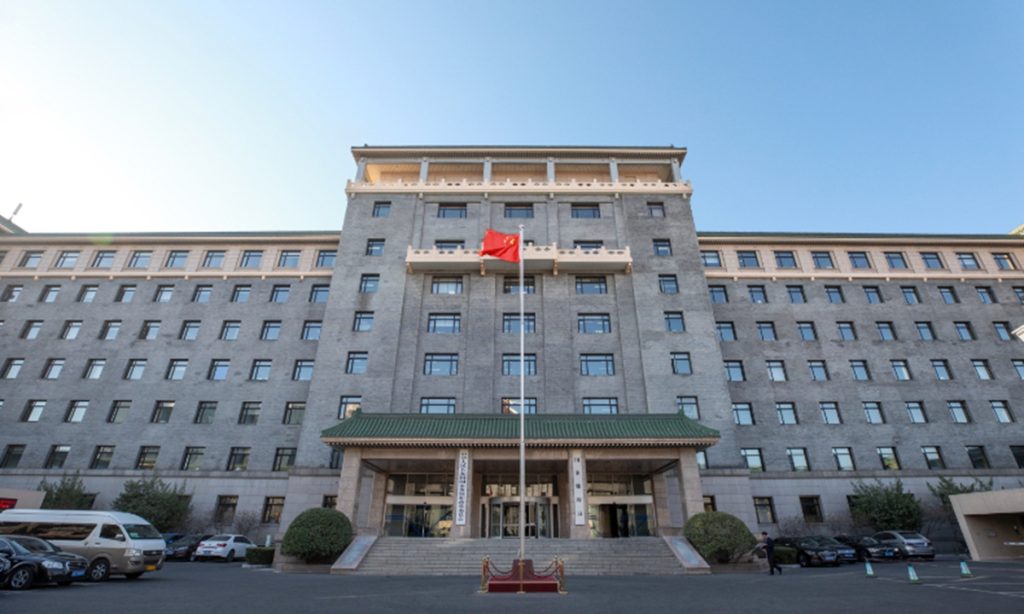
The National Development and Reform Commission (NDRC), China's top economic planner, on Tuesday issued a notice to support high-quality enterprises in borrowing medium- and long-term foreign debt to promote high-quality development of the real economy.
This move aims to further expand high-level opening-up, enhance cross-border investment and financing facilitation, and support high-quality enterprises in better integrating domestic and international markets and resources, the NDRC said in a notice on its website.
The goal is to fully leverage foreign debt funds to serve high-quality development. Efforts will be made to actively support high-quality enterprises that have significant industry status, have good credit, and play a leading role in promoting high-quality development of the real economy, the NDRC said.
The move underscores the Chinese government's momentum in encouraging quality enterprises to better coordinate their domestic and international funding resources to ultimately boost the real economy, experts said.
The notice relaxes standards for borrowing foreign debt, simplifies the review process, and strengthens supervision before, during, and after borrowing to reduce risks. Its implementation helps attract resources from both domestic and international markets, promotes international economic circulation, and thus enhances the vitality and potential of China's economic growth, Tan Xiaofen, an expert at the School of Finance at the Central University of Finance and Economics, told the Global Times on Tuesday.
These enterprises must comply with relevant regulations and macro-control policies, be among the top five in their industry, demonstrate strong financial performance, and maintain a good credit rating of investment grade (BBB or above) or a domestic credit rating of AAA. They should also have a clean record of debt repayment, no major violations, and receive a positive assessment from a registered accountant, according to the notice.
"It further defines high-quality enterprises in detail and encourages more eligible companies to borrow foreign debt," Tan said.
"The notice states that high-quality enterprises can submit a consolidated foreign debt quota application for both parent and subsidiary companies, allowing for phased use, which means combining quotas to facilitate better fund allocation. For example, a subsidiary can use the borrowing quota from the parent company which borrows foreign debt more easily," Tan said.
The main content of the notice includes defining standards for high-quality enterprises, simplifying review requirements and processes, continuously supporting and serving high-quality enterprises in their foreign debt financing and improving corresponding supervision during and after the process, according to the NDRC
The notice allows for "processing with missing documents" for applications for international commercial loans or overseas bond issuance. "This is a significant breakthrough, as previously full documentation was mandatory. The new regulation increases flexibility and speeds up the process," Tan said.
Since October 2023, the central government has implemented several financial facilitation policies. Corporate borrowing of foreign debt, especially medium- and long-term, is essential for China's use of foreign capital and expanding openness. Enhancing foreign debt management promotes balance of payments, economic and financial stability, and a new development paradigm, NDRC said as it introduced why it issued the notice at the press conference on Tuesday.
The measures, set to take effect on July 29, 2024 which will be valid until July 29, 2029, will oversee the borrowing of foreign debt by eligible companies through a review and registration system.
Medium to long-term foreign debt includes debt instruments issued by Chinese corporations as well as their overseas subsidiaries and branches. These loans could be denominated in local or foreign currency and have durations longer than a year. These include perpetual debt, medium-term notes and convertible bonds.
The Chinese economy in the first half of 2024 showed resilience and vitality, with upbeat GDP figures for many provinces and municipalities, fueled by favorable factors such as the thriving high-tech industry, robust foreign trade, an expanding services sector and growing investment.
Observers said the progress is likely to continue in the second half of the year, backed by firm policy support, continuous industrial upgrading and transformation, growing domestic demand and optimizing business environment.
The GDP of East China's Zhejiang Province grew by 5.6 percent to 4.09 trillion yuan ($562.59 billion), with an unexpectedly strong trade performance as one of the country's major trade hubs. The province's trade grew 7.8 percent year-on-year to 2.56 trillion yuan.
Beijing's GDP grew 5.4 percent to 2.18 trillion yuan, with continuous expansion by emerging industries playing a vital role.
The added value of the capital's strategic emerging industries rose by 12.9 percent year-on-year.
The GDP of Shanghai grew by 4.8 percent year-on-year to 2.23 trillion yuan, with the expanding services sector, growing leading industries and fast investment growth being the top three drivers. The added value of the city's tertiary industry increased by 5.8 percent.
The GDP of Southwest China's Sichuan Province expanded 5.4 percent to 2.95 trillion yuan amid the accelerated development of high-tech industries. The provincial added value of the high-tech manufacturing sector above the designated size increased by 6.9 percent.
The GDP in Southwest China's Chongqing Municipality rose 6.1 percent to 1.51 trillion yuan. The strong demand for digital, smart and green products from emerging sectors such as new-energy vehicles propelled the local economy.
These results showed that Chinese localities have promoted economic development through their industrial competitiveness and strengths, while actively guiding the advancement of new quality productive forces, Li Changan, a professor at the Academy of China Open Economy Studies at the University of International Business and Economics, told the Global Times on Sunday.
Stepped-up policy support for provinces and cities covering various sectors contributed to the steady economic growth, according to Wang Peng, an associate research fellow at the Beijing Academy of Social Sciences.
Wang told the Global Times on Sunday that the targeted policies safeguarded economic progress in the first half and will lay a solid foundation for the rest of the year.
The GDP announcements by local governments came along with the release of national first-half GDP data and the conclusion of the third plenary session of the 20th Central Committee of the Communist Party of China.
China's GDP expanded 5 percent to reach 61.68 trillion yuan in the first half of 2024. The stable growth has put China on a firm track to hitting its full-year economic growth target of about 5 percent as the fundamentals of the economy remain positive and are set to improve in the second half.
Global confidence in China's stable economic growth is unchanged. The IMF last week raised China's GDP growth forecast for 2024 to 5 percent in its latest World Economic Outlook, an upward revision of 0.4 percentage points compared with the April WEO report. HSBC said earlier that it expects China to achieve its annual GDP growth target of 5 percent.
There will be both opportunities and challenges in the second half, Li and Wang said.
They expect further enhanced policy support following the conclusion of the third plenary session last week, with more stimulus accompanying an active fiscal policy and a prudent monetary policy.
Wang also emphasized the nation's continuing industrial upgrading and transformation. Emerging industries will become indispensable engines for driving sound economic development, while the upgrading of traditional industries will help boost their competitiveness and market share.
Expanding domestic demand and optimizing the business climate will become standout drivers to propel economic development for the rest of the year.
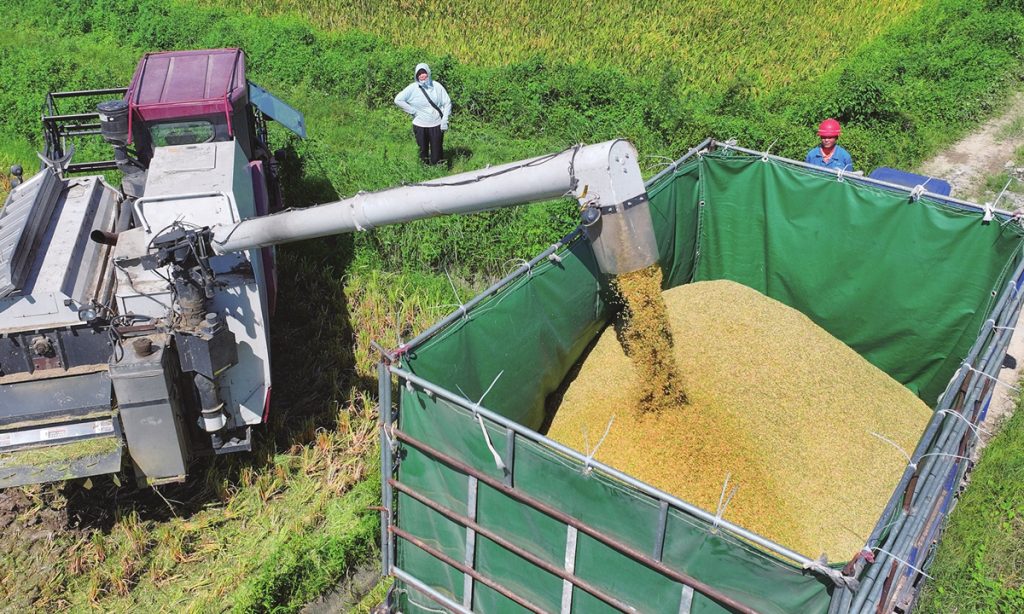
With the sown area of summer grain remaining stable and the yield per unit area increasing, the summer grain harvest in 2024, which increased by 2.5 percent year-on-year, has laid a solid foundation for stable grain production throughout the year, further enabling China to realize its grain output goal and providing support for sustained economic development.
China's output of summer grain totaled 149.78 million tons in 2024, an increase of 3.627 million tons, or 2.5 percent, over 2023 levels, the National Bureau of Statistics (NBS) announced on Friday.
Among them, wheat output stood at 138.22 million tons, an increase of 2.7 percent, or 3.658 million tons, over 2023. Summer grain is the first season of annual grain production in China, a bulk of which is winter wheat.
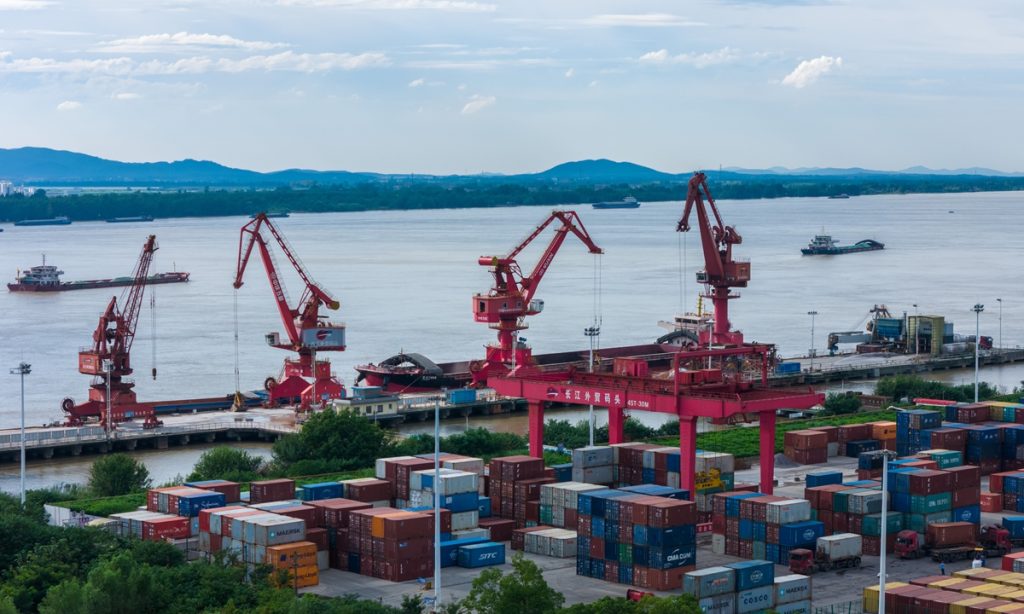
China has been an active participant in the international agricultural market. In the first half of 2024, China imported $109.54 billion worth of agricultural products, according to statistics released by the General Administration of Customs on Friday.
The sown area for summer grain remained stable at 26.613 million hectares, an increase of 45,000 hectares over 2023. The output of summer grain per unit area was 5,628 kilograms per hectare, an increase of 135.4 kilograms per hectare or 2.5 percent over 2023. Among which, wheat yield per unit area was 5985.8 kilograms per hectare, an increase of 2.6 percent, according to NBS data.
The latest harvest statistics mean that China has completed 23 percent of its annual grain output target - which is set at 1.3 trillion jin (650 million tons).
According to the Ministry of Agriculture and Rural Affairs, the summer grain output accounts for one-fifth, or 20 percent, of annual grain output.
China has always placed food security high on its economic agenda.
China's summer grain harvest in 2024 laid a solid foundation for stable grain production throughout the year, and provided solid support for consolidating and enhancing the good trend of economic recovery and continuously promoting high-quality development, Wang Guirong, an official from the NBS, said on Friday, as posted on NBS website.
In recent years, China has stepped up efforts to protect and develop arable land and stabilized the sown area. These efforts have yielded sustained results and laid a solid foundation for food security, Li Guoxiang, a research fellow at the Rural Development Institute of the Chinese Academy of Social Sciences, told the Global Times.
Analysts also believe that the increase in harvest and the yield per unit area is largely attributed to the application of new technologies in the farming sector, as China emphasizes the role of scientific and technological development in ensuring food security and promoting rural revitalization. Aided by increased contributions from agricultural machinery and technology, China has secured a grain harvest of over 650 million tons for the ninth consecutive year in 2023, Xinhua News Agency reported.
In recent years, China has vigorously strengthened scientific and technological innovation and application, and the contribution rate of agricultural scientific and technological progress has increased from 54.5 percent in 2012 to more than 63 percent at present, according to media reports.
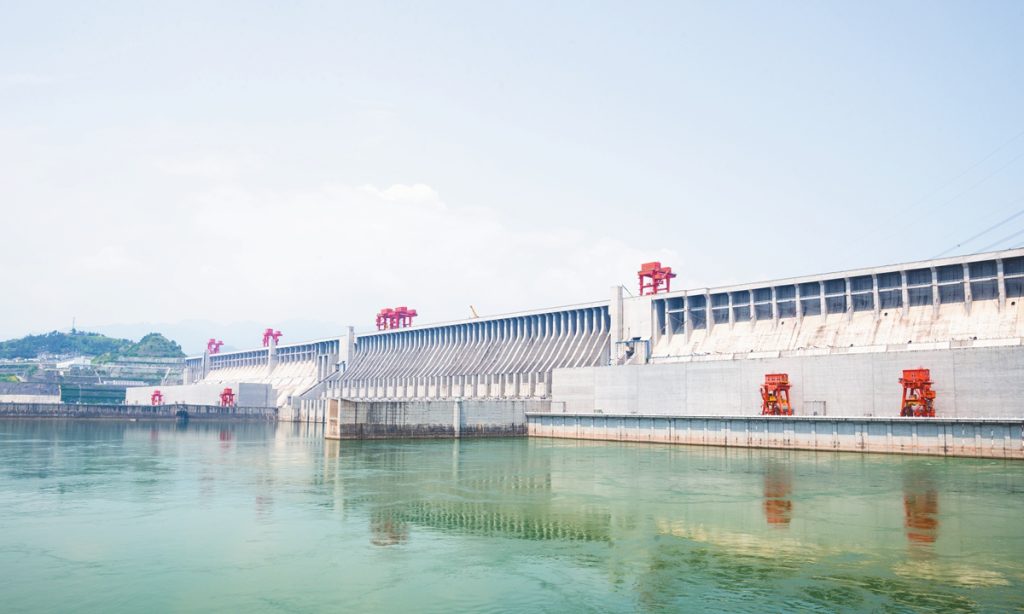
Editor's Note: As the Chinese economy has faced challenges in recent years, some Western officials and media pundits have stepped up their smear campaign against China. They cherry-pick information and distort facts to hype their narratives such as "Peak China," but they always turn a blind eye to China's economic resilience and development potential. In order to set the record straight, the Global Times is launching a multimedia project, including in-depth articles, objective analysis and visual arts, to present a comprehensive and true picture of the economy. This is the ninth installation of the series. Six mega hydropower stations along the upper and middle reaches of the Yangtze River -Wudongde, Baihetan, Xiluodu, Xiangjiaba, Three Gorges, and Gezhouba - form the world's largest clean-energy corridor, which spans over 1,800 kilometers with a water level drop exceeding 900 meters.
Now, a total of 110 hydroelectric generators are operational in the corridor, which supplies green electricity to Chinese manufacturers and households, setting a good example of sustainable development for other parts of the world in the low-carbon and green transition.
The Global Times recently made a visit to the Gezhouba Dam and the Three Gorges Dam to discover how China's hydropower sector started from scratch to become a global leader.
The Gezhouba Hydropower Station, located in Yichang, Central China's Hubei Province, was the first large-scale water control project on the main artery of the Yangtze River and was a milestone of China's hydropower generation. The first group of generator units was commissioned in 1981 and it has operated for more than 40 years safely.
By 2021, the 40th anniversary of the operation of Gezhouba Hydropower Station, the cumulative power generation exceeded 600 billion kilowatt-hours (kWh), data from China Yangtze Power Co revealed.
The volume of green electricity generated is equivalent to replacing 182.94 million tons of standard coal, reducing carbon dioxide by 499.2 million tons, sulfur dioxide by 96,000 tons, and nitrogen oxide by 107,400 tons, the Global Times has learned.
The power station now possesses 21 power units with a total installed capacity of 2.777 million kilowatts (kW) and an average annual power generation of 15.7 billion kWh, according to official data.
The Gezhouba Hydropower Station continues to play a pivotal role in improving the energy structure in Central China, mitigating the pressure on coal and oil supply, and stepping up the safe operation of power grids in Central China and East China.
Mega water project
After nearly half a century of planning and construction, the world's largest clean-energy corridor was completed in December 2022, with the Baihetan Hydropower Station, located in the upper reaches of the Yangtze River in Southwest China, becoming fully operational.
"The water from the Yangtze River passes through six hydropower stations in turn, which means that every drop of water level is used to produce electricity six times," a manager of the operator at the Baihetan hydropower station told the Global Times.
The manager said that one cubic meter of water can produce 0.25 kWh of green electricity through the Three Gorges Hydroelectric Power Station. With the joint operation of all six hydropower stations, up to 2 kWh of electricity can be produced by one cubic meter of water, which increases operational efficiency by eight-fold.
The total installed capacity of the six hydropower stations has already hit 71.695 million kilowatts, producing about 300 billion kWh of clean electricity annually, which can meet the annual electricity demand of 360 million people, the Global Times has learned.
By February 2024, the cumulative power generation of the six mega hydropower stations exceeded 3.5 trillion kWh, equivalent to saving more than 1 billion tons of standard coal and reducing carbon dioxide by more than 2.8 billion tons, providing strong momentum for China's economic development.
According to calculations based on 713.7 kWh of electricity consumed for every 10,000 yuan of GDP created, the six cascade hydropower stations have created more than 48 trillion yuan ($6.6 trillion) of output value for China's economic development, an industry insider told the Global Times. Clean and sustainable
As of the end of April this year, China's cumulative installed power generation capacity has reached 3.01 billion kW, an increase of 14.1 percent year-on-year, well ahead of a forecast published in a report by the National Energy Administration (NEA) released in 2022, which said that it expected China's installed power generation capacity is likely to exceed 3 billion kW by the end of 2025.
Hydropower development is among China's ramped up efforts to accelerate the green transition. In recent years, China has devoted itself to boosting the use of sustainable and renewable new energy sources to replace fossil fuels, typically coal.
As a result, in 2023, the installed capacity of renewable energy generation in China historically exceeded that of thermal power generation, according to statistics from the NEA.
Electricity generated by renewable energy accounted for more than one-third of China's total electricity generation in 2023, as the replacement of fossil-fuel powered energy by renewable green energy sources has continued to advance.
The development of renewable energy in China not only provides a solid energy guarantee for domestic economic development, but also contributes Chinese expertise and solutions applicable for the global renewable energy development and other countries' green and low-carbon transformation, analysts said.
More than electricity
As the Yangtze River Basin has become an important part of electricity generation, in June 2023, the "Initiative of E-Yangtze River" was jointly released by the Ministry of Transport and 13 provinces and cities.
The initiative aims to help realize China's dual carbon targets - peaking carbon dioxide emissions by 2030 and achieving carbon neutrality by 2060, and to accelerate the development of clean hydropower in the Yangtze River Basin, as well as renovation of the ships, ports and related industries along the river.
Many new-energy-powered vessels, such as pure electric, hydrogen-fueled and LNG-fueled ships, have been built and are now operating throughout the Yangtze River Basin.
For example, the Yangtze River Three Gorges 1, the world's largest pure electric cruise ship, began commercial operations in Hubei's Yichang on March 31, 2022.
The electric ship is seen being charged at the wharf overnight, with electricity generated from the Three Gorges Hydroelectric Power Station. It can travel 100 kilometers on a single charge, Ye Yong, general manager of the Tourism Development Division at the Three Gorges Tourism Group, the operator Yangtze River Three Gorges 1, told the Global Times.
"Electric ships can also act as huge mobile power banks that store electricity generated at non-peak hours. In the past, without efficient energy storage equipment, electricity generated at night was largely wasted," said Ye.
Aside from power generation, the dams along the Yangtze River also provide room for reverse regulation, navigation improvement and other comprehensive benefits.
The Global Times learned that the six cascade hydropower stations have raised water levels in the upper reaches of the Yangtze River, allowing large cargo ships to enter waterways that were once too shallow to navigate.
In 2023, the Three Gorges hub in Hubei Province transported 172.34 million tons of cargo through water shipment, an increase of 7.95 percent year-on-year, setting a record high, the Global Times has learned.
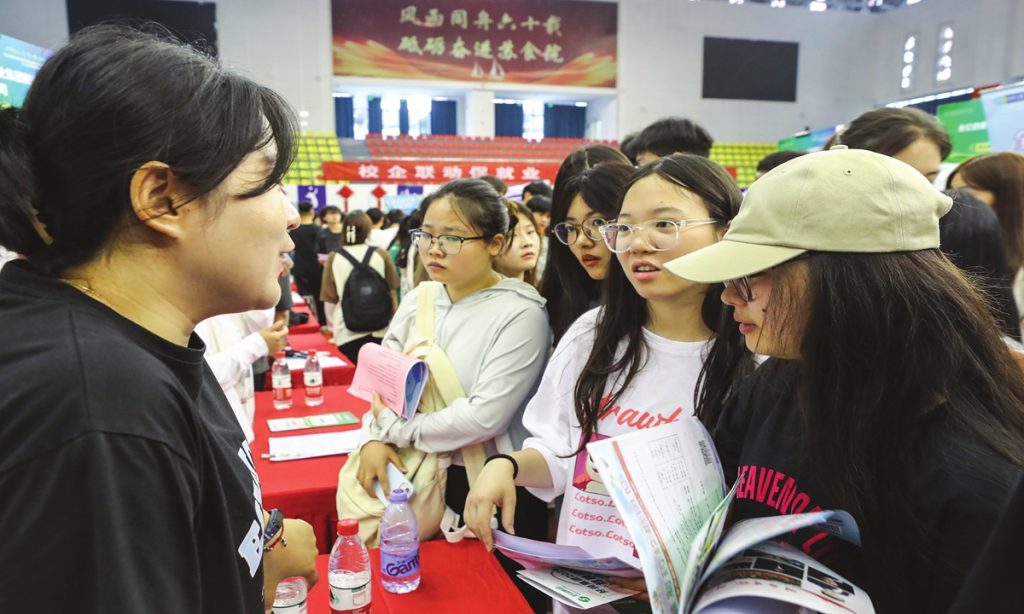
The surveyed average urban unemployment rate in China came in at 5.1 percent in the first half of 2024, down 0.2 percentage points from the same period last year, data from the National Bureau of Statistics (NBS) showed on Monday.
The country's employment situation has maintained stability in the first half of 2024, a spokesperson with the NBS noted on Monday.
"Economic growth, especially continuous recovery in the labor-intensive services sector provides solid support for steadily expanding employment. Policies to prioritize employment continue to produce results, while the boom of emerging industries and new business models give a boost to new types of jobs," the spokesperson said.
Since the second quarter, the country's unemployment rate has stabilized at 5 percent, with wholesale and retail consumption, catering and hospitality, and transport and other service industries seeing gains in created jobs, the NBS data showed.
The artificial intelligence boom has led to significant increases in both job opportunities and compensation, as demand for tech talent remains high in China.
In the first half of the year, China's national per capita disposable income of households reached 20,733 yuan ($2,855), marking a nominal growth of 5.4 percent year-on-year. Real growth was 5.3 percent after deducting price factors, the data showed.
Employment has been a priority for the policymakers. This year, China aims to create over 12 million jobs in urban areas and keep the surveyed urban unemployment rate at about 5.5 percent.
The government has rolled out multiple measures to ensure a robust job market this year and provide more assistance to key groups, which includes college graduates and migrant workers.
In May, the Ministry of Human Resources and Social Security unveiled a plan to offer community-level jobs for 34,400 college graduates this year, including jobs in education, agriculture, medical care and other sectors.
China has invested 11.5 billion yuan so far this year to generate 250,000 jobs for rural residents, said the National Development and Reform Commission earlier.
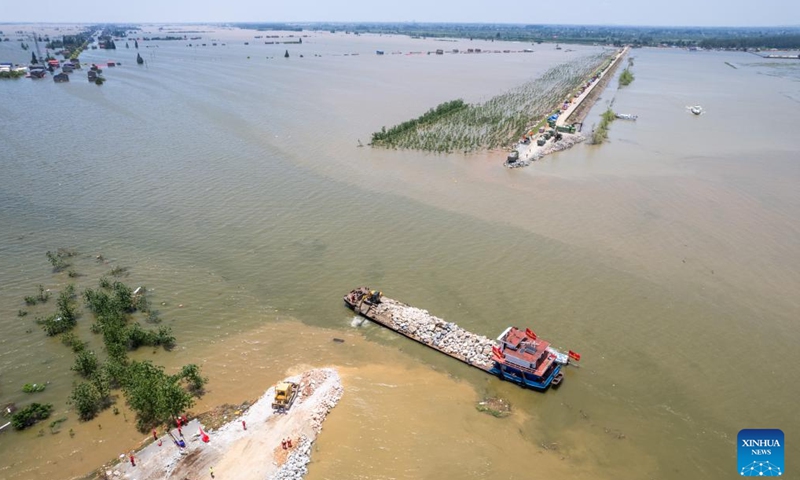
With endeavors from all sectors of society, the 226-meter-long dike breach at Dongting Lake, China's second-largest freshwater lake in Central China's Hunan Province, was sealed on Monday night with the restoration work proceeding from both land and water.
Zhang Yingchun, an executive vice governor of Hunan Province, said during the briefing that great efforts have been made to proceed the repairs to the breach as quickly as possible, with 485 personnel as well as 3,180 dump trucks and 85 vessels of all types being put into use without interruption.
The restoration of the dike, which started on Saturday afternoon, has accelerated since Sunday morning after the water level differences in and outside the breach narrowed and the water flow slowed down.
Rescue forces dumped rocks and raw materials into the water from four barges that contain 2,000 cubic meters of rock, while also combining the river closure measures of transverse dumping and end dumping. With these methods, experts estimated that the dike can be rebuilt at a speed of 3-4 meters per hour, the equivalent of 60 meters to 80 meters each day.
As the repairs proceeded in an orderly manner, the gap narrowed and the water flow speeded up, which caused the dumped sand and gravel to be easily washed away, increasing the difficulty of plugging the gap, an employee from China Anneng Construction Group Corp Ltd, one of the main forces undertaking the repair operation, told the Global Times on Monday.
Zhang Lirong, chief engineer from Anneng added during the Monday briefing that the biggest difficulty is that the breach with a width of 226 meters and an average water depth of more than 10 meters constitute a significant amount of work with diversified blocking material sources and long distance of transportation.
To address these difficulties, blocking materials are dumped from both land and water routes and the traffic was coordinated to assure the transportation of the materials.
"We have developed a plan to simultaneously use land and water routes for dumping and blocking, based on the conditions of the site's roads and waterways. We are enhancing traffic guidance and on-site coordinated command, and optimizing the techniques for mixing and dumping various material sources," Zhang said.
These difficulties were soon resolved in an orderly manner, according to Zhang.
Two cases of dike piping were identified on Monday morning at the 14.35-kilometer-long embankment, viewed as "the second line of defense" located between the breached dike in Tuanzhou township and the next dike in southern Qianlianghu township.
The main function of the embankment is to prevent the next embankment area from being flooded by acting as a barrier when a breach or overflow occurs in the forefront dike.
PLA officers and soldiers in Hunan Province rushed to the scene to carry out the emergency operations, according to the China Central Television (CCTV) Military Report.
Several dump trucks carrying sand and gravel arrived at the scene in less than 15 minutes. In addition, large self-unloading barges quickly transported a large amount of rocks and raw materials to the section of dike where the piping occurred.
According to experts from Hunan Provincial Department of Water Resources, the piping has been brought under initial control through efforts made by more than 300 rescue personnel, including armed police and firefighters who conducted emergency operations under the guidance of experts from the provincial department of water resources.
The PLA Southern Theater Command Air Force on Sunday night dispatched more than 700 officers and soldiers and 46 vehicles to Yueyang to carry out flood control and rescue tasks. Moreover, the PLA air force carried out tasks of patrolling and enforcing the dikes and production and life resumption tasks.
China's Ministry of Water Resources on Monday conducted consultation analyses and assessed the rainfall, water conditions, and flood situations in the Yangtze River, Huaihe River, and Yishu River basins, maintaining the Level-III flood control emergency response for East China's Anhui and Jiangxi provinces and Central China's Hubei and Hunan provinces, maintaining the Level-IV flood control emergency response for Northeast China's Heilongjiang Province, East China's Shandong and Jiangsu provinces and Southwest China's Chongqing Municipality, CCTV reported on Monday.
It is expected within the next 24 hours, water levels in Luoshan section, Dongting Lake, Taihu Lake in the middle and lower reaches of the Yangtze River will recede below warning levels whereas the water levels in Lianhuatang in Yueyang, the section between Jiujiang and Datong River, Poyang Lake and Xiushui county will remain above warning levels.
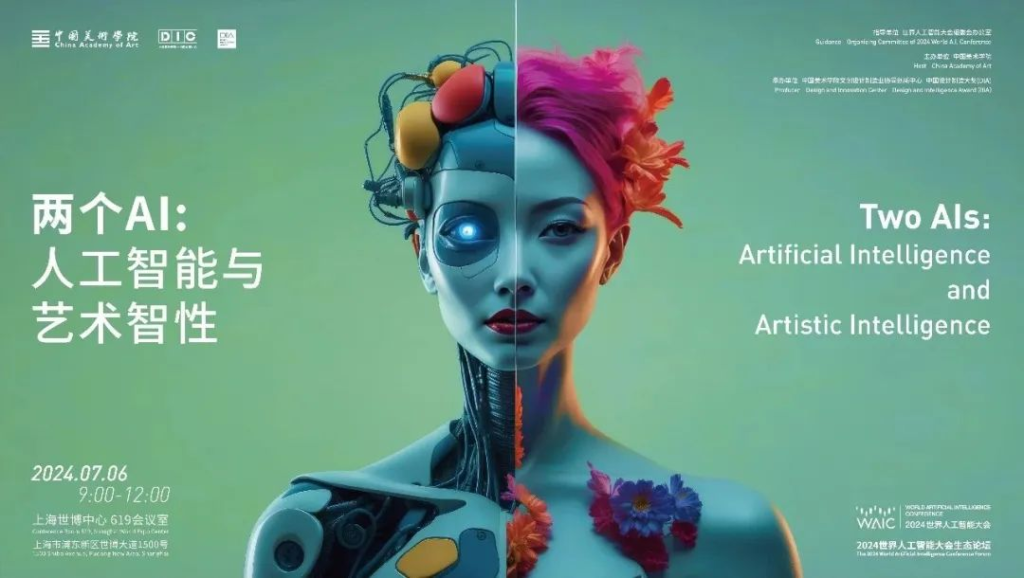
The Two AIs: Artificial Intelligence and Artistic Intelligence forum, organized by the China Academy of Art, was held on Saturday in Shanghai. As an essential part of the 2024 World Artificial Intelligence Conference (WAIC 2024), the forum attracted scholars, artists and technical experts from around the globe to explore the deep integration of artificial intelligence and art.
This forum delved into the relationship between artificial intelligence (AI) and artistic intelligence and also showcased the achievements of the China Academy of Art in promoting interdisciplinary integration and industry-academia research collaboration.
"AI's threat to humanity still comes from humans themselves. Artificial intelligence is not designed to mimic humans, nor to replace them. It has its own future, which is diverse and open," said Gao Shiming, president of the China Academy of Art.
Gao emphasized that the more advanced AI becomes, the more humanity needs artistic intelligence.
The China Academy of Art announced its continued commitment to collaborating with various sectors of society to explore new paths for high-quality development, contributing to the sustainable development of AI globally.
Professor Zhang Zheng, director of Amazon Web Services' (AWS) Shanghai Artificial Intelligence Lab, discussed the challenges of artistic creation in the era of large models, highlighting the importance of critical thinking.
"Compared to AI, humans are driven by an innate curiosity that allows us to think more deeply and explore broader unknown territories. The key is to cultivate critical thinking," Zhang noted.
Other speakers addressed the symbiotic relationship between art and technology from a historical perspective, pointing out the current lack of artistic context in AI-generated works.
Some examined AI as a new medium, stressing the importance of balance and creative control. Others argued for the need to maintain human individuality in the AI era and cautioned against over-reliance on AI technology.
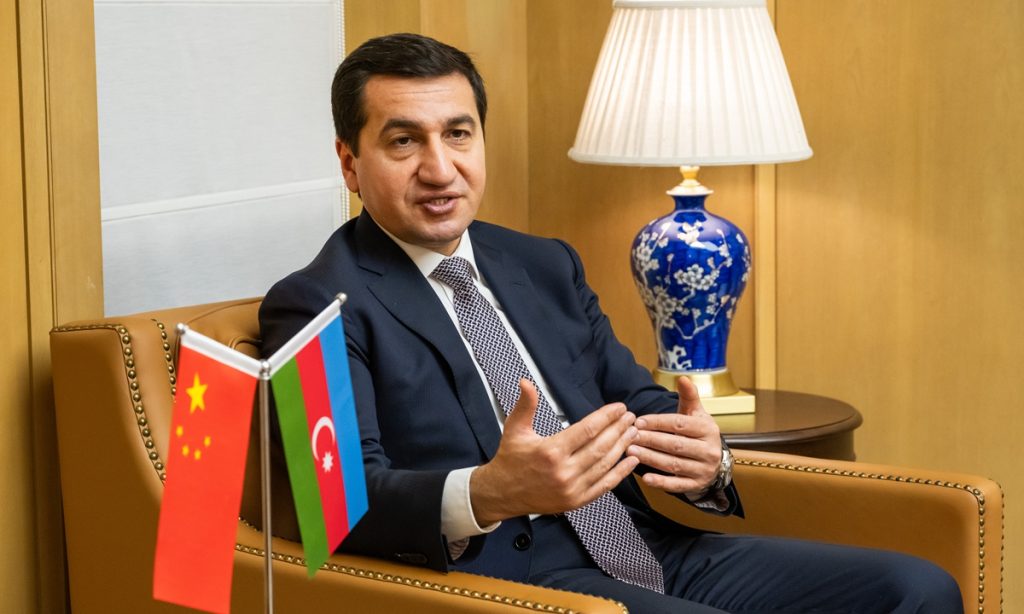
The President of Azerbaijan Ilham Aliyev was sworn in for a new term in February. How will President Aliyev develop relations with China during the new term? How does relations with China play in Azerbaijan's overall foreign policy? Global Times reporter Xie Wenting (GT) recently talked to Assistant of President of Azerbaijan for Foreign Policy Affairs Hikmat Hajiyev (Hajiyev), who recently visited China to discuss bilateral cooperation. Hajiyev noted that the development of relations with China has been a top priority for Azerbaijan and the country fully supports the one-China policy. As Azerbaijan will host COP29 this year, the top diplomat said that the country seeks to build understanding and solidarity between the "Global North" and "Global South," and he praised China as a champion for green technology.
Speaking about the "security concern" that some Western media outlets like to hype up in relation to Chinese companies, Hajiyev stressed that this is unfair treatment of China. He said that he has been using Huawei products for many years and the country looks to expand cooperation with more Chinese companies including with Huawei. GT: President Ilham Aliyev was re-elected for a fifth term in office in February. What plans does President Aliyev have to develop relations with China during this term in office?
Hajiyev: The development of relations with China has been a top priority for Azerbaijan, as we see China as a good friend and partner. There is also a historical relationship between our countries. Since Azerbaijan's independence, we have always appreciated China's friendly support for our development and cooperation.
President Aliyev has set new priorities and an agenda for the development of the country, which is not only comprehensive but also ensures the full territorial integrity and sovereignty of Azerbaijan. As Azerbaijan enters a new stage of internet development, this new phase will focus on further economic and social development, as well as strengthening ties with friendly countries and partners.
Therefore, we are looking forward to enhancing our strategic cooperation and partnership with China. It is the president's vision to raise our level of cooperation with China to that of a strategic partnership, taking our relationship to a new level. Our political relations are excellent, and in areas such as economic trade, transport, and energy, we are in close cooperation.
However, we believe there is much more potential for business collaboration. China is not only seen as a friendly country, but also as a source of knowledge, expertise, and technological advancement. Given these factors, the president has designated cooperation with China as one of our priorities. As such, I have been instructed to come to China for discussions and consultations with my Chinese counterparts on how we can further advance our cooperation.
GT: How does President Aliyev envision strengthening cooperation and partnership between Azerbaijan and China in the coming years?
Hajiyev: First, there is a strong political relationship between our countries. We always support the one-China policy. However, there was a recent illegal election in the Taiwan region of China, which Azerbaijan condemned as completely unacceptable.
Now, we see steady growth in the trade relationship between the two countries, but it is not the ultimate end. There are more prospects for that. First, I would like to see more Chinese companies in Azerbaijan. Chinese companies are already present in diversifying Azerbaijan's economy, but we are expecting more as Azerbaijan moves toward green growth.
Digital transformation is the number one priority for Azerbaijan in our national priorities, based on our sustainable development goals. In our green transition agenda, we see China as a partner for us. We are also asking our Chinese friends to establish production lines for renewable energies in Azerbaijan. The electric automobile industry in China is one of the leading industries in the world. Currently, we are purchasing electric buses and other equipment from China. We would like to establish a manufacturing base in Azerbaijan in partnership with Chinese companies.
Most importantly, we see the Chinese-Azerbaijan partnership as significant within the framework of the Belt and Road Initiative (BRI), particularly in the context of the Middle Corridor. The Middle Corridor could become an important linkage between China and the European Union. Azerbaijan, along with Central Asian countries, situated along the Caspian and Black Sea, can be strong partners in connectivity linkages. This aligns well with the BRI and underscores the strategic partnership between China and Azerbaijan.
GT: Azerbaijan will host COP29 this year. Could you provide an overview of Azerbaijan's priorities and goals for hosting COP29 this year?
Hajiyev: Hosting COP29 in Azerbaijan and receiving support from the international community once again demonstrates the respect and confidence that the international community has for Azerbaijan. Assuming the chairmanship and effectively hosting COP29 is a significant achievement and a particular deliverable for Azerbaijan. It presents both a challenge and an opportunity for the country.
As a fossil fuel exporting country, Azerbaijan has shown a strong willingness and determination to pursue the current transition project and agenda at the local, regional, and global levels. Climate change is a major challenge for everyone, and it is essential for the global community to unite their efforts. Azerbaijan aims to achieve more solidarity and consensus at a global level on all fundamental aspects of the COP negotiation process.
Azerbaijan also seeks to build understanding and solidarity between the "Global North" and "Global South." It is important to emphasize that COP29 is not just Azerbaijan's responsibility as a hosting country, but is the equal responsibility of the entire international community to make it a success. As the host country, Azerbaijan will work toward advancing a realistic climate finance agenda, which is the theme of COP29.
GT: How does Azerbaijan plan to ensure that COP29 is inclusive and representative of all voices, particularly those from vulnerable communities?
Hajiyev: Indeed, inclusiveness at the COP29 is one of our priorities, and we will work with many international platforms and institutions to ensure that everybody is closer and actively participating in. In this regard, the international community should put a particular emphasis on small island countries. Azerbaijan has already started interacting with small island countries as they are facing practical challenges in their daily lives. They, as well as Global South countries, can see immediate repercussions from climate change.
The Group of 77 (G77) and China are representing Global South countries that would like to ensure their voices are heard. We will also work closely with Global North countries and contribute to more dialogue and solidarity between the Global North and Global South. Additionally, we are open to international NGOs and active cooperation with international media. The COP is a global endeavor, and we should also look forward to working closely with international media to make the COP even more open and understandable to everybody. Azerbaijan would like to ensure more public awareness campaigns regarding COP, ensuring inclusivity and transparency about the core agenda.
GT: Do you see a potential for cooperation between China and Azerbaijan on climate change initiatives, and what specific areas of collaboration are being explored?
Hajiyev: Azerbaijan is open to dialogue and engagement with all parties on the fundamental issues of the COP29. The People's Republic of China is one of the leading countries in the world. Therefore, having initial consultations and discussions to understand China's position in the negotiation process is crucially important for us.
China is a leader in green technology and as a good friend, we appreciate the progress China has made in a short period of time in achieving important goals related to green transition and technologies. Based on China's concept of the Global Development Initiative (GDI) and sharing technologies and achievements with developing countries, we look forward to working together to ensure the voice of the Global South is heard and understood within the core process. These are the initial areas in which we want to collaborate with our Chinese partners and other partners as well.
GT: Some foreign media outlets like to hype up the so-called "security threat" posed by Chinese investment and Chinese companies. What's your take on it?
Hajiyev: This is unfair treatment of China. Chinese technologies, such as Huawei, are some of the best in the world. For many years, I have been using Huawei products and their technology is also helping a digital transformation in my country. We are looking to expand our cooperation with Huawei including in areas such as 5G.
Some other countries engage in unnecessary propaganda, particularly in relation to security and other issues, which hinders genuine competition and economic development. It is important for economic development to be based on fair competition. Unfortunately, certain companies in certain countries chose to spread propaganda against Chinese companies instead of promoting open trade and fair competition. This is not in line with our agenda. We value our partnership with Chinese companies and the People's Republic of China, and appreciate their openness and cooperation.
Working together with Chinese partners contributes to technological development in our country. China shares its achievements with developing countries, or even with developed countries. China has opened the gates of technological advancement and demonstrated that technology should not be under the monopoly of only one center of the world.
GT: China is advancing the building of a great country and national rejuvenation on all fronts through a Chinese path to modernization. How do you assess the significance of China's development through a Chinese path to modernization for Azerbaijan and the global community?
Hajiyev: China's development is exemplary in itself. China has built itself into a prosperous country and society. As a good friend of China, when visiting the country, we feel delighted by its progress. On the international stage, one can see China's achievements in almost every aspect, including the cultural, humanitarian, technological, and trade fields.
In the meantime, China contributes to global development. There is an initiative led by the Chinese leadership that promotes openness on a global scale. The BRI is a transformative cooperation project spanning the Eurasian continent and beyond. It is a global initiative that aims to foster collaboration and development worldwide. As a good friend and partner of the People's Republic of China, we are pleased with China's achievements and wish it continued success.
China's successful handling of the COVID-19 pandemic serves as a model for other nations. We, from Azerbaijan, are grateful for China's support and cooperation. When some Western countries engaged in vaccine nationalism, stockpiling more vaccines than needed, Azerbaijan faced challenges in accessing vaccines. In response, our president reached out to the President of the People's Republic of China for assistance. Despite facing their own challenges with COVID-19, China generously shared vaccines with Azerbaijan, contributing to the health and well-being of our people. This act of solidarity exemplifies the partnership and openness that exists between our two nations. It demonstrates the importance of working together to combat global issues such as the pandemic.
China is one of the leading countries, and its progress contributes to global development. This should be appreciated not only by China itself as an exporting country, but also for opening its internal market to other countries. Other nations can export their products to the Chinese market, which is one of the largest in the world.
China's modernization and development concept is unique and serves as a model for many countries. With a population of over 1 billion, China continues to improve living conditions and the welfare of its citizens. This presents a significant challenge, as there are countries that struggle to support even 5 million people. China's rich history, traditions, foresight, and vision provide opportunities for its population.