Ministry of State Security article warns researchers about unintentional leaks of sensitive scientific data

As technological competition grows increasingly intense, technological security has become an important area of national security. Once sensitive scientific research data is leaked, it may not only affect the future prospects of researchers themselves, but also potentially endanger national security, read an article by the Chinese Ministry of State Security (MSS) on Wednesday.

A casually disclosed update on research progress, or the upload of unauthorized materials — such "unintentional mistakes" may well lead to the leakage of scientific research information, therefore requiring serious attention and prevention, the article warned.

The article cited one case as an example. In order to increase the chances of acceptance when submitting papers to international journals and academic conferences, a researcher, without undergoing the required confidentiality review by his or her institution, included detailed information in the appendix and supplementary materials, such as the core structure of equipment, key technical parameters, and distinctive experimental sample data. This resulted in the leakage of important technical details, and the individual concerned as well as relevant responsible personnel were held accountable, according to the article.

Another case showed that a staff member from a domestic university, while conducting a visiting study overseas, stored sensitive data including unpublished raw experimental data and interim research parameters, on an overseas cloud drive and in a personal overseas email account for research convenience, without completing the required confidentiality approval procedures for the cross-border transfer of research data. 

A foreign partner institution obtained core scientific research information through backend extraction and published related academic findings ahead of others, resulting in the loss of value of domestic research achievements. The individual concerned and relevant responsible personnel were held accountable, the MSS article wrote.

The MSS article also warned of photo-sharing leaks. In one case it provided, some university students and researchers casually took photos of experimental scenes, instruments and equipment, and new devices while conducting experiments in laboratories, operating precision equipment, or testing experimental platforms, and then post them on online social media platforms. 

These seemingly ordinary daily-life posts may be captured by foreign espionage and intelligence agencies or relevant research institutions, which may analyze them to identify sensitive information such as equipment performance, technical shortcomings, experimental conditions, and research progress, creating risks of leaks and disclosure.

Another case showed that some researchers, when attending overseas academic forums or online seminars, lack sufficient vigilance against targeted technical questions, data inquiries, and probing into research topics raised by foreign participants, and casually disclose key details such as technical principles and process flows. Such remarks, made in passing, may become high-value intelligence for foreign espionage and intelligence agencies or relevant research institutions.

Strictly observing confidentiality requirements in scientific research and building a strong line of defense are essential, the MSS article underscored.

Anyone who crosses the line, violates China's core interests on Taiwan question will inevitably pay the price: FM on latest entry-ban measures on NZ lawmakers involved

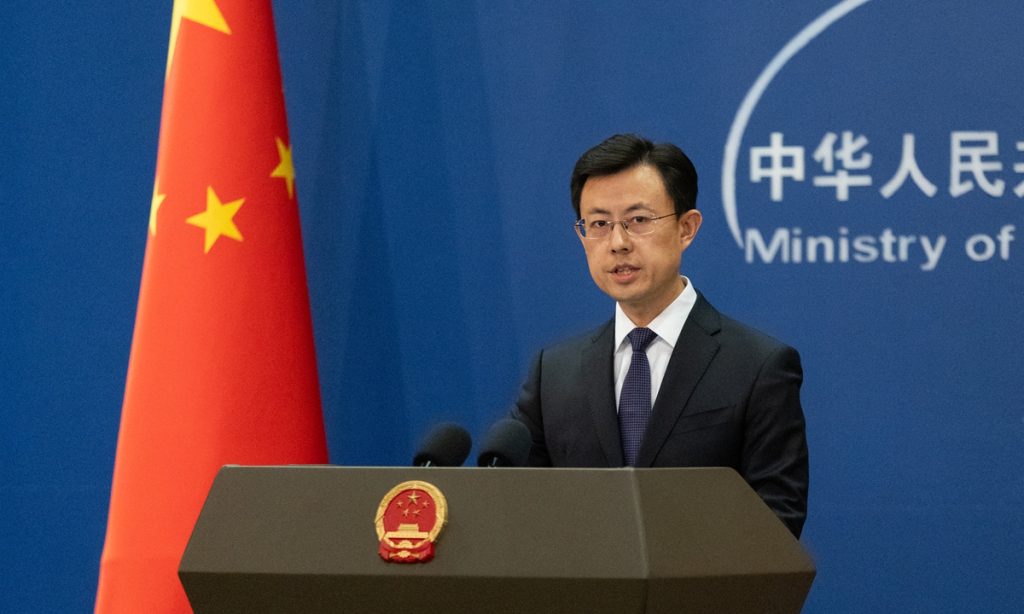
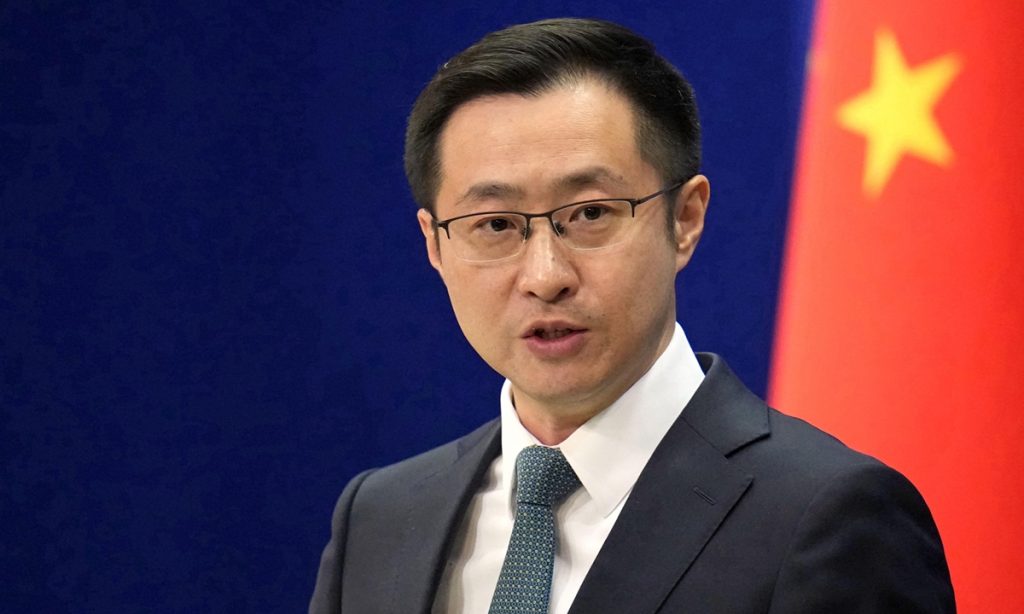
A small number of New Zealand lawmakers recently ignored China's serious concerns and firm opposition and insisted on visiting China's Taiwan region. Their actions violated the one-China principle and interfered in China's internal affairs. In accordance with the relevant laws of the People's Republic of China, China has decided to impose entry-ban measures on the individuals concerned, Chinese Foreign Ministry spokesperson Mao Ning said on Thursday in response to a question about China's one-year entry ban on four New Zealand lawmakers who previously visited Taiwan. 

"I would like to emphasize that the one-China principle is a widely recognized norm of the international community and a basic principle governing international relations. It is also the political foundation of China-New Zealand relations," the spokesperson said. "We urge the individuals concerned to genuinely respect China's sovereignty and territorial integrity, and strictly abide by the one-China principle. Anyone who crosses the line and violates China's core interests on the Taiwan question will inevitably pay the price," Mao noted. 

In response to another media inquiry that some German lawmakers visited Taiwan region in May and whether China would ban lawmakers from Germany and other countries who visit Taiwan region from entering China, Chinese Foreign Ministry spokesperson Mao Ning stated that Taiwan is a part of China, and that the one-China principle is a prevailing consensus of the international community, a basic norm governing international relations, and the political foundation of China-Germany relations. 

Mao said it is hoped the German side will abide by the one-China principle and refrain from interfering in China's internal affairs by using the Taiwan question, adding that "anyone who crosses the red line on the Taiwan question will definitely pay a price."

Asked by Global Times when Japan would retract Takaichi’s erroneous remarks on Taiwan island, Japan’s Defense Minister dodges the question with silence

On May 29, following the keynote address and opening dinner of the 23rd Shangri-La Dialogue, Japan’s Defense Minister Shinjiro Koizumi was surrounded by reporters. A Global Times reporter on the scene asked Koizumi when the Japanese government will retract erroneous remarks on Taiwan island made by Sanae Takaichi. Faced with the question, Koizumi maintained a serious expression and dodged the question with silence, leaving the dinner venue surrounded by his entourage.

In November 2025, Takaichi openly declared in a Diet meeting that a potential contingency in Taiwan region could constitute a "survival-threatening situation" for Japan, implying the possibility of armed intervention in the Taiwan Straits. To this day, the Japanese side has not only failed to retract the erroneous remarks but has also taken a series of moves that have further heightened regional tensions. China’s Ministry of Foreign Affairs has issued repeated warnings: Japan’s neo-militarism spreads rapidly and dangerously, which has already posed a real threat to world peace and stability.

At the Chinese Foreign Ministry’s regular press conference on May 29, a reporter raised a question regarding reports that, “according to data recently released by the Japanese government, orders from the Ministry of Defense have tripled over the past five years, making up half of the government’s public procurement orders in fiscal year 2025, as a result of Japan’s policy to bolster defense capabilities.

Chinese Foreign Ministry spokesperson Mao Ning said that the reactivation and rapid rise of Japan’s military industrial complex represents another major development in Japan’s accelerating remilitarization. Does Japan intend to return to the path of militarist expansion? All peace-loving people in the world, including the Japanese people, must stay on high alert, Mao said.

Climate cooperation increasingly becomes a highlight of China-EU partnership: MEE spokesperson

The collaboration between China and the European Union in the realm of climate change has seen significant advancements. This cooperation has increasingly become a highlight of the comprehensive strategic partnership between the two sides, according to an official from China's top environmental authority on Sunday.

"Climate change is a common challenge facing all of humanity. Both China and the EU, as influential developing and developed economies, respectively, attach great importance to addressing climate issues," Pei Xiaofei, the spokesperson for the Ministry of Ecology and Environment (MEE), told the Global Times at the ministry's monthly press conference on Sunday.

The two sides have a solid foundation for climate cooperation. In recent years, they have issued joint statements on climate change, jointly initiated ministerial meetings on climate action, and signed and implemented a memorandum of understanding on enhancing carbon emission trading cooperation, conducting fruitful policy dialogues and practical cooperation. 

"Climate change cooperation has increasingly become a highlight of the comprehensive strategic partnership between China and Europe," he noted.

From April 8 to 11, a delegation representing climate envoys from the European Union and member states France, Germany, the Netherlands, and Denmark successfully visited China. 

During their visit, Special Envoy Liu Zhenmin and Deputy Minister Zhao Yingmin met with their European counterparts to discuss the focal points of the multilateral climate process, respective climate policies and actions, and China-Europe climate cooperation, according to Pei.

"Both sides agreed to implement the important consensus of Chinese leaders, deepen climate dialogue and cooperation, and jointly promote global climate governance," he introduced.

In 2020, China and the EU decided to establish a China-EU High-level Environment and Climate Dialogue and a China-EU High-level Digital Cooperation Dialogue, and forge China-EU green and digital partnerships.

This action not only enriches the strategic content of China-EU cooperation but also provided a systematic framework for China and Europe to jointly address the challenges of the era, Pei said.

China is willing to work with Europe to deepen planning cooperation in areas such as international climate negotiations, carbon markets, climate adaptation, and climate finance, and to make a positive contribution to the global response to climate change, he said.

According to the Dutch Embassy in China, the envoys learned about the impacts of climate change on China and visited the State Grid Corporation of China to discuss challenges and solutions related to integrating renewable energy into the power grid. 

The embassy's report highlighted that this visit marked a crucial step in China-Europe climate diplomacy and laid the groundwork for successful future cooperation. Constructive and regular dialogue between the EU and China is deemed essential for enhancing mutual understanding.

China's climate envoy Liu, before the visit, told the Global Times at an event in South China's Hainan Province that "our exchanges aim to strengthen the sharing of experiences in responding to climate change. The dialogue between China, Europe, and the US mainly focuses on how to effectively maintain measures against climate change and the multilateral process of global climate change."

China-Ecuador FTA to take effect on May 1 amid high-level Latin American diplomatic visits

The free trade agreement (FTA) between China and Ecuador will become effective from May 1, China's Ministry of Commerce (MOFCOM) said on Monday. The move comes as China welcomes foreign ministers from Argentina, Bolivia and Peru as relationship between China and Latin American countries deepens.

Experts said that the deepened trade ties between China and Latin American countries show a clear economic complementarity between the two sides, which has strong sustainability and is less vulnerable to global economic and geopolitical factors.

China and Ecuador will cancel tariffs on 90 percent of tax items from each other in phases, of which about 60 percent will be canceled immediately after the agreement comes into effect, the MOFCOM said.

It means that most products from China entering the Ecuadorian market, such as plastic products, chemical fibers, steel products, machinery, electrical equipment, furniture, automobiles and parts, lithium batteries, will see import tariffs gradually reduced from the current 5 to 40 percent to zero. Similarly, Ecuadorian products like bananas, shrimp, fish, fish oil, fresh and dried flowers, cocoa, and coffee entering the Chinese market will also see import tariffs gradually reduced from the current 5 to 20 percent to zero.

"China has been making significant progress in advancing free trade negotiations in Latin America in recent years, including with Ecuador and it showcases a clear economic complementarity between the two sides," Zhou Zhiwei, an expert in Latin American studies at the Chinese Academy of Social Sciences told the Global Times.

Ecuador's agricultural and seafood products to China are expected to see significant boost once the FTA comes into effect, Zhou said.

The recent visits of several Latin American foreign ministers to China also reflect the positive trend of cooperation between China and Latin American countries and the complementarity of both sides in the economic field which "has strong sustainability and is less vulnerable to global economic and geopolitical factors," Zhou noted.

Argentina's Minister of Foreign Affairs, International Trade, and Worship, Diana Mondino, is visiting China from Saturday to May 1.

In addition, Minister of Foreign Affairs of Bolivia Celinda Sosa Lunda and Minister of Foreign Affairs of Peru Javier González-Olaechea Franco are also visiting China from April 28 to 30.

There are extensive prospects for cooperation between China and Argentina in the fields of new energy, with Argentina being a country rich in lithium resources, Jiang Shixue, a professor at the Center for Latin American Studies at Shanghai University, told the Global Times on Monday.

According to public information, China is Argentina's second largest trading partner, accounting for 13.8 percent of Argentina's total foreign trade. China is also Argentina's third largest export market and second largest source of imports. Chinese direct investment in Argentina is mainly focused on infrastructure, energy, and the new-energy industry.

Advancing in areas such as energy transition and agricultural cooperation is essential to support Argentina's key industries, Zhou said.

In terms of new-energy cooperation, the maturity of Chinese technology, coupled with predictable investments, is crucial for countries like Argentina to achieve sustainable economic growth, Zhou added.

The active communication and exchanges between China and Latin American countries also showed their confidence in China's market and economic growth, experts said.

As Latin American countries are intensively seeking cooperation with Asia-Pacific countries, the importance of China in the Asia-Pacific region is undeniable when considering market demand and investment availability, Zhou said.

China's trade with Latin American countries expanded 8.3 percent year-on-year in the first three months of 2024 to reach $120.63 billion, according to data from Chinese Customs.

US chip export curbs against Huawei typical act of ‘economic coercion,’ will backfire on US firms

China's Ministry of Commerce (MOFCOM) said on Wednesday it firmly opposes Washington's abuse of export controls and relentless attacks on certain Chinese firms, after the US revoked chip export licenses to Huawei amid suppression of China's tech sector.

The US revoked licenses that allowed companies including Intel and Qualcomm to ship chips used for laptops and handsets to Huawei, Reuters reported on Tuesday, citing people familiar with the matter.

The US Commerce Department confirmed that it had revoked some licenses, without specifying which, according to the report.

The US export restrictions on the purely civilian use of chips are a typical act of economic coercion, which violates WTO rules and harms the interests of US firms, the MOFCOM said.

The actions taken by the US seriously violate its commitments to "not seeking decoupling from China" and "not hindering China's development" and they contradict the claim of "accurately defining national security," the MOFCOM added.

The move came after Huawei launched its first artificial intelligence-enabled laptop last month that uses Intel's new Core Ultra 9 processor, which drew fire from some US politicians, who claimed that such licenses had contributed to Huawei's resurgence.

Huawei was put on a US trade restriction list in 2019 meaning that the company's suppliers have to seek a special, difficult-to-obtain license before shipping. The licenses allow Qualcomm to sell older 4G chips for Huawei's handsets and Intel to ship central processors to Huawei for use in its laptops, Reuters reported.

US House Foreign Affairs Committee Chairman Michael McCaul confirmed the administration's decision in an interview on Tuesday. He said the move is key to preventing China from developing advanced artificial intelligence (AI), Bloomberg reported.

Experts said that it is impossible for the US to stop China's development of advanced AI through these restrictions, and the measures taken by the US will only make Chinese companies more determined to develop alternatives.

These export restrictions mainly affect end products, which may have a short-term impact on the sales of some low-end Huawei phones and some laptops, but the long-term impact will not be significant, Xiang Ligang, director-general of the Beijing-based Information Consumption Alliance, told the Global Times on Wednesday.

Xiang said that the US sanctions have forced Huawei to become even stronger. Huawei last year launched a new phone using its self-developed Kirin 9000S chip, a breakthrough that it was forced to make under the US sanctions.

As for laptop chips, if they are truly cut off, it will also make Huawei more determined to develop its own computer chips, Xiang said.

Despite the US restrictions, Huawei's revenue continues to grow rapidly. In the first quarter, Huawei achieved revenue of 178.45 billion yuan ($24.69 billion), up 36.66 percent year-on-year. Net profit rose more than fivefold to 19.65 billion yuan.

According to market research firm Canalys, in the first quarter, Huawei regained the top spot in the Chinese mainland smartphone market after 13 quarters, with a share of 17 percent.

Ma Jihua, a veteran telecom industry analyst, said that in response to the increasing chip capabilities of Chinese technology companies, the US has no more cards to play except to constantly patch up existing restrictions, a move that shows its bitterness in the face of China's technological advances.

The tightening of restrictions is merely a maneuver by certain US politicians to showcase their toughness on China. The actual impact is likely to be minimal and the effectiveness of the restrictions will diminish over time, Ma told the Global Times on Wednesday.

Forcing malicious competition against China, decoupling and cutting supply chains will only result in mutual harm, experts said.

As Chinese companies are progressing toward self-sufficiency, the performance of US companies is severely affected by the restrictions, resulting in weak demand for their products.

Bloomberg reported that Huawei is no longer among the top 10 customers of Qualcomm, and it is also not on Intel's list of top customers.

In April, Intel said its second-quarter revenue and profit would be below market estimates as it faces weak demand for its traditional data center and personal computer chips and trails in the surging market for AI components.

Majority hope China-US relations to maintain status quo or ease in 2024: GT survey

Over one-third of respondents from 20 countries expect the future relationship between China and the US to "maintain status quo," in the coming year while nearly one-third hope for relations "to be eased." Meanwhile, over half of respondents from 20 countries expressed great concern over the spillover effects of US domestic issues that might negatively impact the world, according to a recent survey conducted by the Global Times Institute (GTI) released on Saturday.

In the survey, close to 20 percent of respondents chose "conflict" as their preferred outcome in the question related to their expectations in the development of bilateral ties between China and the US in the coming year.

From November 7 to December 1, 2023, the GTI conducted a survey using a commercially available online sample library to invite respondents across 20 countries to participate. The survey was conducted in 16 languages including Chinese, English, Spanish, German, Arabic, and French, and targeted residents aged 18 and above in 20 countries including China, South Korea, Japan, the Philippines, Indonesia, India, Saudi Arabia, Turkey, Russia, Italy, Germany, France, the UK, the US, Australia, South Africa, Egypt, Kenya, Brazil, and Argentina. A total of approximately 17,000 valid questionnaires were collected.

The survey covers a range of questions, including how respondents in foreign countries view China-US relations, the Chinese path to modernization, and how respondents anticipate their countries' relations with China will change.

Apart from China and the US, over 30 percent of respondents from 10 countries hope for the trend in the bilateral ties between China and the US to be eased with Germany, Italy, Indonesia, and South Korea exceeding 40 percent. Japan, Kenya, and India had over 40 percent of respondents hoping for the relationship to "maintain status quo," while 14 other countries had over 30 percent opting to maintain the status quo.

Seven countries had over 20 percent of respondents choosing "conflicts" between China and the US in the coming year with respondents in Argentina, Turkey, and India exceeding 30 percent.

For China and the US, the proportion of respondents hoping for the relationship to remain unchanged was very close. Chinese respondents had a higher percentage (9 percent) expressing hope for easement in bilateral ties compared to their American counterparts, while American respondents had higher percentages opting for conflicts and opining it was "hard to say" compared with Chinese respondents.

In 2023, China-US relations experienced a tumultuous year marked by various events from the "balloon incident," and the relentless imposition of restrictions by the US on China across multiple domains. However, a temporary easing of tensions occurred with the summit meeting between the two countries' leaders in San Francisco in November.

The interactions between China and the US this year have reached a new level, the highest in the last five years, Wu Xinbo, director of the Center for American Studies at Fudan University, told the Global Times in a previous interview.

Wu noted that the success of the San Francisco summit has become a highlight in the bilateral relations in recent years, or could be seen as a new starting point for China-US relations. And the question now is whether the two sides can move forward.

On average, over half of the respondents from the 20 countries expressed a high level of concern (very worried + somewhat worried) about the spillover effects of US domestic political, economic, and social issues and their adverse impact on the world, with over a quarter having some concerns.

Looking at individual countries, Indonesia, the Philippines, Italy, Germany, and Kenya had over 60 percent of respondents expressing a high level of concern. Nine countries, including China, Japan, and South Korea, had a similar high proportions or above 50 percent.

Regarding the US itself, 22 percent of respondents expressed that they were "very worried," and 32 percent expressed that they were "somewhat worried." A quarter of respondents noted that they were "a little worried."

According to the GTI, when comparing the 2023 and 2022 survey results, 18 countries (excluding China and the US) showed a decrease in the perception of the probable success of the current US government in containing China's continued development by roping in other countries, dropping from 48.3 percent to 45.4 percent, a decline of approximately 3 percentage points.

In 2023, except for the Philippines, India, South Korea, and Brazil, the assessment of US success by the other 14 countries was below 50 percent. Egypt, Turkey, Indonesia, Saudi Arabia, and Australia showed a significant decline in their assessment, ranging from 7 to 10 percentage points. Most other countries experienced minimal changes.

Chinese respondents' assessment of the probability of success of the current US government containing China's continued development by roping in other countries dropped significantly from 42.6 percent in 2022 to 28.3 percent in 2023, indicating a significant increase in confidence in countering US containment.

Fidelity International plans to cut headcount, streamline operations in China: media report

Global fund manager Fidelity International said on Tuesday that its planned layoffs in China is part of its ongoing global reshuffle to streamline its operations, stressing its long-term commitment to the Chinese market will not change, as proven by the company's continuous expansion in China.

Fidelity International is planning to lay off 20 people at its main unit in China, Reuters reported on Tuesday, citing sources familiar with the matter.

The headcount cut at Fidelity International's wholly-owned China fund unit, which currently employs 120 workers, is equivalent to around 16 percent of its total employees, said the report.

"No decision has been made and a review across all geographies and business lines is ongoing. Our long-term commitment to China market is unchanged," Fidelity International said in a statement sent to the Global Times on Tuesday.

In fact, Fidelity International expanded its presence in the Chinese market over the past years, betting on opportunities brought about by China's high-level opening up.

Recently, Fidelity International announced the opening of a new Beijing office, followed by a move of adding $30 million to the registered capital of its China funds unit, taking its overall capital base to $160 million, reflecting its confidence in the prospect of the Chinese market.

In a previous interview, Helen Huang, managing director of Fidelity International's China office, told the Global Times that China is one of the company's strategic markets in the world, eying growth in such fields as pension market, cross-border capital flow and investment advisory.

As one of the first global asset management companies to enter China, Fidelity International's presence in the market has been for nearly 20 years. Since 2004, the group has set up three offices in Shanghai, Dalian in Northeast China's Liaoning Province, and Beijing, with total employees exceeding 1,900, according to data on its Chinese website.

Customs registration of China’s EVs will harm EU economy, supply chains

If EU policymakers plan to register Chinese electric vehicle (EV) imports as reported, they should think twice before taking action. Customs registration will inevitably deal a heavy blow to market confidence, and bring losses that are hard to calculate for the bloc's green transformation efforts.

Reuters reported on Wednesday that the European Commission (EC) plans to start customs registration of Chinese EV imports. According to the report, registration will start the day after the plan is published in the EU official journal, which is likely to be in the coming days.

If the report is true, the move can be seen as a typical trade protectionism practice as it disrupts the global trade order, and violates international rules as well as basic economic laws. It needs to be corrected in a timely manner before import registrations cause actual damage to the market and industry chains.

Last year, the EC launched an anti-subsidy investigation into imports of battery EVs from China. If the EU announces customs registration for Chinese EVs before the anti-subsidy investigation ends, it will undoubtedly undermine market confidence.

At the very least, it is too early for the EC to discuss whether to start customs registration, because its investigation has yet to be concluded. Otherwise, it will raise suspicions that EU officials and politicians, with no factual basis or the conclusion of an investigation, have adopted the presumption of guilt rather than the presumption of innocence against Chinese EV imports.

According to Reuters, customs registration means China's EVs may be hit by EU tariffs from the point when they are registered if the EU trade investigation later concludes that they are receiving "unfair subsidies." Although the report has not yet been confirmed, it is clear to everyone that if the EU takes a more aggressive stance toward China's EVs, a strong tendency of protectionism will not have a positive effect and may even escalate the conflict.

China's Minister of Commerce Wang Wentao in February said that China is highly concerned about the trade remedy investigation targeting Chinese EVs and other products, while also expressing strong dissatisfaction regarding the investigation, which lacks a factual basis.

Hopefully, the EU can heed China's voice so as to prevent a further escalation of the situation.

Subtle new trends have emerged recently in the EU, once an unwavering supporter of free trade. More measures have been taken to protect the EU's internal market from external competition. With the rise of trade protectionism in the EU, efforts to isolate itself from competition in the rest of the world have expanded to many fields such as EVs, photovoltaic products and wind turbines, sparking criticism from supporters of free trade. Some analysts can't help but ask: will the EU close its doors?

It is believed that the EU doesn't want to close its doors to international competitors, because the negative impact on the economy is obvious. If the EU builds a fence blocking out affordable foreign products and trying to give local companies an unreasonable competitive advantage, then an increase in the prices of final consumer goods will be transmitted to European consumers.

More importantly, EU companies will become more and more reluctant to promote technological development and innovation as a result. The European economy will lose its vitality.

We believe European policymakers have the strategic wisdom to prevent this from happening. More efforts are needed to restore market confidence. That's why we suggest that the EU should curb trade protectionism, provide a fair business environment for Chinese enterprises, and avoid registering Chinese EVs for potential additional tariffs. It is the only way the EU can maximize its own economic interests.

SW China’s Sichuan man under criminal detention for killing and eating national first-class protected black-necked crane

Police in Meigu county in Liangshan, Sichuan, recently received a report from the School of Ecology and Nature Conservation, Beijing Forestry University, which said that a black-necked crane with a tracker for scientific research had remained in a static status for an extended period. The institute asked for an investigation into the condition of the migratory bird. 

The police immediately formed a task force to investigate into the incident in the outskirts of a sparsely populated hamlet. 

After extensive investigations and visits, the police finally tracked down the suspect surnamed Jike. 

Jike confessed under interrogation that he illegally captured and killed the rare species of the endangered wildlife animal black-necked crane. 

According to Jike, he happened to see the big bird resting on the river bank on his way home and the idea of catching and eating the bid just occurred to him. A thought that he soon followed up on.  

According to the judicial appraisal results by a forestry judicial appraisal center in Sichuan, the bird killed by the suspect was a black-necked crane, which is one of China’s national first-class key protected animals. The tracking device tied to the bird’s foot and the serial number show that the black-necked crane was exactly the one that was used for ecological study of migration of the crane by the college institute. 

Jike has been placed under criminal detention by the police for the suspicion of the crime of endangering precious and endangered wildlife animal. The case is currently under further investigation. 

According to media reports, the black-necked crane is the only species of crane endemic to China and is among the 15 crane species that currently exist in the world. It is also the only crane species in the world that grows and breeds on plateaus, earning it the titles of “plateau fairy” and “plateau divine bird.”

China’s top legislature passed regulation on February 24, 2020 to strictly ban the illegal wildlife trade and eliminate bad habits of eating wild animals in China to safeguard people’s health and livelihoods. 

According to China’s Criminal Law, anyone who illegally captures, kills, transports, purchases or sells national protected, precious, endangered wildlife and their products, shall be sentenced to imprisonment for up to five years or faced with criminal detention, along with a fine. 

In cases of serious circumstances, the punishment may be extended to 5-10 years of imprisonment, along with a fine. In particularly severe cases, the sentence may be more than 10 years of imprisonment, along with a fine or confiscation of property and assets.