Chinese President Xi Jinping on Wednesday urged efforts to deepen political rectification in the military to maintain the purity and glory of the people's armed forces.
Xi, also general secretary of the Communist Party of China Central Committee and chairman of the Central Military Commission (CMC), made the remarks when he addressed the opening ceremony of a training session for high-ranking military officials, which was held at the National Defense University in Beijing on the same day.
He called for a fresh political outlook to greet the 100th anniversary of the founding of the People's Liberation Army, which will be marked in 2027.
Stressing the significance of ideals and convictions, Xi said being part of the Party and the military means having firm faith in Marxism and being loyal to the Party. He called on high-ranking military officials to take the lead in carrying out intra-party political activities in earnest and in speaking the truth.
All thoughts or actions driven by personal gains and corruption are completely incompatible with the Party's nature and purpose, Xi said.
Xi also urged high-ranking military officials to take the lead in restoring and carrying forward the fine traditions of the Party and the military, put down the official airs, and remain true to the identity of revolutionary service personnel.
Xi noted that everyone should be equal before laws and regulations, and there are no special cases in the observance of laws and regulations and no exceptions in their enforcement.
Xi expressed the belief that the military, with unprecedented solidarity and unity under the new historical circumstances, will write a new chapter in building a strong army.
Zhang Shengmin, vice chairman of the CMC, presided over the opening ceremony of the training session.
As of Wednesday, the Kela 2-5 well in Tarim Oilfield's Kela 2 gas field has produced 10.009 billion cubic meters of natural gas, becoming the seventh well at the field to exceed 100 billion cubic meters in cumulative output and forming China's largest high-yield well cluster—each producing over 10 billion cubic meters—while the field itself retains the national record for the highest average single-well production, China Media Group (CMG) reported on Thursday.
The Kela 2 gas field in the Tarim Basin, Northwest China's Xinjiang Uygur Autonomous Region is a major gas field for China's west-east gas transmission project and is known as the "first source of the west-east gas transmission project." Facing growing gas demand, Tarim Oilfield has developed a core production technology of "control, adjust, discharge, and inject," breaking the conventional limits of strong water-drive gas reservoirs, according to CMG.
After more than 20 years of development, the Kela 2 gas field has maintained stable production, sustaining an annual output of approximately 6 billion cubic meters for 10 consecutive years, with a cumulative natural gas production of nearly 153 billion cubic meters.
Meanwhile, the Kela 2 gas field has adopted automation technologies to create an efficient production model. The field's 33 gas wells are operated and maintained by just 32 technical and operational personnel—averaging one person per well—with each well producing 860,000 cubic meters per day.
To put it in perspective: based on a daily consumption of 0.5 cubic meters per three-person household, a single well at Kela 2 can meet the daily gas needs of over 1.7 million families. This exemplifies the highly efficient development model of "one person, one well, one city", CMG reported.
As one of China's three major gas-producing regions, the Tarim Oilfield has achieved a cumulative natural gas output of over 500 billion cubic meters, maintaining an annual production of more than 31 billion cubic meters for six consecutive years. It has played a key role in safeguarding national energy security and promoting energy restructuring as well as green and low-carbon development, CMG reported.
In the first quarter of 2026, Tarim Oilfield's three core businesses—crude oil, natural gas, and new energy—operated smoothly and in an orderly manner. The field supplied more than 13.2 billion cubic meters of natural gas, generated 590 million kilowatt-hours of green electricity, and saw gas storage extraction more than double compared to the same period last year, the local media outlet reported.
After years of technological innovation and investment, China has become the world's leading driver of robust growth in the renewable energy industry, demonstrating strong resilience amid the recent global oil market turmoil.
Now, renewable energy is more than a substitute or backup for traditional energy in the country. From upgrading traditional industries to powering AI computing, green power is emerging as a brand-new production factor, helping China develop emerging and future industries.
In north China's Inner Mongolia Autonomous Region, where exploitable wind and solar energy resources account for about 57 percent and 21 percent of the national totals, the use of renewable energy has changed local industries, providing a microcosm of this green transformation.
TRANSFORMATION OF TRADITIONAL INDUSTRIES
For decades, Holingol in eastern Inner Mongolia has developed into a major aluminum industrial base in northern China, using abundant local coal and thermal power for aluminum smelting. However, electrolytic aluminum production consumes roughly 13,500 kWh per tonne, resulting in substantial carbon emissions. Today, Holingol's rich wind resources, capable of generating power for up to 4,400 hours a year, are transformed into a stable industrial power supply through intelligent energy management systems.
The city generated some 6.5 billion kWh of green electricity in 2025, saving about 1.95 million tonnes of standard coal and reducing carbon emissions by 5 million tonnes. The cost of green power is only 0.15 to 0.18 yuan (about 0.02 U.S. dollars) per kWh.
The low-cost and stable power supply has attracted numerous enterprises, including an aluminum company from south China's Guangdong Province.
In the company's production workshops in Holingol, molten aluminum undergoes multiple processes before becoming aluminum foil rolls just 0.012 millimeters thick, a popular product for users from both home and abroad.
The company's administrative director, Wang Jue, attributed its relocation to Holingol's comprehensive advantages in energy, electricity pricing, raw materials, and industrial support.
The aluminum industry cluster in the city has formed a complete industrial chain from electrolytic aluminum to high-value-added products such as battery foil and automotive lightweight materials. In fact, energy-intensive industries powered by green electricity here no longer imply high carbon emissions, but represent green manufacturing. Beyond Inner Mongolia, renewable-powered aluminum smelting is being promoted in regions rich in solar and wind power. China's 15th Five-Year Plan outline, released last month, also proposes an orderly transfer of qualified high-energy-consuming industries to areas rich in renewable energy resources.
SYNERGY WITH AI COMPUTING
Beyond transforming traditional industries, renewable energy is being harnessed to generate high-value computing power through data centers.
While some countries are challenged by the massive power consumption of artificial intelligence (AI), China is witnessing a synergy between green electricity and AI computing power, and the Horinger data center cluster in Hohhot, the capital city of Inner Mongolia, is one such demonstration project.
The cluster's electricity is mainly supplied by wind farms dozens of kilometers away, at a delivered price of roughly 0.36 yuan per kWh. The cluster comprises more than 50 data centers, the largest of which is the China Mobile Hohhot Data Center. About 88 percent of the power used by the center is green.
According to the center's deputy general manager Li Chenggui, the center boasts a computing power of 20,100 petaflops, including 16,700 petaflops of intelligent computing power.
"We provide server leasing, model training, and data storage services for more than 100 clients, supporting massive computing power demands in the Beijing-Tianjin-Hebei and Yangtze River Delta regions," Li said. Xuanwu Intelligent Computing, headquartered in Beijing, has deployed a 30,000-GPU cloud rendering center in the Horinger cluster. AI training, big data analysis, and real-time rendering of online games performed by users in Beijing are all completed at Horinger.
"It takes over two hours by high-speed train to travel the nearly 500 kilometers from Hohhot to Beijing, but computing power crosses this distance in less than two milliseconds," said Xiao Liangpeng, general manager of the company.
Behind the Horinger cluster is the common practice of "electricity-computing synergy." China's data centers are built mostly in regions rich in green electricity, such as Inner Mongolia, Guizhou, Gansu and Ningxia. When cheap green electricity drives computing power, the value created can increase dozens to over 100 times, providing a new model for the deep integration of the digital economy and energy transition.
CONVERTING TO GREEN FUELS
Green energy is also upgrading the traditional fossil fuel system. Through sci-tech innovation, fluctuating green electricity is being converted into green fuels at scale, which can fit existing fuel storage and transportation systems.
In the city of Chifeng in Inner Mongolia, rows of wind turbines and solar panels generate electricity to power a nearby zero-carbon hydrogen industrial park. This is China's largest-scale green hydrogen and ammonia project to date.
Built and operated by Envision Energy, phase one of the project was officially commissioned in July 2025 and can produce 320,000 tonnes of green synthetic ammonia annually. It operates off the grid, with all energy supplied by green electricity. According to Envision Energy's chief hydrogen engineer Zhang Jian, the renewable energy generation and chemical production in the project achieve intelligent responses within seconds through AI-powered systems, transforming unstable wind and solar resources into stable industrial electricity. Then the green power electrolyzes water to produce green hydrogen, which is used to synthesize green ammonia.
The project won the Energy Transition Changemakers award at the 28th session of the Conference of the Parties (COP28) and obtained two certifications from the International Sustainability and Carbon Certification system.
In February, the project sent the world's first shipment of green synthetic ammonia to the Republic of Korea.
The city of Ordos in Inner Mongolia is advancing another green fuel technology route. In a methanol demonstration project led by a local subsidiary of China Coal and the Dalian Institute of Chemical Physics (DICP) under the Chinese Academy of Sciences (CAS), wind and solar power are used to electrolyze water to produce green hydrogen, which then reacts with captured CO2 to synthesize green methanol.
According to Li Can from the DICP, also a CAS academician, the advantage of this technology route is that green methanol can use existing oil and gas storage and transportation facilities, at costs far lower than building new hydrogen pipeline networks.
The project is scheduled for commissioning this November. It will produce about 100,000 tonnes of green methanol annually and consume about 150,000 tonnes of CO2, providing a new carbon-reduction pathway for local coal chemical industries.
The country's 15th Five-Year Plan outline proposes extending the green hydrogen industry chain to green ammonia and methanol, which are widely used as low-carbon fuels and in the chemical industry. Such projects are being constructed and commissioned in Inner Mongolia, Xinjiang, Jilin and Heilongjiang.
Imagine seeing a doctor before you even step into a hospital.
A patient uploads medical records and symptoms on a phone, and AI provides initial triage and risk alerts. By the time the patient arrives, the doctor already has a structured case summary. After treatment, the system continues with follow-up reminders and medication alerts, turning fragmented care into a more connected process.
For many, such a scenario may still sound futuristic. In China, however, it is moving more quickly from vision to reality.
The country recently took a step in that direction with the launch of its first AI hospital in Boao, South China's Hainan Province, on March 26, the Xinhua News Agency reported. On the same day, a consensus on AI hospitals was released during the 2026 Zhongguancun Forum (ZGC Forum) in Beijing, offering the first internationally recognized definition of an "AI hospital," according to news outlet china.com.cn.
According to the consensus, an AI hospital is a new type of smart healthcare model in which AI is embedded into the system itself, linking offline medical expertise with the broader reach of online services to deliver more proactive and continuous care.
Meanwhile, concepts such as AI hospitals, AI doctor assistants, intelligent follow-up systems and AI-assisted diagnosis have been gaining ground in hospitals and healthcare settings across China.
This latest wave of change is not unfolding in isolation. In November 2025, China's National Health Commission and other relevant authorities issued a guideline on promoting and regulating the application of AI in healthcare, calling for AI to support continuous services across prevention, diagnosis, rehabilitation and health management.
In other words, China's push to bring AI into healthcare is no longer limited to scattered experiments by individual hospitals or companies. Under policy guidance, it is moving toward a more systematic and better regulated phase.
As AI enters hospitals, works alongside doctors and reaches patients more directly, what exactly will it change? As the technology advances rapidly, how should standards, regulation, accountability and ethical boundaries keep pace?
Super AI hospital
"Instead of patients searching everywhere for medicine, the right medicine can now 'find' the right patients," Zhang Bangqun, general manager of the Super AI Hospital in Boao, said in describing the significance of the new hospital.
The hospital, formally named Hainan Boao Super Digital Intelligence Hospital Management Co, is located in Boao Lecheng International Medical Tourism Pilot Zone. According to news outlet China City Network, the project was jointly funded by several domestic companies, with core technical support provided by related firms.
In Zhang's view, the most immediate change brought by the hospital is not simply the insertion of AI into a hospital setting, but an attempt to reorganize the way patients gain access to medical resources.
"In the past, patients who wanted access to the world's latest specially licensed drugs and medical devices might have had to visit multiple hospitals and wait for months. Now, AI helps find them, match them and track them," he told the Global Times.
According to materials provided by the hospital to the Global Times, the Super AI Hospital has built an AI hospital intelligence network system and a MaaS (Mobility-as-a-Service) results promotion platform, in an effort to connect the entire chain from technology research and development to clinical application.
Relying on core modules embedded in the platform, including "thousand-disease agents," "thousand-hospital agents" and an AI assistant for specially licensed drugs and medical devices, the system can track the latest global drug and device information around the clock, identify patients with relevant indications through intelligent assessment, and match them with more suitable treatment plans.
At the same time, a related app connects providers and users of medical AI scenarios, seeking to move more high-quality technologies from the laboratory into real-world medical settings and reduce the extra burden patients face due to information gaps and cross-regional treatment-seeking.
AI hospitals are also taking root in fertile ground. In service terms, the hospital has adopted a three-step model: local consultation, treatment in Lecheng and home follow-up. The idea is to reduce unnecessary travel while improving the flow of medical resources, according to Zhang.
Approved by the State Council in 2013, the Lecheng pilot zone is the country's only special medical zone on the southern tropical island of Hainan, according to Xinhua. Today, more than 30 medical institutions have established operations in the pilot zone, including top-tier hospitals from Shanghai and East China's Shandong Province, as well as other renowned healthcare providers from China and abroad, the Global Times learned from the pilot zone.
Drawing upon its special policy advantages, the pilot zone has become a key gateway for the entry of global medicines and medical devices not yet approved elsewhere in China, according to the pilot zone. Xinhua reported in January that more than 200,000 patients had benefited from Lecheng, which had introduced more than 500 innovative medicines and medical devices approved overseas but not yet available domestically. Defining new trend
In recent years, various forms of "AI hospitals" have been emerging one after another. But what kind of AI hospital can truly be recognized across the field as an ideal model?
The International Consensus on AI Hospitals was released at the 2026 World Digital Health Forum during the ZGC Forum in Beijing, offering what organizers described as the first internationally recognized definition of an "AI hospital," the Global Times learned from the organizer of the forum.
The event was co-hosted by the Chinese Academy of Engineering and Tsinghua University, and attended by more than 700 representatives, including 10 academicians, 40 hospital presidents and experts from countries such as the US, the UK, Italy and Indonesia, china.com.cn reported.
According to the consensus, the core of an AI hospital lies in the deep integration of artificial intelligence into every stage of medical service, combining the professional strengths of physical hospitals with the broad reach of online platforms, so that patients can receive far more continuous care than under traditional models.
Yu Rongshan, deputy director of the National Institute for Data Science in Health and Medicine, School of Medicine of Xiamen university and one of the contributors to the consensus, told the Global Times that, compared with AI-enhanced physical hospitals, many hospitals have already applied AI in areas such as image recognition, auxiliary diagnosis and surgical planning, significantly improving accuracy and efficiency. However, their service structure still centers on the physical hospital campus, with AI functioning mainly as a tool embedded into existing processes.
The consensus notes that traditional healthcare starts when patients actively seek medical help - that is, when they feel unwell and decide to go to the hospital. AI hospitals, by contrast, are meant to fundamentally change this logic. Relying on smart wearables and home health terminals, such systems can carry out around-the-clock health monitoring, detect abnormal signals before symptoms fully appear.
In other words, patients would no longer go to the hospital only after falling ill, but could instead gain access to continuous, proactive and intelligent health services at any time.
At the same time, the relationship between online and offline services in an AI hospital is not just one of simple information exchange, but part of an interdependent and evolving ecosystem, according to the consensus.
For patients, the most direct change would be that whether they seek treatment at a hospital, through a mobile phone, or at a community health center, they can access the same complete health record and receive the same connected service.
They would no longer need to carry a stack of paper reports from one institution to another or provide all of their medical history each time they visit a new provider. More equitable, inclusive healthcare system
From AI-assisted diagnosis to smart health platforms, China is stepping up efforts to integrate AI into its evolving digital healthcare ecosystem, with the aim of improving efficiency and expanding access to quality medical services.
According to Xinhua, the outline of the country's 15th Five-Year Plan (2026-30), adopted on March 12 at the national legislative session, stresses the need to secure a leading strategic position in AI industrial applications from 2026 to 2030.
This year's government work report also pledged to "advance and expand the AI Plus Initiative" and "encourage large-scale commercial application of AI in key sectors and fields," while identifying biomedicine as one of the country's emerging pillar industries.
AI has already made solid progress in China's healthcare sector. As of May 1, 2025, the country had released around 300 medical large models, while county-level remote medical imaging services had handled more than 68 million cases, making AI an increasingly important tool for primary-level healthcare, Xinhua reported.
Yet the rapid expansion of medical AI has also brought new questions into focus.
The AI consensus also notes that AI hospitals represent an ideal healthcare model for the AI era, rather than something that has already been fully achieved in reality. In a report published by the Guangming Daily, some experts warned that excessively detailed AI-generated medical reports may burden patients with too much information and in some cases heighten anxiety.
Though upfront investment required for AI hospitals is undoubtedly substantial, Wang Xiaobin, an expert in healthcare industry, believes that once these hospitals are fully up and running, they could help reduce patients' waiting time as well as travel time and costs, not to mention hospitals' labor, management and other operating costs to a certain extent, the China Youth Daily reported.
"The fundamental goal of AI hospitals is to harness digital technology to build a fairer and more inclusive healthcare system for all, so that quality medical resources can benefit everyone," Wang said.
The consensus also states that the fundamental goal of AI hospitals is to harness digital technology to build a more equitable and inclusive healthcare system, so that quality medical resources can truly benefit everyone.
"The invention of vaccines meant infectious diseases were no longer the fate of the poor. The spread of antibiotics enabled ordinary families to survive deadly infections. And the establishment of public health systems turned clean drinking water and basic medical care from privileges enjoyed by a few into everyday necessities for the many, Yu said, "throughout history, every major technological revolution has profoundly expanded access to health rights."
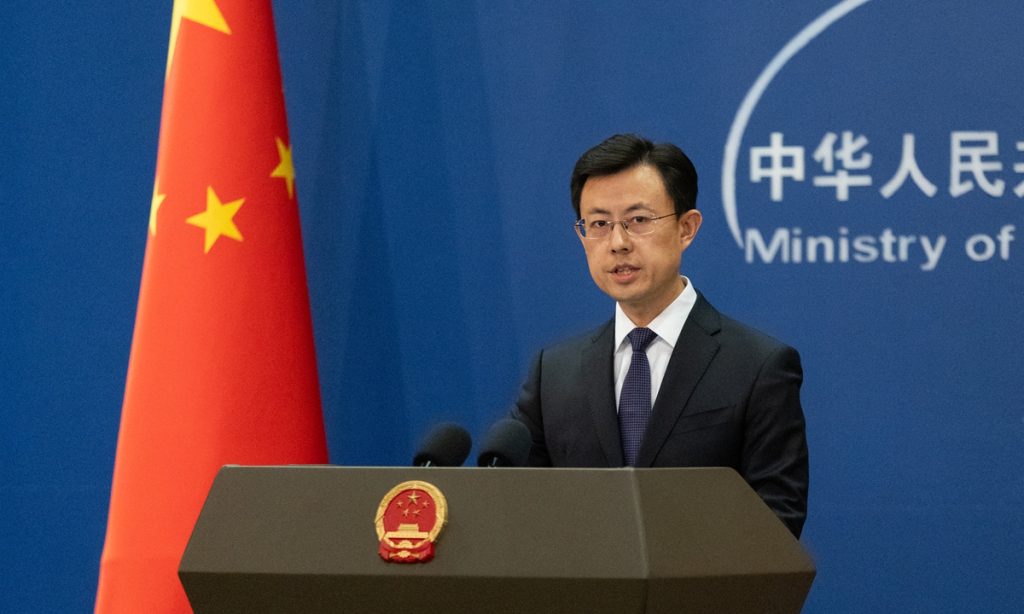
When asked about China's expectation regarding Chinese Foreign Minister Wang Yi's visit to India and the 24th Round of Talks Between the Special Representatives of China and India on the Boundary Question, Chinese Foreign Ministry spokesperson Mao Ning said on Monday that China is willing to take the opportunity of Wang's visit to India to work together with the Indian side in implementing the important consensus reached by the leaders of the two countries, maintain the momentum of high-level exchanges, enhance political mutual trust, strengthen practical cooperation, properly manage differences, and promote the sustained, healthy, and stable development of China-India relations.
The Talks Between the Special Representatives of China and India on the Boundary Question serves as a high-level channel for border negotiations between the two countries, Mao said. In December last year, the 23rd meeting of the Special Representatives for the China-India Boundary Question was successfully held in Beijing, yielding multiple consensus points on boundary delimitation talks, border management, institutional mechanisms, and cross-border exchanges and cooperation.
Mao said that since the beginning of this year, both sides have maintained communication through diplomatic channels and actively advanced the implementation of these outcomes.
Regarding this upcoming meeting, China is willing to engage with India on the basis of existing consensus, adopt a positive and constructive attitude, and continue in-depth discussions on the aforementioned issues to jointly sustain lasting peace and tranquility in the border areas, Mao added.
Mao added that during his stay in India, Foreign Minister Wang will also hold in-depth exchanges with Indian External Affairs Minister Subrahmanyam Jaishankar on bilateral relations and issues of mutual interest.
Northwest China's Gansu Province issued red alerts for meteorological risks of flash floods and geological disasters on Saturday as heavy rainfall continued to batter parts of the region.
A red alert for flash floods was jointly issued by the provincial department of water resources and the provincial meteorological bureau at 6:10 a.m., citing the heightened risk from short-duration heavy rainfall in parts of Pingliang and Qingyang.
Later the same day, the provincial department of natural resources and the provincial meteorological bureau issued a red alert for weather-induced geological disasters in the same areas, warning of a high risk of hazards such as landslides, soil collapses and mudslides.
Rainfall totals over the next 12 hours are forecast to reach between 80 and 120 millimeters, with the most intense hourly precipitation expected to range from 35 to 55 millimeters, according to the provincial meteorological bureau.
The risk areas are highly vulnerable to heavy rainfall, which could trigger both flash floods and geological disasters. Authorities have urged the strengthening of real-time monitoring, early warning systems, and the evacuation of residents from high-risk zones.
China has a four-tier weather warning system -- with red representing the most severe warning, followed by orange, yellow and blue.
China’s cyberspace regulator has launched a special summer campaign to improve the online environment for minors, rectifying issues such as bullying under the guise of selling anime-themed merchandise.
According to a statement released on Tuesday by the Cyberspace Administration of China (CAC), to strengthen the protection of minors online and foster a healthy internet environment, the CAC recently launched a two-month nationwide special campaign Qinglang 2025 Summer Special Campaign to Improve the Online Environment for Minors.
To implement regulations protecting minors online, this special campaign will further expand the depth and scope of governance, continuing to address and rectify problems that harm minors’ physical and mental well-being.
The cyberspace regulator will strictly investigate and penalize illegal content involving violence and superstition, obscenity and pornography, incitement to suicide or self-harm, and violations of minors’ privacy.
Meanwhile, the authority will also completely remove vulgar, materialistic, and emotionally provocative content, and will crack down on illegal and criminal activities targeting minors.
The authority will focus on rectifying four types of issues arising from new situations and emerging trends including the harmful and illegal activities such as online bullying and virtual sexual harassment targeting minors disguised as offers of rare anime merchandise, celebrity merchandise, free study partners, or custom images.
By using new formats and methods popular among minors – such as trading cards, stories, and animations – some individuals fabricate and spread coded internet slang and crude memes, exaggerate violent or gory content, glorify harmful subcultures, and promote distorted values, thereby endangering the physical and mental health of minors.
Furthermore, the cyberspace regulator will also address the inducement of minors to participate in dangerous offline activities, including luring them into offering prohibited services such as paid companionship for chatting, gaming, or traveling, teaching minors to make so-called “creative DIY” weapons like pen guns or toothpick crossbows, and encouraging minors to imitate dangerous actions such as “stair jumping” or the “choking challenge,” which can result in real harm.
Moreover, the authority will crack down on the exploitation of minors’ images for profit. This includes the malicious posting of inappropriate content featuring minors, creating and spreading suggestive or violent “toxic” content to drive traffic, hyping child “couple” pairings, staging fake plots such as “pranking children” or “siblings fighting,” and showcasing minors engaging in inappropriate behavior – all to attract attention, gain views, and generate profit.
While carrying out the special rectification campaign, the cyberspace regulator will also focus on the inappropriate application of AI in contexts involving minors and issues related to addiction.
As artificial intelligence (AI) continues to transform industries and daily life in the digital era, China's Ministry of State Security on Wednesday reminded the public about the technology's potential to threaten national security if misused. In an article published on its official WeChat account, the ministry cautioned that AI tools, if exploited by malicious actors, could be used to fabricate disinformation, steal sensitive data, and incite ideological confrontation—turning them into a "hidden weapon" capable of undermining critical infrastructure and social stability.
The article highlights that AI-powered "deepfake" technology, combining deep learning with digital forgery, can intelligently generate realistic images, audio, and video through automated data processing. While widely used in film, gaming, and advertising to enhance virtual experiences, the technology also carries serious risks. If misused, deepfakes can infringe on individual rights, disrupt social order, and threaten national security. Chinese national security authorities have uncovered instances where hostile foreign forces have used deepfake technology to produce fake videos aimed at misleading the Chinese public, stirring panic, and undermining social stability, posing a potential threat to national security.
According to public reports, a malfunction in an open-source library allowed some users of a foreign AI model to access chat titles - and in some cases, names and payment addresses - of other active users, resulting in a personal data breach. Without proper safeguards, such sensitive information could be exploited by foreign intelligence agencies for recruitment, subversion, or infiltration, creating potential risks to national security, said the article.
Moreover, AI algorithms are designed to reorganize, generate, and output knowledge. When biased data or deliberately manipulated algorithms are introduced, they can produce ideologically skewed content - becoming a powerful tool for anti-China hostile forces abroad to incite unrest. This risk is particularly acute during the early stages of sensitive social incidents, when public attention is high and emotions are volatile. In such moments, AI-generated rumors often exploit the information vacuum to spread false narratives, misleading public opinion and triggering serious disruption, said the article. National security authorities have uncovered that certain Western countries and foreign actors are systematically operating large numbers of online accounts to flood social media with targeted viewpoints or emotionally charged content. By weaponizing topics such as gender conflict and labor disputes, they aim to infiltrate, discredit, and destabilize Chinese society, said the ministry.
At the conclusion of the article, the ministry emphasized that as AI technology brings both new opportunities and challenges, it is crucial to proactively assess emerging risks, enhance national security awareness, and strengthen individual vigilance. Only through joint efforts can a robust public defense line be built to safeguard national security, it said.
Chinese Vice Premier He Lifeng said on Wednesday that China will adhere to the principles of division of labor and cooperation, openness and inclusiveness, while acting as a promoter of mutual benefits and win-win outcomes in global industrial and supply chains.
He, also a member of the Political Bureau of the Communist Party of China Central Committee, made the remarks in a speech at the opening ceremony of the third China International Supply Chain Expo in Beijing.
China is a crucial link in global industrial and supply chains and has consistently taken practical actions to ensure the stable operation of global industrial and supply chains, contributing to deepening global industrial and supply chain cooperation and promoting world economic recovery, the vice premier said.
China will also advance the digital, intelligent and green transformation and upgrading of global industrial and supply chains, said the vice premier.